PaintingWallArtHigh Renaissance
 Renaissance
 325.0 x 224.0 cm
 卢浮宫
卢浮宫




























从与原作比例一致的预设尺寸中进行选择。

您可以输入自定义尺寸,以适配特定的画框或空间。如果您选择的尺寸与原图比例不符,我们将对作品进行裁剪,或通过镜像填充/纯色填充边缘的方式来扩展图像。在开始制作之前,我们会向您发送一份数字效果图供您确认。
请注意,屏幕上的预览并不能反映实际的裁剪或扩展效果。只有效果图才能准确展示最终的构图。
虽然我们提供定制尺寸,但为了保持原图比例,我们建议您从预设列表中选择尺寸。

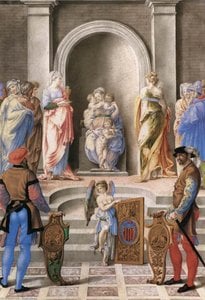
Elymas Struck Blind by St Paul before the Proconsul Sergius Paulus
复制品尺寸
In the grand tapestry of the Italian High Renaissance, few moments possess the visceral tension found in Giulio Clovio’s Elymas Struck Blind by St Paul before the Proconsul Sergius Paulus. This masterpiece serves as a breathtaking window into a moment of profound spiritual upheaval, where the earthly and the divine collide with startling clarity. The scene captures the precise instant of a miracle: the sorcerer Elymas is overcome by sudden darkness, his sight stolen by the righteous authority of Saint Paul. Clovio does not merely illustrate a biblical passage; he orchestrates a drama of light and shadow, positioning the viewer directly within the crowded, breathless atmosphere of Paphos. The composition is alive with movement, as figures react to the divine intervention—some recoiling in awe, others leaning in with suspicion or curiosity—creating a rhythmic energy that pulls the eye across the canvas.
The emotional weight of the piece lies in its ability to convey both terror and transcendence. As St Paul performs his divine act, there is an unmistakable sense of gravity; the air seems thick with the weight of judgment. For the modern collector or lover of classical art, this painting offers more than just a historical narrative; it provides a profound meditation on the power of faith and the vulnerability of human perception. The dramatic interplay between the central figures and the surrounding onlookers creates a psychological depth that makes the scene feel perpetually present, as if the miracle is unfolding for the very first time before our eyes.
Giulio Clovio, often celebrated as the "Michelangelo of the miniature," brought a level of sophistication to this larger-scale work that bridged the delicate precision of manuscript illumination with the monumental grandeur of High Renaissance painting. His technique is characterized by an extraordinary command of detail, where every fold of heavy drapery and every expressive gesture is rendered with meticulous care. Clovical influence is evident in the way he handles light; it does not merely illuminate the scene but acts as a narrative tool, highlighting the divine authority of Paul while casting the shadows of confusion over those caught in the wake of the miracle.
Interestingly, Clovio’s approach to this composition was a brilliant act of artistic dialogue. Drawing inspiration from the monumental tapestry cartoons of Raphael, Clovio chose to deliberately invert the composition. This was not a mere stylistic whim but a calculated move to enhance the immediacy and impact of the biblical story. By reconfiguring the spatial relationships between the Proconsul, the Saint, and the sorcerer, he achieved a sense of arresting intimacy. For interior designers seeking to anchor a room with a piece of significant historical weight, this painting offers a sophisticated balance of complex detail and powerful, singular focus, making it an ideal centerpiece for a gallery-style collection or a stately study.
To behold this work is to understand the zenith of Clovio’s career. Born in Croatia but flourishing under the patronage of Italian cardinals, Clovio infused his works with a unique blend of Gothic intricacy and Renaissance humanism. In Elymas Struck Blind, we see the culmination of this journey—a painting that uses the physical medium of pigment and light to explore the metaphysical concept of spiritual sight. The symbolism is layered; the blinding of Elymas represents the stripping away of worldly deception to reveal a higher truth, a theme that resonates deeply across centuries.
Owning or displaying a high-quality reproduction of this work allows one to bring this era of intense devotion and artistic innovation into a contemporary space. It serves as a conversation starter, an object of contemplation, and a tribute to the enduring power of the Renaissance spirit. Whether placed in a sunlit salon or a quiet library, Clovio’s dramatic depiction continues to command attention, reminding us of the moments in history when the veil between the seen and the unseen was momentarily torn asunder.

1498年,朱利奥·克洛维奥(Giulio Clovio)出生于克罗地亚格里扎内起伏的丘陵之间,其原名是尤雷·朱利耶·克洛维奇(Juraj Julije Klović)。作为连接晚期哥特式手抄本装饰传统与蓬勃发展的盛期文艺复兴的关键人物,他的存在具有划时代的意义。尽管他的根源深植于克罗比特王国,但正是通过意大利这片土地,克洛维奥的艺术天才才得以真正绽放。他赢得了无可争议的盛名,被誉为那个时代最伟大的装饰画家,也是延续数世纪之久的艺术谱系中最后一位举足轻重的宗师。他的生命历程是一部关于非凡天赋、敏锐的赞助人关系以及对将微型艺术转化为令人屏息的精致艺术形式所持有的不懈追求的史诗。
克洛维奥早年的生活仍笼罩在些许神秘之中。人们相信,他最初可能是在里耶卡附近的修道院圈子中接受艺术训练,但年仅十八岁时,他的雄心便驱使他前往意大利。进入枢机主教马里诺·格里马尼(Marino Grimani)的府邸成为了他人生的转折点;在这里,在枢机主教的悉心指导下,克术艺日益精进,并开始磨炼出那足以定义其职业生涯的严谨技法。他吸收了当时顶尖艺术家的影响——朱利奥·罗马诺(Giulio Romano)和吉罗拉莫·达伊·利布里(Girolamo dai Libri)都在塑造他的风格方面发挥了作用——但他很快便开辟了自己的道路,展现出一种将文艺复兴绘画的宏伟气势转化为微型尺度之上的卓越天赋。
克洛维奥的艺术造诣不仅仅在于复制既有风格,更在于对风格的深度融合。他大师般地将北欧装饰画细腻的精准度,与拉斐尔、米开朗基罗和提香等意大利文艺复兴大师所特有的动态构图及鲜艳色彩相结合。这种融合在他的手抄本装饰作品中表现得尤为显著:画面中的人物具有雕塑般的质感,风景在空气透视法中层层退远,每一个细节——从衣褶的纹理到珠宝的闪光——都以令人惊叹的准确度呈现出来。
他为枢机主教多梅尼科·格里马尼(Domenico Grimani)创作的作品,包括那部细节极其精美的《圣保罗致罗马书注释》(现收藏于索恩博物馆),展示了他当时正处于上升期的才华并奠定了他的名望。这部手抄本中的微型画不仅仅是插图,它们本身就是独立的微型绘画作品,充满了叙事力量与情感深度。其中对“圣保罗皈依”的描绘,展现出一种在装饰手稿中罕见的戏剧性张力。
克洛维奥的职业生涯与那些能够识其卓越才华的权贵赞助人紧密相连。在离开格里马尼家族后,他曾效力于匈牙利国王路易二世的宫廷,创作了如《帕里斯的审判》和《露克丽西亚》等杰作。然而,随着国王在莫哈奇战役中英年早逝,克洛维潮回到了罗马,并继续吸引着各界显赫的支持者。
他与枢机主教亚历山德罗·法尔内塞(Alessandro Farnese)的结缘被证明是极具成果的。正是为了法尔内塞,克洛维奥创作了他的巅峰之作:《法尔内塞时祷书》。这是一部极其奢华的装饰手抄本,在历经九年艰辛的创作后于1546年完成。这部杰作现存于纽约摩根图书馆,包含了二十八幅描绘旧约与新约场景的微型画,其高潮在于一幅壮丽的双页展开图,展现了罗马的基督圣体节游行。这本《法尔内塞时祷书》不仅是克洛维奥技艺的明证,更是他对文艺复兴图像学和神学主题深刻理解的体现。
克洛维奥的影响力早已超越了手抄本装饰的范畴。他在艺术界是一位备受尊敬的人物,与彼得·勃鲁盖尔(Pieter Bruegel the Elder)等艺术家交好——后者甚至为克洛维奥的一件作品贡献了一幅微型画;他与埃尔·格雷柯(El Greco)也建立了联系,后者曾为这位装饰大师绘制过数幅肖像,并将他与米开朗基罗、拉斐尔和提香并列,视其为自己的艺术影响源。这些肖像画成为了克洛维奥在艺术共同体中地位的有力视觉宣言。
尽管他的创作主要局限于微型尺度,但克洛维奥对文艺复兴艺术的影响是深远且重大的。他将装饰绘画从一种手工艺提升到了纯艺术的高度,证明了这种形式在表现力与技术精湛度上的无限潜力。他能够在方寸之间捕捉到盛期文艺复兴的精神内核,这确保了他作为那个时代最受赞誉的艺术家之一的地位——这位克罗地亚的璀璨巨匠,其留下的光辉遗产至今仍在照亮着整个艺术世界。

1498 - 1578 , 克罗地亚

Embark on a journey through time with our deep dive into the exquisite beauty of illuminated manuscripts. Discover the sacred artistry, precious materials, and enduring legacy of medieval illumination in this cultural exploration for history lovers.


 效果预览
效果预览
 购买手绘画作
 分享
分享 分享
分享
 详情
详情

 下载
下载
 相似作品
相似作品 X射线
X射线 幻灯片播放
幻灯片播放 展开详情
展开详情









 玻璃选项仅适用于110厘米以下的尺寸。