
x































从与原作比例一致的预设尺寸中进行选择。

您可以输入自定义尺寸,以适配特定的画框或空间。如果所选尺寸与原图比例不符,我们将通过裁剪作品或添加手绘元素来扩展画面。数字样稿将在制作开始前发送给您确认。
请注意,屏幕预览无法准确反映实际的裁剪或扩展效果,只有样稿才能真实呈现最终的构图。
虽然我们提供定制尺寸服务,但为了保留原作比例,建议您从预设列表中选择尺寸。

Bacchanal
复制品尺寸
In the heart of the seventeenth century, the Venetian Baroque era reached a crescendo of sensory indulgence, and few artists captured this spirit of revelry as masterfully as Giulio Carpioni. His work Bacchanal serves as a breathtaking window into a world of uninhibited joy and classical myth. The painting presents a sprawling, lively tableau where a diverse group of figures—at least thirteen in number—are woven into a complex tapestry of movement and emotion. Some figures lounge in states of relaxed abandon, while others are caught in the kinetic energy of social interaction and play. Through his brush, Carpioni transforms a simple gathering into a grand theatrical performance, inviting the viewer to step into a space where the boundaries between the mortal and the divine seem to blur amidst the laughter and the wine.
The composition is a masterclass in Baroque disegno, reflecting the rigorous training Carpioni received under Alessandro Varotari. Every element of the scene is meticulously placed to guide the eye through a labyrinth of delights. A bowl rests on the periphery, perhaps holding the remnants of a feast, while a delicate wine glass catches the light toward the right, acting as a subtle nod to the intoxicating nature of the festivities. Even the presence of sports balls scattered near the center and bottom-right corners suggests a momentary pause in vigorous activity, adding a layer of spontaneous realism to the mythological setting. This careful arrangement creates a sense of depth and rhythm, making the canvas feel less like a static image and more like a living, breathing moment frozen in time.
Carpioni’s technical prowess is most evident in his command of light and shadow, a hallmark of the Venetian tradition. Influenced by the dramatic chiaroscuro of contemporaries like Carlo Saraceni, he uses light not merely to illuminate, but to sculpt the figures and imbue them with a palpable presence. The way light dances across the skin of the revelers and glints off the various objects scattered throughout the scene creates a luminous atmosphere that feels both opulent and intimate. His ability to balance the heavy, dramatic shadows with brilliant, focused highlights allows for a rich texture that appeals deeply to the tactile senses.
For the discerning collector or interior designer, this piece offers more than just visual beauty; it provides an emotional anchor. The painting’s palette and subject matter evoke a sense of timeless luxury and classical sophistication. Whether placed in a grand salon or a curated study, a high-quality reproduction of Bacchanal brings with it the prestige of the Italian Baroque. It is a work that commands attention through its complexity and rewards prolonged contemplation with its subtle details, making it an ideal centerpiece for those looking to infuse their space with history, drama, and the enduring allure of Venetian splendor.

In the vibrant, sun-drenched landscape of the seventeenth-century Venetian Republic, few artists captured the dual nature of human existence—the sacred and the profane—with as much grace and technical precision as Giulio Carpioni. Born in Venice around 1613, Carpioni emerged during the height of the Baroque era, a period defined by dramatic movement, emotional intensity, and a sensory feast of light and shadow. His journey as an artist was one of profound refinement, shaped by the prestigious workshops of his homeland and a deep-seated commitment to the classical ideals of disegno. Through his brush, the theatricality of the Baroque found a unique voice, blending the spiritual fervor of religious devotion with the uninhibited joy of mythological revelry.
The foundation of Carpioni’s mastery can be traced back to his formative years under the tutelage of Alessandro Varotari, known as il Padovanino. From this mentor, Carpioni inherited a rigorous command of drawing and composition, ensuring that even his most chaotic scenes possessed an underlying structural elegance. His artistic vocabulary was further enriched by absorbing the stylistic nuances of contemporaries such as Simone Cantarini and Carlo Saraceni. These influences introduced him to the power of chiaroscuro—the dramatic interplay of light and dark—which he would later use to sculpt figures out of the shadows, imbuing them with a palpable, breathing presence. A pivotal moment in his development occurred in 1631, when a brief sojourn to Bergamo exposed him to the distinct traditions of Lombard art. This encounter with the more sculptural and refined aesthetic of the Lombardy region added a new layer of complexity to his visual language, allowing him to marry Venetian color with a more structured, tactile sensibility.
Carpioni’s body of work is characterized by a remarkable versatility, oscillating between the solemnity of the altar and the decadence of the feast. As he established himself in Vicenza around 1638, he became a sought-after painter for the churches of the Venetian Republic. His religious compositions were not merely instructional; they were deeply emotive experiences, designed to convey profound theological truths through meticulous detail and spiritual intensity. In works such as his depictions of biblical narratives, one finds a sense of divine presence captured through the careful arrangement of light, guiding the faithful through complex stories of martyrdom and grace.
Yet, it is perhaps in his secular explorations that Carpioni’s exuberant spirit truly shines. He was a master of the Bacchanal, creating sprawling, lively tableaus that served as windows into a world of classical myth and sensory indulgence. In these paintings, the boundaries between the mortal and the divine seem to blur amidst flowing wine and rhythmic movement. His ability to weave dozens of figures into a single, cohesive tapestry of emotion is nothing short of breathtaking. Consider his approach to such scenes:
The historical significance of Giulio Carpioni lies in his ability to synthesize the diverse artistic currents of his time into a singular, cohesive style. He stood at the crossroads of tradition and innovation, honoring the classical foundations of disegno while embracing the theatrical emotionalism of the Baroque. His portraits, which reflected the grandeur and dignity of noble families, further cemented his status as a premier chronicler of Venetian society. Through his etchings and paintings, Carpioni left behind a legacy that celebrates the full spectrum of human experience—from the quiet contemplation of the saint to the boisterous laughter of the reveler. Today, his works remain vital testaments to an era of unparalleled artistic splendor, reminding us of a time when art was a grand performance designed to stir the soul and enchant the senses.

1613 - 1678 , Italy

探索巴洛克艺术的辉煌与奢华!WahooArt提供精湛的手工油画复制、定制服务和专业艺术咨询,助您将经典作品融入当代室内设计,提升家居品味。投资艺术,传承价值。

探索丁托列托25幅杰作:深入了解这位威尼斯光影大师的艺术传奇!从宗教绘画到神话故事,感受文艺复兴与巴洛克风格的完美融合。WahooArt.com提供高清艺术复制品和家居装饰灵感,点亮您的生活空间。立即探索完整系列!
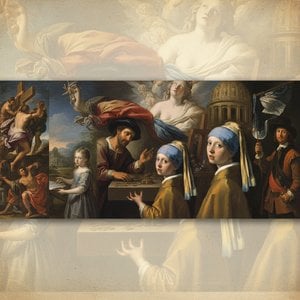
探索巴洛克艺术的辉煌!本文精选十部巨作,带您领略卡拉瓦乔、伦勃朗等大师的光影魔法与戏剧张力。从黄金时代到宗教绘画,感受奢华与精致。WahooArt.com为您提供博物馆品质的艺术复制品和家居装饰灵感。尽在WahooArt.com!

深入探索巴洛克艺术的辉煌历史、独特风格与持久影响。了解卡拉瓦乔、贝尼尼等大师的作品,洞悉反宗教改革运动下的艺术变革。WahooArt.com为您提供专业的艺术解读与高清画作欣赏。

Explore the dramatic world of Baroque art! Discover iconic masters like Caravaggio & Rembrandt, their techniques, and the movement's lasting impact. Expert insights for collectors & enthusiasts at WahooArt.


第一时间获取最新的艺术新闻、独家优惠及装饰灵感。
向我们介绍您的项目需求,我们的艺术专家将为您提供 3 个个性化的艺术品推荐。
由我们的专家为您精选 3 款心仪之作 —— 完全免费!


 效果预览
效果预览
 购买印刷品
购买印刷品 分享
分享 分享
分享
 详情
详情

 下载
下载
 相似作品
相似作品 X射线
X射线 幻灯片播放
幻灯片播放


 展开详情
展开详情









 玻璃选项仅适用于110厘米以下的尺寸。


