
博物馆级艺术微喷或帆布版画,制作高效,并提供多种饰面选择。 ( 购买手绘画作 切换至数字图像销售渠道)
从与原作比例一致的预设尺寸中进行选择。

您可以输入自定义尺寸,以适配特定的画框或空间。如果您选择的尺寸与原图比例不符,我们将对作品进行裁剪,或通过镜像填充/纯色填充边缘的方式来扩展图像。在开始制作之前,我们会向您发送一份数字效果图供您确认。
请注意,屏幕上的预览并不能反映实际的裁剪或扩展效果。只有效果图才能准确展示最终的构图。
虽然我们提供定制尺寸,但为了保持原图比例,我们建议您从预设列表中选择尺寸。

Container vase
复制品尺寸

Born in Prussia in 1830, Albert Bierstadt’s journey to becoming one of America's most celebrated landscape painters was a testament to his ambition and artistic dedication. His early life, marked by a move to New Bedford, Massachusetts, instilled within him a deep appreciation for the natural world – an appreciation that would profoundly shape his future work. He initially pursued studies in Düsseldorf, Germany, immersing himself in the traditions of the Dusseldorf School, known for its meticulous detail and dramatic lighting. This training provided him with a foundational skill set, but it was his return to America and his subsequent association with the Hudson River School that truly defined his artistic trajectory.
The Hudson River School, emerging in New York during the mid-19th century, represented a shift away from the rigid neoclassical styles of earlier periods. Artists within this movement sought to capture the sublime beauty of the American landscape – vast wildernesses and towering mountain ranges – often imbued with romantic ideals. Bierstadt’s work perfectly embodies this spirit. He wasn't merely depicting scenery; he was striving to convey an emotional response, a sense of awe and wonder at the scale and majesty of nature. His paintings were not simply representations but carefully constructed narratives designed to transport the viewer into the heart of the American West.
Bierstadt’s most significant contribution lay in his ability to translate the experiences of westward expansion into visual form. He participated in several expeditions, meticulously documenting the landscapes he encountered – journeys that provided him with unparalleled access to some of America's most iconic vistas. Unlike many of his contemporaries who focused on smaller scenes or urban settings, Bierstadt chose to paint the grand scale of the West: towering mountains, expansive plains, and dramatic river valleys. His paintings became a crucial element in shaping public perception of this burgeoning frontier, offering a romanticized yet undeniably powerful vision of the American West.
Bierstadt’s fascination with the Rocky Mountains proved to be his most enduring subject matter. He embarked on several expeditions into these majestic peaks, producing some of his most celebrated works – paintings like *Rocky Mountain Sunset* and *The First Snowfall*. These weren't simple depictions; they were carefully orchestrated compositions designed to evoke a sense of grandeur and spiritual connection. He employed techniques honed during his Düsseldorf training—precise detail, atmospheric perspective, and dramatic lighting—to create an almost palpable sense of depth and scale.
Crucially, Bierstadt’s approach went beyond mere observation. He meticulously researched the geology, flora, and fauna of the region, incorporating these details into his paintings with remarkable accuracy. His work served as a visual record of the West, capturing not only its beauty but also its raw power and untamed spirit. His detailed renderings of indigenous peoples within these landscapes further cemented his role as an interpreter of this vast territory.
Bierstadt’s artistic style was characterized by a masterful command of color, light, and composition. He utilized a technique known as *luminism*, employing subtle gradations of tone to create a sense of atmospheric depth and luminosity. His brushwork was often loose and expressive, yet always meticulously controlled, resulting in paintings that were both visually stunning and emotionally resonant. He frequently employed a pyramidal composition, drawing the viewer's eye towards a central focal point – often a towering mountain peak or a dramatic sunset.
His use of color was particularly noteworthy. He favored rich, saturated hues—deep blues, vibrant greens, and fiery reds—to capture the intensity of the Western landscape. He skillfully manipulated light to create a sense of drama and mystery, using highlights to accentuate key features and shadows to deepen the overall mood. His paintings were not simply colorful; they were imbued with an almost palpable energy.
Despite facing challenges in the later years of his career as modernism gained prominence, Albert Bierstadt remains a pivotal figure in American art history. He was one of the first artists to successfully capture the grandeur of the American West on canvas, shaping public perception of this vast territory and establishing a lasting legacy as a master landscape painter. His influence can be seen in the work of subsequent generations of artists, including Frederic Church and Thomas Moran, who continued to explore the themes and techniques pioneered by Bierstadt.
Today, his paintings are treasured for their beauty, historical significance, and artistic merit. They offer a unique window into a bygone era—a time when America was still forging its identity on the frontier, and when artists like Albert Bierstadt sought to capture the spirit of this transformative period in visual form.

1902 - 1965 , Italy

Explore the profound beauty of equestrian art. From the realism of Meissonier to impressionistic studies, discover how master techniques capture the noble spirit of the horse in fine oil reproductions and custom commissions.

Explore the profound elegance of ceramic art. From master glazes to sculptural forms, our expert guide offers discerning collectors deep insights into the mastery, texture, and timeless value of fine ceramics for sophisticated collections and luxury interiors.
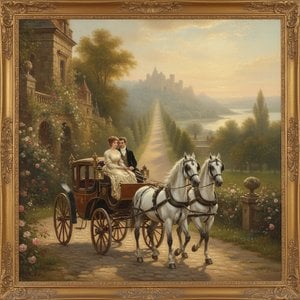
Embark on a visual journey through the romantic world of horse carriage art. Discover the mastery of equestrian oil paintings, from Impressionist textures to classical realism, and learn how to bring timeless elegance into your home with museum-quality reproductions.


 分享
分享 分享
分享
 详情
详情

 下载
下载
 相似作品
相似作品 幻灯片播放
幻灯片播放 统计数据
统计数据


 展开详情
展开详情






































 玻璃选项仅适用于110厘米以下的尺寸。


