博物馆级艺术微喷或帆布版画,制作高效,并提供多种饰面选择。 ( 订购此收藏品的纯手工复刻画作 切换至数字图像销售渠道)
您可以从与原作比例一致的预设尺寸中进行选择。

请输入您所需的宽度和高度,以适配您的画框或墙面。由于印刷品只能进行裁剪,无法超出原图尺寸,因此若比例不一致,画面的一部分将会被裁切。在正式印刷之前,我们会为您发送一份数字效果图供您确认。本页面显示的图片并非最终裁剪后的效果——只有效果图才能展示真实的裁剪情况。
Summer
复刻品尺寸说明
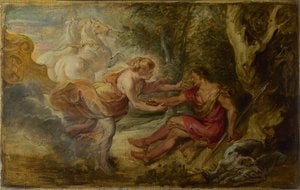
In the heart of Florence, within the hallowed walls of Casa Vasari, lies a fresco that captures the very essence of High Renaissance tranquility. “Summer”, a collaborative masterpiece by Giorgio Vasari and his skilled contemporaries, is far more than a mere seasonal depiction; it is a profound meditation on peace and maternal tenderness. The scene unfolds with a breathtaking intimacy, presenting a woman reclining gracefully on her side, her form cradling a small child in a moment of quiet repose. As the viewer gaz and upon this tableau, one feels transported to an era where art sought to harmonize the human experience with the divine, creating a window into an idealized world of domestic grace.
The composition is masterfully structured to evoke a sense of grandeur and architectural permanence. An arched ceiling looms above the figures, its classical lines echoing the Greco-Roman aesthetics that Vasari so fervently sought to revive. This architectural framework does not merely enclose the scene but elevates it, lending a monumental quality to the private moment shared between mother and child. The inclusion of subtle decorative elements, such as a delicately placed vase, adds a layer of Florentine elegance, suggesting an environment of refined taste and opulent beauty that would have graced the palatial settings of the sixteenth century.
To behold “Summer” is to witness the technical virtuosity of the Mannerist tradition. Vasari employs sfumato—the delicate, smoky blurring of edges famously pioneered by Leonardo da Vinci—to soften the contours of the figures. This technique allows the woman and child to emerge from the background not as sharp, isolated shapes, but as organic presences integrated into a hazy, sun-drenched atmosphere. The light seems to filter through the very air of the fresco, imbuing the scene with a warm, ethereal glow.
The artist’s palette is a sophisticated study in earth tones and luminous highlights. By masterfully blending hues of ochre, umber, and ivory black, Vasari achieves a remarkable sense of depth and three-dimensionality. These rich, grounded colors provide a sturdy foundation for the lighter, more delicate passages of skin and fabric, creating a visual rhythm that guides the eye across the fresco. For the discerning collector or interior designer, this interplay of light and shadow offers a timeless sophistication, making it an ideal centerpiece for spaces that demand both warmth and intellectual depth.
Beyond its aesthetic splendor, “Summer” is steeped in the humanist ideals of the Renaissance. The woman’s posture, characterized by a sense of vulnerability and repose, serves as a powerful symbol of motherhood and the nurturing spirit. In the context of the era, such imagery was intended to reflect the moral virtues of constancy and devotion. The child, nestled securely in her arms, represents the purity of innocence and the promise of the future—a poignant reminder of the cyclical nature of life and the enduring strength of familial bonds.
This artwork resonates deeply with anyone moved by the celebration of human dignity. It captures a fleeting moment of stillness that feels both historically specific and eternally relevant. Whether displayed in a contemporary gallery or as a hand-painted reproduction in a curated home, “Summer” brings with it an aura of spiritual contemplation and classical harmony. It is an invitation to slow down, to appreciate the beauty in simplicity, and to surround oneself with the enduring legacy of one of Italy's greatest artistic visionaries.
乔尔乔·瓦萨里 (Qiá'Ěrjiào Wǎsàlǐ) 的《Summer》 采用了 Earthy 色调。这一色调概括了作品整体的色彩特征。
“Summer”的色彩饱和度为Balanced。饱和度描述了色彩呈现的浓郁程度。
"Summer" 描绘了 woman, child, arch, ceiling, floral vase, figures, frescoes, renaissance,而 乔尔乔·瓦萨里 (Qiá'Ěrjiào Wǎsàlǐ) 记录在案的主题则是 vasari’s renaissance legacy, religious symbolism & grace, humanist idealization style, artist’s artistic vision, celebrating masters' genius。通过两者的对比,可以看出此作与艺术家惯用题材之间的关联。


1511 - 1574 , 意大利

Explore the profound mastery of fresco painting, from the technical alchemy of buon fresco to the legendary narratives of Renaissance masters like Ghirlandaio. Discover how this timeless medium shaped art history and continues to inspire architectural grandeur today.

Discover the timeless art of fresco painting. Explore the profound history, technical mastery of buon fresco, and the enduring legacy of Renaissance masters like Michelangelo in this expert guide to painting on wet plaster.


 发送
发送 分享
分享
 详情
详情 指南
指南

 下载图片
下载图片
 相似作品
相似作品 幻灯片播放
幻灯片播放 统计数据
统计数据


 阅读全文
阅读全文






































 玻璃选项仅适用于110厘米以下的尺寸。