
由我们的艺术家按需定制,为您提供您所选尺寸及画框的布面手工油画。 ( 切换至版画销售渠道 切换至数字图像销售渠道)





























您可以从与原作比例一致的预设尺寸中进行选择。

您可以输入自定义尺寸,以适配特定的画框或空间。如果所选尺寸与原图比例不符,我们将通过裁剪作品或添加手绘元素来扩展画面。数字样稿将在制作开始前发送给您确认。
请注意,屏幕预览无法准确反映实际的裁剪或扩展效果,只有样稿才能真实呈现最终的构图。
虽然我们提供定制尺寸服务,但为了保留原作比例,建议您从预设列表中选择尺寸。

The Terrible Games
复刻品尺寸说明
Giorgio de Chirico's The Terrible Games (1925) is not merely a painting; it’s an immersion into the unsettling subconscious, a quintessential example of the artist’s groundbreaking metaphysical style. Executed during a period of intense intellectual and artistic ferment in pre-war Europe, this work embodies de Chirico's fascination with dreams, memory, and the fractured nature of reality. The scene unfolds as a meticulously constructed illusion – a deserted urban landscape populated by enigmatic figures and unsettling objects, all contributing to an atmosphere of profound alienation and melancholy. The painting’s power lies in its ability to evoke a sense of unease, prompting viewers to confront their own anxieties about existence and the limitations of perception.
At the heart of The Terrible Games stands a solitary figure holding a colossal sphere – an oversized head or perhaps a representation of the earth itself. This central element immediately draws the eye, demanding interpretation. The sphere, often interpreted as representing the burden of knowledge or the weight of human consciousness, is juxtaposed against the surrounding figures, creating a dynamic tension. The presence of multiple individuals, some distant and blurred, others sharply defined, suggests fragmented memories and distorted perspectives. A clock in the upper-left corner – a recurring motif in de Chirico’s work – reinforces the theme of time's relentless passage and its impact on human experience. The overall composition deliberately avoids clear narrative, instead prioritizing emotional resonance over logical storytelling.
De Chirico’s technique is characterized by precise draftsmanship combined with a deliberate manipulation of perspective and scale. He employs sharp lines and geometric forms to create a sense of spatial ambiguity, further enhancing the painting's unsettling atmosphere. The muted color palette – dominated by browns, grays, and ochres – contributes to the work’s somber mood. The artist meticulously rendered details, from the textures of the statue to the reflections in the clock face, adding to the illusionistic quality of the scene. This meticulous attention to detail is crucial to the metaphysical effect; it forces the viewer to actively engage with the artwork and question its reality.
Created in 1925, *The Terrible Games* reflects the intellectual climate of the time – a period marked by anxieties about modernity, industrialization, and the decline of traditional values. De Chirico was deeply influenced by philosophers such as Friedrich Nietzsche, Arthur Schopenhauer, and Otto Weininger, whose ideas explored themes of existentialism, irrationality, and the subjective nature of reality. The painting can be seen as a visual manifestation of these philosophical concerns, capturing a sense of disorientation and disillusionment within the rapidly changing world. It’s a testament to de Chirico's ability to translate complex intellectual concepts into a powerfully evocative visual language.
Artwork Code: DECH01

1888 - 1978 , 希腊
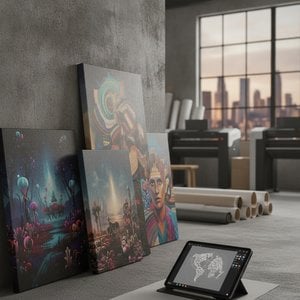
Transform your digital artistry into a prestigious global brand with WahooArt’s premium Giclée prints. Experience museum-quality archival excellence and seamless on-demand fulfillment designed for the modern creative entrepreneur seeking to build a lasting artistic legacy.

Explore the profound mystery of Metaphysical Art. Delve into the philosophical depths of Giorgio de Chirico’s dreamscapes and discover how this enigmatic movement redefined reality through unsettling beauty and classical symbolism.

Master the nuances of Giclée printing with our expert guide. Discover how pigment-based inks and museum-grade substrates create fade-resistant, high-fidelity art reproductions designed for discerning collectors seeking unparalleled quality and longevity.


 实景预览
实景预览
 发送
发送 分享
分享
 详情
详情 指南
指南

 下载图片
下载图片
 相似作品
相似作品 X射线
X射线 幻灯片播放
幻灯片播放 统计数据
统计数据

 阅读全文
阅读全文









 玻璃选项仅适用于110厘米以下的尺寸。


