
购买高分辨率增强版数字图像,其品质远超在线预览。
每一份文件都由我们的内部专家使用先进工具与专业的后期润色技术精心打造。我们确保每一张图像都具备卓越的清晰度、精准的色彩还原度以及细腻的细节表现。
最终文件将在 72 小时内通过电子邮件交付,并针对专业、编辑及印刷用途进行了优化。其品质与顶级设计工作室、出版社和画廊所信赖的标准完全一致。
选择 WahooArt.com,您获得的不仅仅是一张图像——您收到的是经过专业级增强、精雕细琢的数字艺术作品,并享有满意保证。以下是您的订单中自动包含的所有内容:

您的高分辨率数字图像文件将在下单后 72 小时内通过电子邮件发送给您 —— 即可立即使用。

您的艺术品经过专业优化,结合先进的 AI 技术与人工修饰,确保呈现极致的细节、清晰度与色彩准确度。

不小心删除了文件或找不到了?没关系——我们将随时为您免费重发。

即刻拥有您的艺术作品,无需支付任何关税、税费或运费——数字下载始终免税。

我们通过专业工具与色彩管理技术,确保您的数字图像尽可能真实地还原原作色彩。

如果您对所购数字图像不满意,我们将在100天内为您进行修改或提供100%的全额退款——无需任何理由。

不满意?在收到数字文件后的100天内,您可以申请全额退款——无需任何理由。

购买 3 张图片可享 10% 折扣 - 购买 5 张可享 15% 折扣 - 购买 10+ 张可享 20% 折扣。非常适合创意项目、画廊和机构使用。

In the golden age of Flemish Baroque, few artists captured the intersection of terrestrial beauty and maritime exploration as poignantly as Gillis Peeters. Born in the vibrant artistic hub of Antwerp in 1612, Peeters was a product of a lineage deeply embedded in the craft of painting. He emerged from a family of remarkable talent, including his siblings Catharina, Jan, and Bonaventura, whose collective work helped define the landscape and marine traditions of the seventeenth century. His early years were shaped by the rigorous training characteristic of the Antwerp Guild of Saint Luke, where he achieved master status in 1634 alongside his brother. This foundation allowed him to weave together the technical precision of the Flemish tradition with a burgeoning sense of worldly curiosity.
The artistry of Peeters was never static; it was an evolving dialogue between the established masters and the uncharted territories of the New World. While his early stylistic inclinations drew heavily from the atmospheric, idealized landscapes of Paul Bril, he moved away from mere imitation to find a voice that favored tonal subtlety over grandiosity. His work often eschewed the opulent, dramatic flourishes seen in the works of Rubens, opting instead for a more tranquil, contemplative approach to nature. This sensitivity to light and atmosphere allowed him to transform simple vistas into emotive experiences, where the play of shadow across a meadow or the soft haze over a distant riverbank invited the viewer into a state of quiet wonder.
Perhaps the most defining chapter of Peeters’ life was his role as a visual chronicler of colonial expansion. Unlike many of his contemporaries who remained tethered to the European landscape, Peeters’ spirit was one of adventure. It is widely believed that he undertook expeditions to Brazil, likely traveling in the company of Johan Maurits van Nassau-Siegen, the governor of Dutch Brazil. These journeys, potentially occurring around 1636 and 1640, fundamentally altered the trajectory of his oeuvre. He was not merely a traveler but an observer tasked with documenting the lush, exotic vistas of a burgeoning colonial enterprise.
These Brazilian commissions represent a monumental achievement in his career, as they bridged the gap between European landscape conventions and the raw, vibrant reality of South American ecology. His paintings from this period served a dual purpose: they were aesthetic triumphs that captured the breathtaking beauty of the tropics, and they functioned as vital visual records for administrators and settlers. Through his brush, the dense foliage and unique light of Brazil were translated into a language understood by the European eye, blending the familiar techniques of Flemish landscape painting with the unprecedented subject matter of the Atlantic frontier.
The historical significance of Gillis Peeters lies in his ability to harmonize the domestic tranquility of Flanders with the expansive horizons of global exploration. His contributions to marine art and landscape painting helped expand the boundaries of what Flemish art could represent, moving it beyond the borders of Europe. Even as he collaborated with figures like his brother Bonaventura or drew inspiration from masters like Anthony Claesz the Younger, Peeters maintained a singular focus on the atmospheric essence of his subjects.
Today, his work remains a testament to an era of profound transition. His paintings are more than mere depictions of scenery; they are windows into a period when the world was rapidly expanding through trade, conquest, and discovery. Whether portraying a quiet watermill in the Belgian countryside or a sun-drenched vista in Brazil, Peeters’ legacy is defined by a masterful command of light and an enduring ability to capture the soul of the landscape.
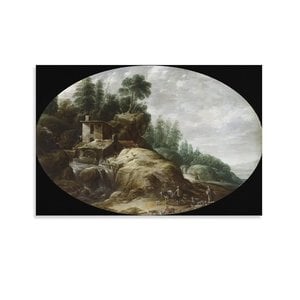
1612 - 1653 , Belgium


 效果预览
效果预览
 切换至版画销售渠道
 分享
分享 分享
分享
 详情
详情 指南
指南

 下载
下载
 相似作品
相似作品 X射线
X射线 幻灯片播放
幻灯片播放 统计数据
统计数据 展开详情
展开详情


