购买高分辨率增强版数字图像,其品质远超在线预览。
每一份文件都由我们的内部专家使用先进工具与专业的后期润色技术精心打造。我们确保每一张图像都具备卓越的清晰度、精准的色彩还原度以及细腻的细节表现。
最终文件将在 72 小时内通过电子邮件交付,并针对专业、编辑及印刷用途进行了优化。其品质与顶级设计工作室、出版社和画廊所信赖的标准完全一致。
选择 WahooArt.com,您获得的不仅仅是一张图像——您收到的是经过专业级增强、精雕细琢的数字艺术作品,并享有满意保证。以下是您的订单中自动包含的所有内容:

您的高分辨率数字图像文件将在下单后 72 小时内通过电子邮件发送给您 —— 即可立即使用。

您的艺术品经过专业优化,结合先进的 AI 技术与人工修饰,确保呈现极致的细节、清晰度与色彩准确度。

不小心删除了文件或找不到了?没关系——我们将随时为您免费重发。

即刻拥有您的艺术作品,无需支付任何关税、税费或运费——数字下载始终免税。

我们通过专业工具与色彩管理技术,确保您的数字图像尽可能真实地还原原作色彩。

如果您对所购数字图像不满意,我们将在100天内为您进行修改或提供100%的全额退款——无需任何理由。

不满意?在收到数字文件后的100天内,您可以申请全额退款——无需任何理由。

购买 3 张图片可享 10% 折扣 - 购买 5 张可享 15% 折扣 - 购买 10+ 张可享 20% 折扣。非常适合创意项目、画廊和机构使用。
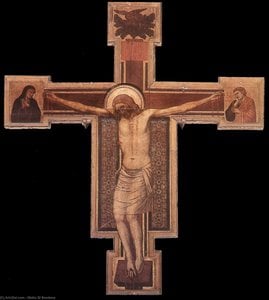
Gian Lorenzo Bernini’s “Altar Cross,” crafted in 1657-61 and currently residing within the Treasury of St. Peter's Basilica, is more than just a religious object; it’s a breathtaking embodiment of the High Renaissance’s dramatic shift into the Baroque era. This magnificent bronze sculpture transcends its functional purpose as an altar piece, transforming into a dynamic tableau of faith, suffering, and divine grace. Bernini, already establishing himself as Rome's foremost sculptor, masterfully utilizes texture, movement, and emotional intensity to create a work that continues to captivate viewers centuries after its creation.
The sculpture depicts the crucified Christ, rendered with an unprecedented level of realism and pathos. The figure’s body, sculpted from gleaming bronze, is not idealized but rather imbued with the raw physicality of pain. Bernini meticulously captures the subtle details – the clenched muscles, the contorted limbs, the downward gaze – conveying a profound sense of agony while simultaneously radiating an aura of serene acceptance. Crucially, he avoids the static representation often found in earlier Christian art; Christ’s body appears to be caught mid-movement, as if enduring his final moments with agonizing intensity. This dynamism is further emphasized by the dramatic lighting within the Treasury, which casts long shadows and highlights the contours of the sculpture, intensifying its emotional impact.
Bernini’s skill as a sculptor is immediately apparent in the sheer virtuosity displayed throughout the “Altar Cross.” He employs a technique known as *terrecotta*, using a clay-based material that he then fired to create a durable bronze. This method allowed him to achieve an astonishing level of detail and surface texture, particularly evident in the folds of Christ’s drapery and the intricate carvings on the cross's arms. The use of *lost wax casting* – a process where a wax model is created and then melted out to leave a mold into which molten bronze is poured – ensured that every curve and contour was perfectly rendered. Bernini wasn’t simply sculpting; he was manipulating metal with an almost alchemical precision, transforming cold, hard material into a vessel for profound emotion.
Furthermore, the sculpture's composition is brilliantly conceived. The cross itself isn’t merely a structural element but becomes an integral part of Christ’s body, visually merging with his limbs and torso. The small figures adorning the arms – angels or cherubs – are not static additions but seem to be caught in moments of empathetic sorrow, mirroring Christ's suffering. This interwoven design creates a powerful sense of unity and reinforces the sculpture’s central theme: the shared experience of pain and redemption.
Bernini’s “Altar Cross” was commissioned during a period of immense artistic and political upheaval in Rome. The papacy, under Pope Alexander VII (and later Urban VIII), was actively engaged in commissioning monumental works of art to glorify the Church and assert its power. Bernini, as the papal sculptor, was at the heart of this artistic renaissance. His work served not only as religious iconography but also as a potent symbol of Rome’s enduring legacy and spiritual authority. The commission itself reflects the growing emphasis on emotional engagement within Christian art – a departure from the more austere styles of the preceding era.
The sculpture's placement within St. Peter's Basilica, specifically in the Treasury, further underscores its significance. The Treasury, traditionally used to store the Church’s wealth and sacred objects, provided an ideal setting for this dramatic centerpiece. It speaks to the intersection of faith, power, and artistic expression that defined Baroque Rome.
Beyond its technical brilliance, the “Altar Cross” is rich in symbolic meaning. The crucifixion itself represents Christ’s sacrifice for humanity's sins – a central tenet of Christian belief. The downward gaze of Christ symbolizes humility and acceptance of his fate. The outstretched arms evoke the image of a loving embrace, offering salvation to all who believe. The angels or cherubs represent divine compassion and support. Bernini doesn’t simply depict a historical event; he conveys an emotional truth – the profound sorrow and ultimate hope associated with Christ's sacrifice. The sculpture invites contemplation on themes of suffering, redemption, and the enduring power of faith, making it a timeless masterpiece that continues to resonate with viewers today.

1598 - 1680 , 意大利


 效果预览
效果预览
 切换至版画销售渠道
 分享
分享 分享
分享
 详情
详情

 下载
下载
 相似作品
相似作品 X射线
X射线 幻灯片播放
幻灯片播放 统计数据
统计数据


 展开详情
展开详情