
由我们的艺术家按需定制,为您提供您所选尺寸及画框的布面手工油画。 ( 切换至版画销售渠道 切换至数字图像销售渠道)





























从与原作比例一致的预设尺寸中进行选择。

您可以输入自定义尺寸,以适配特定的画框或空间。如果所选尺寸与原图比例不符,我们将通过裁剪作品或添加手绘元素来扩展画面。数字样稿将在制作开始前发送给您确认。
请注意,屏幕预览无法准确反映实际的裁剪或扩展效果,只有样稿才能真实呈现最终的构图。
虽然我们提供定制尺寸服务,但为了保留原作比例,建议您从预设列表中选择尺寸。

Portrait Schmela
复制品尺寸
Gerhard Richter's ‘Portrait Schmela,’ conceived in 1964, stands as a cornerstone of his photographic oeuvre and embodies the artist’s signature approach to capturing reality—a deceptively simple technique layered with profound psychological resonance. This series comprises six meticulously crafted prints depicting Alfred Schmela, proprietor of Galerie Schmela, presenting him in strikingly similar compositions. Each portrait exhibits subtle variations in expression and slight distortions suggesting multiple exposures or deliberate manipulation, inviting contemplation on the nature of perception and memory.
Richter’s method transcends mere replication; he achieves an illusionistic effect reminiscent of photography while simultaneously distancing himself from its immediacy. The prints are executed in grayscale—a deliberate choice that amplifies the unsettling atmosphere—and utilize a grainy texture characteristic of photographic printing. This technique isn't merely stylistic but reflects Richter’s fascination with the materiality of image production and his questioning of representation itself. The grid format reinforces this conceptual framework, emphasizing order and repetition as tools for exploring themes of identity.
‘Portrait Schmela’ emerged during the formative years of Minimalist and Conceptual art—a period marked by a rejection of traditional artistic conventions in favor of exploring ideas and processes. Richter's decision to transform a photograph into an artwork aligns perfectly with this movement’s ethos, prioritizing conceptual significance over visual aesthetics. The series anticipates Richter’s later explorations of color charts and other seemingly banal objects, demonstrating his commitment to challenging viewers’ assumptions about art.
The repetitive nature of the portraits—identical subjects rendered in subtly different ways—introduces layers of symbolic meaning. The distortions suggest a fractured self-image or an attempt to capture fleeting emotions, mirroring Richter's broader preoccupation with psychological states. Furthermore, the multiple exposures could represent fragmented memories, hinting at the elusive and subjective experience of remembering. These deliberate manipulations underscore Richter’s belief that art can convey truths beyond what is visually apparent.
‘Portrait Schmela’ evokes a palpable sense of melancholy and contemplation. The monochromatic palette contributes to this mood, creating an environment conducive to introspection. The unsettling effect stems from the combination of photographic imperfections—the grainy texture and slight distortions—which destabilize our perception of reality. Ultimately, Richter's work invites us to confront questions about representation, identity, and the complexities of human experience—a testament to his enduring influence on contemporary art.

1932 - , 德国
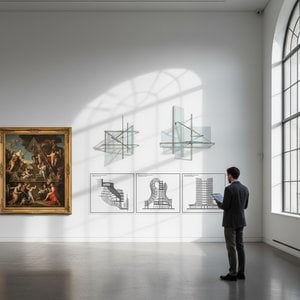
Discover the profound impact of composition on fine art. Explore how masters use geometry, light, and structural harmony to breathe life into masterpieces—an essential guide for discerning collectors seeking depth in every brushstroke.
Explore the profound influence of geometry and line in fine art. Discover how structural composition creates visual impact, from Cubist mastery to Op Art precision, and learn to curate sophisticated, mathematically balanced collections for discerning art connoisseurs.


 效果预览
效果预览
 分享
分享 分享
分享
 详情
详情

 下载
下载
 相似作品
相似作品 X射线
X射线 幻灯片播放
幻灯片播放 统计数据
统计数据
 展开详情
展开详情









 玻璃选项仅适用于110厘米以下的尺寸。


