
 Acrylic On CanvasWallArtContemporary Realism
 1993
1993 72.0 x 82.0 cm
博物馆级艺术微喷或帆布版画,制作高效,并提供多种饰面选择。 ( 订购此收藏品的纯手工复刻画作 切换至数字图像销售渠道)





























您可以从与原作比例一致的预设尺寸中进行选择。

请输入您所需的宽度和高度,以适配您的画框或墙面。由于印刷品只能进行裁剪,无法超出原图尺寸,因此若比例不一致,画面的一部分将会被裁切。在正式印刷之前,我们会为您发送一份数字效果图供您确认。本页面显示的图片并非最终裁剪后的效果——只有效果图才能展示真实的裁剪情况。
I.G.
复刻品尺寸说明
Gerhard Richter’s 1993 photograph, titled simply “I.G.”, isn’t a grand statement of artistic ambition; it’s a quiet invitation to contemplate the complexities of self-perception and the subtle anxieties that permeate modern existence. The image presents a figure – short in stature, with cropped hair – standing before a mirror, their gaze fixed intently on their reflection. It's a deceptively simple composition, yet within its stark black and white palette lies a profound sense of unease and introspection. The photograph’s strength resides not in dramatic gesture or overt emotion, but in the palpable stillness, the almost hesitant quality of the subject’s attention. The background, featuring a muted picture hanging on the wall, adds another layer of detachment, suggesting an observer rather than a participant within this private moment.

“I.G.” exemplifies a key aspect of Gerhard Richter's oeuvre – his masterful manipulation of photographic realism. He doesn’t simply reproduce a photograph; he transforms it, imbuing it with an emotional resonance that transcends mere representation. Richter frequently employs a technique known as ‘photographic painting,’ where he builds up layers of paint to mimic the texture and grain of a photograph, creating a disconcerting ambiguity between reality and illusion. In this particular piece, the subtle variations in tone and the slightly blurred edges contribute to a sense of temporal displacement – as if we’re glimpsing a fleeting moment caught outside of time. The deliberate lack of sharp detail forces the viewer to actively engage with the image, questioning what they are seeing and how it makes them feel.
The photograph’s title, “I.G.,” immediately evokes a significant historical context. It references IG Farben, the colossal German chemical conglomerate that played a deeply troubling role in World War II. Founded in 1925 through a merger of six major companies – BASF, Bayer, Hoechst, Agfa, Griesheim-Elektron and Weiler-ter-Meer – IG Farben was notorious for its involvement in the Holocaust, utilizing slave labor from concentration camps and producing Zyklon B, the gas used to exterminate millions. While Richter himself wasn’t directly involved in the company's activities, the deliberate use of “I.G.” as a title serves as a potent reminder of this dark chapter in German history – a subtle yet powerful acknowledgement of the lingering shadows that can shape our present. The photograph becomes then not just an exploration of self-reflection, but also a meditation on collective memory and the weight of the past.
The mirror itself is a potent symbol – a classic motif in art representing introspection, duality, and the illusion of self. Here, however, it doesn’t offer a clear reflection; instead, it seems to amplify the subject's uncertainty. The figure’s averted gaze suggests a reluctance to fully confront their own image, perhaps indicating a deeper struggle with identity or a sense of alienation. The muted background photograph adds another layer of complexity, hinting at a past that is both familiar and distant. “I.G.” ultimately captures a moment of quiet contemplation – a poignant portrayal of the human condition marked by vulnerability, introspection, and an awareness of our own precarious place within the larger narrative of history. It’s a work that invites repeated viewing, each time revealing new nuances and prompting fresh interpretations.

1932 - , 德国
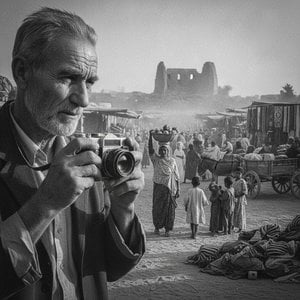
Explore the profound evolution of documentary photography through a cultural lens. From early social realism to modern visual narratives, discover how photographers have captured history, labor, and the human condition to redefine fine art.

Explore the profound emotional depth of documentary photography art. Discover how collectors curate powerful historical narratives through museum-quality black and white prints and fine art reproductions that preserve humanity's most resilient moments.

Explore the profound artistry of black and white photography. From historical mastery to the interplay of light and shadow, discover how monochrome captures timeless emotion and form through a sophisticated lens of art history.

Explore the profound evolution of contemporary photography through a connoisseur's lens. From monochrome mastery to digital innovation, discover how modern photographic works shape fine art collections and define our cultural legacy.


 实景预览
实景预览
 发送
发送 分享
分享
 详情
详情 指南
指南

 下载图片
下载图片
 相似作品
相似作品 X射线
X射线 幻灯片播放
幻灯片播放 统计数据
统计数据 阅读全文
阅读全文









 玻璃选项仅适用于110厘米以下的尺寸。


