Oil On CanvasWallArtDutch Baroque Painting
 1665
1665 29.0 x 24.0 cm
 冬宫博物馆 (Hermitage Museum)
由我们的艺术家按需定制,为您提供您所选尺寸及画框的布面手工油画。 ( 切换至版画销售渠道 切换至数字图像销售渠道)





























从与原作比例一致的预设尺寸中进行选择。

您可以输入自定义尺寸,以适配特定的画框或空间。如果所选尺寸与原图比例不符,我们将通过裁剪作品或添加手绘元素来扩展画面。数字样稿将在制作开始前发送给您确认。
请注意,屏幕预览无法准确反映实际的裁剪或扩展效果,只有样稿才能真实呈现最终的构图。
虽然我们提供定制尺寸服务,但为了保留原作比例,建议您从预设列表中选择尺寸。

The Violinist
复制品尺寸
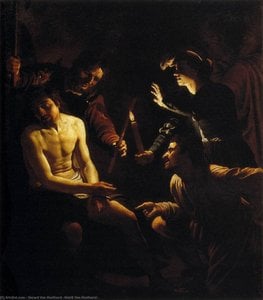
Gerard ter Borch’s “The Violinist,” painted circa 1665, stands as a quintessential example of Dutch genre painting during its golden age—a period characterized by meticulous observation of everyday life and an unparalleled mastery of light and texture. More than just a portrait, it's a carefully crafted tableau that invites contemplation on human emotion and artistic skill.
Captured in the Baroque style, Terborch’s technique is remarkable for its realism. He eschewed grand theatrical gestures, opting instead for a quiet scene focused on a single figure—a man seated at a table with two cups and bowls—engaged in playing the violin. The artist's meticulous attention to detail is evident in every brushstroke; observe how light dances across the varnished surface of the violin, illuminating its contours and creating an illusion of depth that transcends mere representation.
The painting emerged during a time when Dutch society was grappling with intellectual currents influenced by the Enlightenment. Terborch’s work reflects this shift towards rationalism while simultaneously retaining elements of traditional artistic conventions. Unlike earlier portraits that prioritized status and lineage, “The Violinist” delves into psychological nuance—the violinist's gaze is direct, conveying both concentration and perhaps a hint of melancholy. This focus on inner experience aligns with the broader humanist spirit of the era.
Music held profound significance in seventeenth-century Dutch culture, symbolizing intellect, refinement, and spiritual contemplation. The violin itself serves as a potent emblem—a tool for artistic expression and a conduit to emotion. Its placement on the table alongside simple objects like cups and bowls underscores Terborch’s intention to portray not just an individual but also his inner world. The careful arrangement contributes to the overall sense of serenity and understated beauty.
Terborch's genius lies in his ability to convey fleeting emotions with remarkable precision. “The Violinist” isn’t about grand pronouncements; it’s about capturing a single, contemplative moment—a man absorbed in his craft. The artist skillfully utilizes chiaroscuro—the dramatic interplay of light and shadow—to heighten the emotional resonance of the scene. This technique draws viewers into the violinist's inner life, prompting reflection on themes of solitude, passion, and artistic devotion.


1617 - 1681 , 荷兰

Explore the dramatic mastery of Dutch Baroque art. Discover how chiaroscuro and light define the Golden Age, from Rembrandt's shadows to maritime grandeur. Perfect for classic art enthusiasts seeking deep historical insight and inspiration.

Embark on a sophisticated journey through the Dutch Golden Age. Unveil the dramatic brilliance of Rembrandt’s chiaroscuro and the expressive landscapes of 17th-century masters in this authoritative exploration of light, shadow, and enduring artistic legacy.


 效果预览
效果预览
 分享
分享 分享
分享
 详情
详情

 下载
下载
 相似作品
相似作品 X射线
X射线 幻灯片播放
幻灯片播放 统计数据
统计数据 展开详情
展开详情









 玻璃选项仅适用于110厘米以下的尺寸。