
由我们的艺术家按需定制,为您提供您所选尺寸及画框的布面手工油画。 ( 切换至版画销售渠道 切换至数字图像销售渠道)





























从与原作比例一致的预设尺寸中进行选择。

您可以输入自定义尺寸,以适配特定的画框或空间。如果所选尺寸与原图比例不符,我们将通过裁剪作品或添加手绘元素来扩展画面。数字样稿将在制作开始前发送给您确认。
请注意,屏幕预览无法准确反映实际的裁剪或扩展效果,只有样稿才能真实呈现最终的构图。
虽然我们提供定制尺寸服务,但为了保留原作比例,建议您从预设列表中选择尺寸。

Head with Broken Pot
复制品尺寸
Georgia O’Keeffe’s “Head with Broken Pot,” painted in 1943, isn’t merely a depiction of an inanimate object; it's a profound meditation on mortality, femininity, and the quiet dignity of decay. The stark simplicity of the composition—a weathered skull resting atop a shattered ceramic pot—immediately commands attention, drawing the viewer into a space where the boundaries between life and death, beauty and ruin, become exquisitely blurred. O’Keeffe, already a master of distilling form to its essential elements, here elevates the commonplace to the realm of symbolic significance, inviting us to contemplate the fragility of existence and the enduring power of the human spirit.

Painted during a period of intense personal reflection and artistic exploration, “Head with Broken Pot” is inextricably linked to O’Keeffe’s relocation to the high desert landscapes of New Mexico in 1949. The muted palette—ochre browns, dusty blues, and stark whites—mirrors the arid beauty of the region, while the rough texture of the skull and pot evokes the weathered surfaces of ancient ruins. This setting profoundly influenced her work, providing a backdrop for her explorations of form, scale, and the relationship between nature and human perception. The New Mexico landscape became a constant source of inspiration, informing her unique visual language and allowing her to capture the essence of the Southwest’s stark beauty.
The symbolism within “Head with Broken Pot” is layered and open to interpretation. The skull, a universal emblem of mortality, anchors the composition, reminding us of our own inevitable fate. However, O’Keeffe doesn't present it as a morbid image; instead, she imbues it with a sense of quiet strength and resilience. The broken pot, positioned above the skull, adds another layer of complexity. It could represent shattered dreams, lost innocence, or the fragility of beauty—a poignant reminder that even the most enduring things can be irrevocably damaged. Some scholars have suggested the pot alludes to female genitalia, a recurring motif in O’Keeffe's work, further emphasizing the painting’s exploration of feminine power and vulnerability. The deliberate ambiguity invites viewers to project their own interpretations onto the scene.
O’Keeffe’s masterful technique is evident in the painting's precise execution and careful attention to detail. She employed a limited palette of earthy tones, applying thin layers of oil paint to create a textured surface that captures the rough quality of the materials. The composition is remarkably simple—a tight crop focusing solely on the skull and pot—yet it’s incredibly dynamic. The stark contrast between the smooth curves of the skull and the jagged edges of the broken pot creates a visual tension that draws the eye across the canvas. O'Keeffe’s use of scale further enhances this effect, making the skull appear monumental against the backdrop of the desert landscape. The painting is a testament to her ability to convey profound meaning through deceptively simple forms and techniques.
“Head with Broken Pot” remains one of Georgia O'Keeffe’s most iconic works, celebrated for its haunting beauty and enduring symbolism. High-quality reproductions capture the painting’s rich textures and subtle nuances, allowing viewers to experience O’Keeffe’s vision in their own homes. Whether displayed as a statement piece or incorporated into a minimalist interior design scheme, this artwork continues to resonate with audiences today, prompting reflection on life, death, and the enduring power of art.

1887 - 1986 , 美国

Embark on a sophisticated journey through art history with our exploration of still life masterpieces. Discover the profound symbolism behind classical paintings of drinks and fruit, curated for the true connoisseur seeking timeless elegance and academic depth.
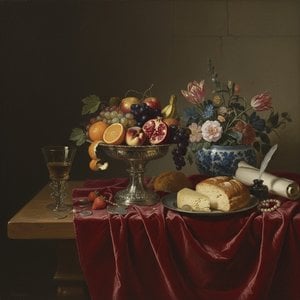
Embark on a sophisticated journey through the history of still life art. From Dutch Golden Age masterpieces to Baroque opulence, explore the profound symbolism and timeless beauty of the world's most exquisite table compositions.

Discover the profound beauty of fruit still life paintings. Explore the rich symbolism, Baroque mastery, and timeless allure of nature's bounty through an art-historical lens, perfect for collectors and enthusiasts of classical fine art.

Explore the profound beauty of fruit arrangement masterpieces. From Dutch Golden Age opulence to Baroque chiaroscuro, discover the art history, symbolism, and timeless elegance of classical still life paintings for the discerning collector.

Explore the profound evolution of Cubist still life, from Cézanne's structural foundations to the fragmented brilliance of Braque and Léger. Discover how geometric abstraction redefined reality through a sophisticated lens of form, color, and modern artistic mastery.


 效果预览
效果预览
 分享
分享 分享
分享
 详情
详情

 下载
下载
 相似作品
相似作品 X射线
X射线 幻灯片播放
幻灯片播放 统计数据
统计数据


 展开详情
展开详情









 玻璃选项仅适用于110厘米以下的尺寸。


