
由我们的艺术家按需定制,为您提供您所选尺寸及画框的布面手工油画。 ( 切换至版画销售渠道 切换至数字图像销售渠道)
您可以从与原作比例一致的预设尺寸中进行选择。

请输入您需要的宽度和高度,以适配您的画框或墙面。由于作品为手工绘制,若您选择不同的尺寸比例,艺术家可能会在画面边缘多画一些或稍作裁剪 —— 由您决定。在开始绘画之前,我们会为您发送一份数字效果图供您确认。本页面上展示的图片并非最终实物 —— 只有效果图才能反映真实结果。
The holy face 2
复刻品尺寸说明
Georges Rouault’s “The Holy Face 2” is not merely a depiction of a man's head; it’s an immersion into the heart of spiritual seeking, a testament to the artist’s deeply held convictions and his unique approach to portraying human suffering. Painted in the late 19th/early 20th century, this work embodies Rouault’s signature style – a bold, almost brutal honesty rendered through meticulously crafted dark contours framing luminous color fields. The image, dominated by stark black and yellow hues, immediately draws the viewer into a space of intense contemplation, echoing the artist's own profound faith.
The subject itself, a representation of Christ’s face, is presented with an unflinching realism. The slightly closed mouth suggests a quiet acceptance, while the open eyes convey a sense of enduring sorrow and perhaps even a glimmer of hope. Rouault deliberately avoids idealized beauty; instead, he offers a portrait of vulnerability and sacrifice – a deliberate choice reflecting his commitment to depicting the marginalized and suffering within society. The blue square background isn’t simply an aesthetic element; it serves to isolate and amplify the figure's solemnity, creating a visual echo of the religious iconography prevalent in medieval art, particularly stained glass.
Rouault’s artistic lineage is immediately apparent. His apprenticeship as a glass painter at fourteen profoundly shaped his aesthetic sensibilities, imbuing him with a deep understanding of color and form. This influence manifests powerfully in “The Holy Face 2” through the heavy black contouring – reminiscent of leaded glass – that defines the figure's features. These bold outlines aren’t merely decorative; they create a sense of depth and solidity, anchoring the image within a tangible space. The luminous yellow fields surrounding the face are equally significant, recalling the vibrant hues of stained glass and suggesting an inner radiance, a spiritual light emanating from Christ himself.
The painting's texture is deliberately rough, achieved through Rouault’s layering of oil paint – a technique he honed during his printmaking training. This tactile quality adds to the work’s emotional impact, conveying a sense of age and wear, as if the image has borne witness to centuries of devotion. The composite process, incorporating etching on paper, overlaying oil paint, and mounting on a wooden board, further emphasizes this layered approach – mirroring the complexities of faith and human experience.
“The Holy Face 2” resonates deeply with the devotional practices surrounding images of Christ’s face, particularly those associated with the “Holy Faces” tradition. Like the depictions found in the Shroud of Turin or the image on the Veronica veil, this painting seeks to evoke empathy and contemplation of Christ's suffering. Rouault’s work aligns with Gustave Moreau’s concept of “inner vision,” aiming not for a literal representation but rather an emotional response within the viewer. The redemptive tone, reminiscent of "Miserere et Guerre," suggests a profound engagement with themes of sacrifice, repentance, and ultimately, salvation.
Furthermore, Rouault's artistic trajectory – from his early fascination with religious symbolism to his later embrace of Expressionism – is evident in this piece. The stark contrasts, the heightened emotionality, and the focus on human vulnerability all point to a deeply personal and spiritually driven artistic vision. “The Holy Face 2” stands as a powerful testament to Rouault’s enduring legacy as one of France's most significant and emotionally resonant artists.
乔治·鲁奥 (Qiáozhì Lǔ'Ào) 的《The holy face 2》 的 X 光视图可在作品的 X射线检测 页面查看:通过十一层光学图层对图像进行交互式深度解析。
"The holy face 2" 的画幅格式为 Portrait。这对于规划复制品的摆放位置非常有用。
关于 乔治·鲁奥 (Qiáozhì Lǔ'Ào) 的《The holy face 2》 的统计数据可在该作品的 统计数据 页面查看:包括作品的每月访问量、艺术家作品的访问量,以及近期访客的国家和语言分布情况。


1871 - 1958 , 法国
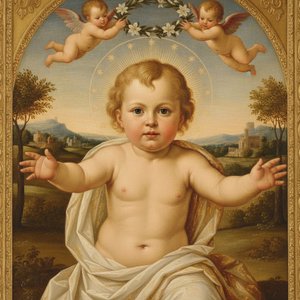
Explore the profound beauty of Baby Jesus in fine art history. From Raphael's Renaissance masterpieces to symbolic light, discover how classical painters captured divine innocence through masterful technique and sacred iconography.

Explore the profound power of religious symbolism in art history. From Renaissance masterpieces to sacred iconography, uncover the hidden meanings behind divine details in a deep dive into classical art excellence.
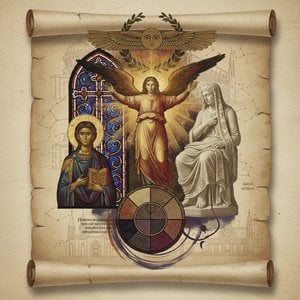
Explore the profound impact of spiritual themes in fine art. From Renaissance iconography to Baroque drama, discover how sacred symbolism and divine visions have shaped art history through a scholarly and reflective lens.


 实景预览
实景预览
 发送
发送 分享
分享
 详情
详情 指南
指南

 下载图片
下载图片
 相似作品
相似作品 X射线
X射线 幻灯片播放
幻灯片播放 统计数据
统计数据

 阅读全文
阅读全文






































 玻璃选项仅适用于110厘米以下的尺寸。


