效果预览效果预览 AR 预览AR 预览 Switch to Print Switch to Print购买手绘画作 购买手绘画作 分享分享
详情详情 加入收藏 加入收藏 下载下载 相似作品相似作品 X射线X射线 幻灯片播放幻灯片播放 StatsStats

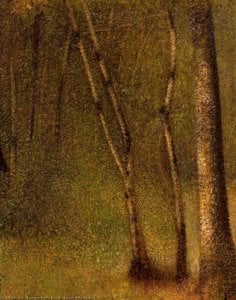
The tree trunk

'The Tree Trunk' by Georges Seurat exemplifies Pointillism, applying tiny dots of color to create luminous images rooted in scientific observation. Explore this masterpiece at WikiArt!

Georges Seurat(1859-1891),法国画家,是印象派之后的新印象主义创始人。他以点状绘画技术著称于世,通过运用纯色小点创造出光线和色彩的视觉融合效果,彻底改变了绘画艺术。他的代表作《巴黎铁塔》、《慵懒的圣奥纳》等作品展现了他对现代生活的独特视角与艺术表达能力。他是现代艺术发展的重要推动者,为后人开辟了新的创作道路。

购买高分辨率增强版数字图像,其品质远超在线预览。

每一份文件都由我们的内部专家使用先进工具与专业的后期润色技术精心打造。我们确保每一张图像都具备卓越的清晰度、精准的色彩还原度以及细腻的细节表现。

最终文件将在 72 小时内通过电子邮件交付,并针对专业、编辑及印刷用途进行了优化。其品质与顶级设计工作室、出版社和画廊所信赖的标准完全一致。

数字图像

下载高分辨率文件,用于个人展示、打印及创意项目。 (Switch to Print Switch to Print购买手绘画作 购买手绘画作)

最终价格

$ 24.90

每份数字图像订单均包含

专业数字图像交付,品质保障

选择 WahooArt.com,您获得的不仅仅是一张图像——您收到的是经过专业级增强、精雕细琢的数字艺术作品,并享有满意保证。以下是您的订单中自动包含的所有内容:

shipping_icon
邮件快速送达

您的高分辨率数字图像文件将在下单后 72 小时内通过电子邮件发送给您 —— 即可立即使用。

canvas_icon
AI 增强型数字文件

您的艺术品经过专业优化,结合先进的 AI 技术与人工修饰,确保呈现极致的细节、清晰度与色彩准确度。

insurance_icon
终身免费重发服务

不小心删除了文件或找不到了?没关系——我们将随时为您免费重发。

tax_icon
无需进口费用,始终如一

即刻拥有您的艺术作品,无需支付任何关税、税费或运费——数字下载始终免税。

color_icon
色彩精准保证

我们通过专业工具与色彩管理技术,确保您的数字图像尽可能真实地还原原作色彩。

return_icon
100天满意保证

如果您对所购数字图像不满意,我们将在100天内为您进行修改或提供100%的全额退款——无需任何理由。

guarantee_icon
100% 退款保证

不满意?在收到数字文件后的100天内,您可以申请全额退款——无需任何理由。

discount_icon
批量订单优惠

购买 3 张图片可享 10% 折扣 - 购买 5 张可享 15% 折扣 - 购买 10+ 张可享 20% 折扣。非常适合创意项目、画廊和机构使用。

作品概览

  • Subject: Landscape
  • Movement: Pointillism
  • Influences: Impressionism
  • Notable Elements: Optical illusion; Precise color dots
  • Artistic Style: Post-Impressionist
  • Location: Private Collection
  • Dimensions: 31 x 24 cm

艺术知识测试

每道题只有一个正确答案。

题目 1:
What artistic technique is Georges Seurat known for pioneering?
题目 2:
The painting depicts a scene featuring what prominent elements?
题目 3:
What was Seurat's primary motivation for employing Pointillism?
题目 4:
In what artistic movement did Georges Seurat operate?
题目 5:
What is the approximate size of “The Tree Trunk”?

A Pioneer of Luminous Precision: The Life and Art of Georges Seurat

Georges Pierre Seurat’s artistic legacy rests upon a singular achievement—the invention of Pointillism, a revolutionary technique that irrevocably altered the course of painting history. Born in Paris on December 2, 1859, Seurat possessed an innate fascination with scientific observation coupled with an extraordinary sensitivity to color and light – qualities that distinguished him from his Impressionist peers and continue to resonate powerfully within contemporary artistic discourse. His formative years were marked by a comfortable upbringing fostered by his father’s profession as property speculator, affording young Georges access to invaluable art education and nurturing the seeds of his future creative endeavors. The burgeoning Impressionist movement captivated Europe during Seurat's early adulthood, yet he recognized its limitations in capturing the subtleties of perception. Influenced by Henri Matisse and Eugène Boudin, Seurat embarked on a quest for a more profound method of representation—one rooted in mathematical precision and underpinned by the principles of optics. This intellectual pursuit culminated in the development of Pointillism, a technique championed by Seurat alongside Paul Signac, wherein pigment is applied in tiny dots rather than blended strokes. This seemingly simple approach demanded meticulous calculation and unwavering adherence to scientific observation; each dot was positioned with deliberate accuracy to recreate the illusion of color through simultaneous juxtaposition—a concept that challenged conventional artistic dogma. “The Tree Trunk,” created circa 1890-91, exemplifies Seurat’s masterful execution of Pointillism. Measuring 31 x 24 cm, this painting showcases a striking depiction of a tree trunk against a backdrop of muted hues – primarily ochre and umber – skillfully rendered with countless dots of pigment. The composition is deliberately restrained, prioritizing clarity and visual impact over elaborate ornamentation. Unlike Impressionist canvases characterized by loose brushstrokes and atmospheric haze, “The Tree Trunk” presents an almost crystalline surface, reflecting Seurat’s unwavering commitment to optical realism. Beyond its technical brilliance, "The Tree Trunk" carries symbolic weight, mirroring the broader intellectual currents of the era. Pointillism itself represented a reaction against Impressionistic subjectivity, asserting instead the primacy of objective observation and scientific inquiry. The tree trunk symbolizes strength and resilience—qualities that align with Seurat’s philosophical stance as a champion of rational thought amidst the burgeoning Romantic fervor. Furthermore, the muted color palette evokes feelings of tranquility and contemplation, inviting viewers to immerse themselves in the painting's serene atmosphere. The enduring appeal of “The Tree Trunk” lies not merely in its aesthetic qualities but also in its profound emotional impact. Seurat’s meticulous technique succeeds in conveying a sense of stillness and grandeur—a testament to his ability to transform scientific principles into artistic expression. Reproductions of this iconic artwork continue to inspire interior designers and collectors alike, demonstrating the timeless relevance of Seurat's vision – a vision that celebrates luminous precision as a conduit for capturing the essence of beauty and truth.
  • Artist: Georges Pierre Seurat
  • Born Year: 1859
  • Death Year: 1891
  • Birth City: Paris
  • Birth Country: France
Additional Resources: Explore more about Georges Seurat’s life and work at WikiArt.org: https://www.wikiart.org/en/georges-seurat/the-tree-trunk

艺术家简介

乔治·修拉:点彩主义的先驱与光学的探求

乔治·皮埃尔·修拉(Georges Pierre Seurat,1859年12月2日 – 1891年3月29日)是一位法国画家和绘图家,他以开创性的点彩画法而闻名于世。他的巨幅作品《格朗代热图岛上的星期日下午》(A Sunday Afternoon on the Island of La Grande Jatte)标志着新印象主义运动的开端,其绘画技巧利用对比色的小点来呈现光线效果,深深地影响了后世艺术的发展。修拉的一生虽然短暂,却以其独特的视角和严谨的方法,彻底改变了人们对色彩、光线与绘画之间的关系的理解。他不仅仅是一位画家,更是一位科学家,一位哲学家,用他的画笔探索着光学与视觉的奥秘。

从学院派训练到光学理论

修拉的艺术之路并非一蹴而就,而是经历了一个渐进式的演变过程。早年,他在 École des Beaux-Arts 学习,接受了传统的绘画训练,掌握了素描和构图的基本技巧。然而,他很快便对这些传统规范产生了质疑,开始寻求一种更科学、更理性的绘画方法。修拉沉浸于色彩理论的研究中,深受科学家如米歇尔·欧仁·舍夫勒(Michel Eugène Chevreul)和奥格登·鲁德(Ogden Rood)的影响,他们对色彩的相互作用以及视觉感知进行了深入研究。这些研究成为了他革命性技巧——点彩主义的基础。修拉的核心理念在于将纯色的小点应用于画布上,依靠观者的眼睛来混合这些颜色,从而产生一种充满活力、光彩夺目的效果。这不仅仅是追求更鲜艳的色彩,更是为了理解人类视觉系统如何感知光线和色彩,并利用这种知识创造出更加生动、引人入胜的绘画体验。他会用康泰炭笔在粗糙的纸上绘制详细的草图,精确地规划每个小点的放置位置,体现了他艺术创作过程中的近乎数学般的严谨性。

创新之作:修拉的主要作品与艺术愿景

《格朗代热图岛上的星期日下午》(1884-1886)是修拉研究和实验的集大成者,也是新印象主义运动的开端。这幅巨大的画作描绘了巴黎人在塞纳河畔享受悠闲时光的场景,充分展现了他点彩主义的精髓。人物被细致地描绘成精心排列的色彩小点,仿佛闪烁着光芒,营造出一种宁静而安详的氛围。《圣德尼的蓿草》(Alfalfa, Saint-Denis)展示了他将色彩理论应用于乡村景观的方式,而早期作品如《圣瓦勒恩的风景》(Landscape at Saint-Ouen)则揭示了他的风格演变和对光线与气氛的捕捉兴趣。即使是对现代巴黎生活的描绘,例如《埃菲尔铁塔》(The Eiffel Tower),也通过他的独特技巧得到了升华,展现了工业现代感与艺术创新的和谐统一。《阿尼耶尔河畔的沐浴者》(Bathers at Asnières)是另一件重要的作品,以其独特的风格探索了休闲和现代生活的主题,预示着《格朗代热图岛上的星期日下午》中更精致的处理手法。这些画作不仅仅是对场景的再现,更是精心设计的视觉实验,旨在探索色彩与感知的可能性。

持久的影响:历史意义与艺术遗产

尽管修拉的一生短暂——他在31岁时就去世了(1891年),但他对艺术世界的贡献是深远而广泛的。他的作品挑战了传统的艺术惯例,为众多后来的艺术运动铺平了道路。他对主观表达和探索新技巧的重视,引起了寻求摆脱学院派束缚的艺术家的共鸣。修拉的影响可以体现在野兽派画家对大胆色彩和表现性笔触的运用、立体主义者对形式进行几何解构以及抽象表现主义者对情感强度和即兴创作的追求之中。修拉的科学方法,虽然最初备受争议,但最终拓宽了艺术可能性的定义。他证明了艺术既可以具有理性的严谨性,又可以充满情感的感染力,这种结合继续激励着当代艺术家。修拉的作品不仅仅是技术创新的见证,更是对现代生活本质的深刻捕捉,以无与伦比的精确性和美感固化了他作为现代艺术先驱者的地位。他的画作依然证明了观察、实验和人类理解周围世界愿望的力量,通过艺术表达这一独特的视角。
苏拉

苏拉

1859 - 1891 , 法国

基本信息

  • 全名: 乔治·皮埃尔·修拉
  • 出生地点: 法国巴黎
  • 出生日期: 1859年12月2日
  • 去世日期: 1891年3月29日
  • 受影响的艺术家或运动:
    • 野兽派
    • 立体主义
    • 抽象表现主义
  • 国籍: 法国
  • 影响艺术家:
    • 米歇尔·欧文
    • 奥格登·鲁德
  • 艺术运动或风格: 新印象主义,点彩画法
  • 著名作品:
    • 大本岛星期日下午
    • 阿尼埃尔的沐浴者
    • 圣德尼的阿尔法