Oil On CanvasWallArtPost-Impressionism
 188219th Century
 16.0 x 25.0 cm
 大都会艺术博物馆
博物馆级艺术微喷或帆布版画,制作高效,并提供多种饰面选择。 ( 购买手绘画作 切换至数字图像销售渠道)





























从与原作比例一致的预设尺寸中进行选择。

您可以输入自定义尺寸,以适配特定的画框或空间。如果您选择的尺寸与原图比例不符,我们将对作品进行裁剪,或通过镜像填充/纯色填充边缘的方式来扩展图像。在开始制作之前,我们会向您发送一份数字效果图供您确认。
请注意,屏幕上的预览并不能反映实际的裁剪或扩展效果。只有效果图才能准确展示最终的构图。
虽然我们提供定制尺寸,但为了保持原图比例,我们建议您从预设列表中选择尺寸。

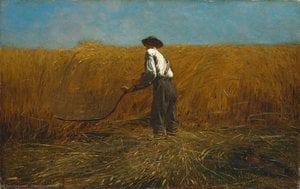
The Mower
复制品尺寸
Georges Pierre Seurat, a name synonymous with innovation and meticulous observation within the Post-Impressionist movement, irrevocably altered the landscape of painting in late 19th century France. Born in Paris on December 2nd, 1859, his artistic journey began amidst a burgeoning fascination for scientific principles – specifically optics – which would ultimately propel him to create one of the most recognizable and influential artworks of his era: “The Mower.” Now housed at The Metropolitan Museum of Art in New York City, this deceptively simple depiction holds profound significance beyond its tranquil subject matter.
"The Mower," measuring just 16 x 25 cm, is executed with remarkable care using oil on canvas. Seurat’s genius lay not merely in capturing a rural scene but in applying his groundbreaking technique – Pointillism – to achieve an unprecedented level of luminosity and color vibrancy. Unlike Impressionists who blended pigments wet-on-wet, Seurat painstakingly applied tiny dots of pure pigment onto the canvas surface. This method, rooted in Helmholtz’s theory of color perception, aimed to stimulate the eye's ability to synthesize colors optically, resulting in a shimmering effect that transcends mere representation.
While “The Mower” doesn't showcase the full extent of Seurat’s later explorations into Chromoluminarism—where he utilized a broader palette and manipulated tonal gradations—it represents an essential step in establishing Pointillism as his signature style. The painting brilliantly portrays a solitary farmer diligently cutting grass with a scythe, bathed in dappled sunlight. A bird soaring overhead introduces a subtle element of dynamism against the backdrop of stillness, emphasizing the artist’s focus on capturing not just what is seen but how it feels—a profound sense of calm and contemplative engagement.
"The Mower" precedes Seurat’s monumental masterpiece, “A Sunday Afternoon on the Island of La Grande Jatte,” marking a pivotal moment in his artistic development. However, it stands alone as an exemplary embodiment of his early aesthetic sensibilities—a desire to distill complex visual information into its purest form. Alongside this serene depiction are other notable works like Landscape at Saint-Ouen and The Gardener, all residing within The Musée de l'Annonciade and numerous private collections. These pieces underscore Seurat’s unwavering commitment to exploring the interplay between observation and artistic expression.
Georges Seurat’s legacy extends far beyond the confines of 19th century France. His innovative techniques and stylistic vision continue to inspire artists today, demonstrating the enduring power of artistic experimentation and intellectual curiosity. “The Mower,” with its masterful use of color and composition, serves as a testament to Seurat's ability to transform everyday life into an extraordinary visual experience—a timeless reminder that beauty can be found in simplicity and precision.

1859 - 1891 , 法国

Explore the transformative era of Post-Impressionism. Discover how masters like Cézanne and Matisse revolutionized color and form, moving beyond Impressionism to shape modern art history through structural innovation and expressive emotion.

Unveil the profound revolution of Post-Impressionism. Explore how masters like Van Gogh and Cézanne utilized bold colors and emotional depth to transcend mere representation, laying the foundation for modern art. A sophisticated journey through history's most emotive brushstrokes.

Explore the vibrant evolution of Post-Impressionism. From Seurat's revolutionary Pointillism to the emotional depth of masters, discover how this movement redefined modern art history through color, structure, and unparalleled creative expression.

Master the nuances of Impressionism vs. Post-Impressionism with our expert guide. Explore the revolutionary shift from Monet’s fleeting light to Van Gogh’s emotional depth. Discover how these iconic movements continue to inspire fine art collectors and modern interiors today.


 效果预览
效果预览
 分享
分享 分享
分享
 详情
详情 Guide
Guide

 下载
下载
 相似作品
相似作品 X射线
X射线 幻灯片播放
幻灯片播放 统计数据
统计数据 展开详情
展开详情









 玻璃选项仅适用于110厘米以下的尺寸。