
博物馆级艺术微喷或帆布版画,制作高效,并提供多种饰面选择。 ( 购买手绘画作 切换至数字图像销售渠道)





























从与原作比例一致的预设尺寸中进行选择。

您可以输入自定义尺寸,以适配特定的画框或空间。如果您选择的尺寸与原图比例不符,我们将对作品进行裁剪,或通过镜像填充/纯色填充边缘的方式来扩展图像。在开始制作之前,我们会向您发送一份数字效果图供您确认。
请注意,屏幕上的预览并不能反映实际的裁剪或扩展效果。只有效果图才能准确展示最终的构图。
虽然我们提供定制尺寸,但为了保持原图比例,我们建议您从预设列表中选择尺寸。

Seated Nude: Study for
复制品尺寸
Georges Seurat's “Seated Nude: Study for” is not merely a drawing; it’s a distilled essence of the artist’s revolutionary approach to art, a poignant glimpse into his creative process. Completed in 1883, this monochromatic work immediately draws the viewer into a world of meticulous detail and profound emotional resonance. The subject – a male nude seated in profile – is rendered with an almost obsessive precision using dry point technique, creating a surface that vibrates with texture and depth. It’s a study, yes, but one brimming with a quiet dignity and vulnerability that transcends its preparatory status.
The composition centers on the figure's back and shoulders, subtly angled towards the viewer, inviting a sense of intimacy despite the formal restraint. The lower body is deliberately obscured by shadow, fostering an atmosphere of contemplation – a suggestion of introspection rather than overt sensuality. Seurat’s genius lies in his ability to convey complex emotion through deceptively simple forms. This isn't a celebration of the nude form; it’s a meditation on stillness, solitude, and perhaps even a touch of melancholy.
Executed with an extraordinary level of control, “Seated Nude” exemplifies Seurat's groundbreaking technique of Pointillism – or, as he termed it, chromoluminarism. Rather than blending colors directly on the canvas, Seurat employed thousands of tiny, distinct dots of pure color, meticulously arranged to create optical mixtures when viewed from a distance. This method, rooted in scientific observation of how the eye perceives light and color, was radically innovative for its time.
The drawing isn’t just about technique; it’s about the *process* of seeing and representing reality. Seurat wasn’t interested in simply copying what he saw; he was attempting to capture the very essence of light and form through a system of scientific observation.
“Seated Nude: Study for” emerged during a pivotal moment in art history – the transition from Impressionism to modernism. Georges Seurat, born in Paris in 1859, was deeply influenced by artists like Eugène Delacroix and the scientific theories of Charles Darwin, particularly regarding perception and color. He sought to move beyond the fleeting impressions of Impressionism and create a more structured, rational approach to art.
His work aligns with the broader intellectual currents of the late 19th century, reflecting a fascination with science, technology, and the pursuit of objective truth. Seurat’s meticulous methodology and his exploration of optical effects paved the way for later movements such as Neo-Impressionism and Fauvism. The drawing stands as a crucial bridge between these artistic traditions.
Beyond its technical brilliance, “Seated Nude” possesses a subtle yet powerful symbolic resonance. The pose itself – seated, contemplative, slightly vulnerable – evokes a sense of introspection and quiet dignity. The somber tone and the deliberate use of monochrome contribute to this atmosphere of melancholy and contemplation.
It’s important to note that Seurat was not simply depicting a nude figure; he was exploring themes of human experience—the beauty of stillness, the weight of solitude, and perhaps even the acceptance of mortality. This drawing invites us to pause, reflect, and consider our own place within the larger context of existence.

1859 - 1891 , 法国

Explore the vibrant evolution of Post-Impressionism. From Seurat's revolutionary Pointillism to the emotional depth of masters, discover how this movement redefined modern art history through color, structure, and unparalleled creative expression.
Discover the mesmerizing world of Pointillism. Explore the revolutionary techniques of Georges Seurat, the science of optical color mixing, and the enduring legacy of Neo-Impressionism in this expert guide for classical art enthusiasts.

Explore the scientific brilliance of Seurat and Signac. Discover how Pointillism revolutionized color through optical mixing and light, offering a profound look into the Neo-Impressionist movement for true art connoisseurs and collectors.
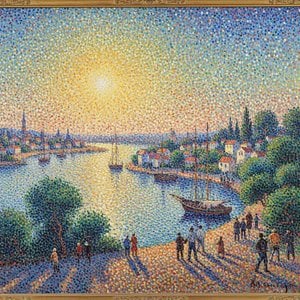
Embark on a sophisticated journey into the luminous world of Neo-Impressionism. Uncover the scientific brilliance of Pointillism, from Georges Seurat’s revolutionary color theory to the mesmerizing magic of the dot. An expert exploration for true art history enthusiasts.


 效果预览
效果预览
 分享
分享 分享
分享
 详情
详情

 下载
下载
 相似作品
相似作品 X射线
X射线 幻灯片播放
幻灯片播放 统计数据
统计数据


 展开详情
展开详情









 玻璃选项仅适用于110厘米以下的尺寸。


