
博物馆级艺术微喷或帆布版画,制作高效,并提供多种饰面选择。 ( 购买手绘画作 切换至数字图像销售渠道)





























从与原作比例一致的预设尺寸中进行选择。

您可以输入自定义尺寸,以适配特定的画框或空间。如果您选择的尺寸与原图比例不符,我们将对作品进行裁剪,或通过镜像填充/纯色填充边缘的方式来扩展图像。在开始制作之前,我们会向您发送一份数字效果图供您确认。
请注意,屏幕上的预览并不能反映实际的裁剪或扩展效果。只有效果图才能准确展示最终的构图。
虽然我们提供定制尺寸,但为了保持原图比例,我们建议您从预设列表中选择尺寸。

Peasant Laboring
复制品尺寸
In the quiet, sun-drenched landscapes of rural France, Georges Seurat captured more than just a moment in time; he engineered a revolution of light. “Peasant Laboring,” painted around 1886-87, stands as a breathtaking testament to this scientific and artistic mastery. At first glance, the viewer is greeted by a scene of pastoral tranquility: a solitary farmer, bent with rhythmic dedication over his field, working under the radiant glow of the midday sun. Yet, beneath this seemingly simple subject lies a profound complexity that transcends mere representation. The painting does not just depict labor; it celebrates the very physics of vision, inviting the observer to participate in a dance of light and color.
The brilliance of this masterpiece is found in Seurat’s pioneering use of Pointillism, or more accurately, Chromoluminarism. Eschewing the rapid, spontaneous brushstrokes of his Impressionist predecessors, Seurat adopted a method of extreme discipline. He applied tiny, distinct dots of pure pigment to the canvas, relying on the science of optics rather than traditional blending. As your eyes move across the surface, these individual points of color undergo an optical mixing process within the retina itself. This technique allows the colors to vibrate with an unparalleled luminosity, creating a shimmering effect where the air seems to hum with the warmth of the summer sun and the vitality of the earth.
Beyond its technical rigor, “Peasant Laboring” possesses a deep, emotive resonance that makes it a captivating centerpiece for any curated collection. The composition is anchored by the figure of the laborer, whose presence evokes the timeless connection between humanity and the land. In the background, the subtle inclusion of other figures and horses suggests the industrious pulse of farm life, adding layers of narrative depth to the scene. There is a profound sense of order and harmony here—a reflection of Seurat’s desire to find a logical, almost mathematical beauty within the natural world.
For the discerning collector or interior designer, this artwork offers a unique blend of intellectual stimulation and aesthetic serenity. The painting’s ability to transform a commonplace rural scene into an extraordinary optical experience provides a focal point that is both sophisticated and inviting. Whether placed in a modern gallery setting or a classic study, the luminous quality of Seurat's dots brings a sense of movement and life to a room. To possess a reproduction of this work is to bring home a piece of the Belle Époque—a fragment of an era defined by optimism, scientific discovery, and the eternal pursuit of capturing the fleeting magic of light.

1859 - 1891 , 法国
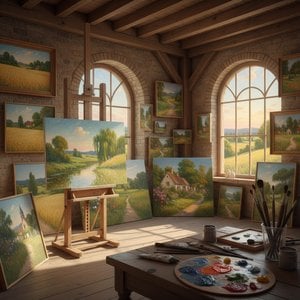
Discover the profound tranquility of rural art through an expert exploration of Impressionist landscapes. From pastoral scenes to textured oil masterpieces, learn how timeless nature-inspired artworks bring enduring elegance and serenity to sophisticated collectors.

Explore the ethereal beauty of Impressionist landscapes. Discover how masters like Monet captured fleeting light through color and texture, and learn to curate these timeless, luminous masterpieces for your home collection.


 效果预览
效果预览
 分享
分享 分享
分享
 详情
详情

 下载
下载
 相似作品
相似作品 X射线
X射线 幻灯片播放
幻灯片播放 统计数据
统计数据

 展开详情
展开详情









 玻璃选项仅适用于110厘米以下的尺寸。


