博物馆级艺术微喷或帆布版画,制作高效,并提供多种饰面选择。 ( 订购纯手工绘制画作 切换至数字图像销售渠道)





























您可以从与原作比例一致的预设尺寸中进行选择。

请输入您所需的宽度和高度,以适配您的画框或墙面。由于印刷品只能进行裁剪,无法超出原图尺寸,因此若比例不一致,画面的一部分将会被裁切。在正式印刷之前,我们会为您发送一份数字效果图供您确认。本页面显示的图片并非最终裁剪后的效果——只有效果图才能展示真实的裁剪情况。
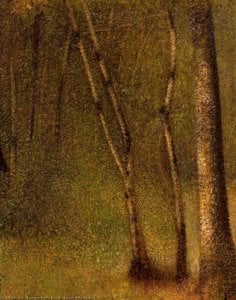
Man Dining
复刻品尺寸
Georges Pierre Seurat (1859-1891) stands as a monumental figure in the artistic landscape of late 19th century France, irrevocably altering perceptions of painting through his pioneering exploration of Pointillism. More than just a technique—though undeniably revolutionary—Pointillism represented a profound intellectual commitment to scientific principles and an unwavering dedication to capturing optical reality. Seurat’s brief but impactful career wasn't merely about applying pigment; it was about fundamentally reshaping how artists understood the relationship between perception and representation.
Seurat’s intellectual framework was inseparable from his artistic practice. He meticulously studied the work of Henri Poincaré, a mathematician who championed the idea that color perception is not simply how objects appear but rather how they are interpreted by the eye—a concept central to Pointillism's theoretical underpinning. This dedication to scientific rigor distinguishes Seurat’s approach from many of his contemporaries and underscores his conviction that art could benefit from incorporating insights into sensory experience.
“Man Dining” exemplifies Seurat’s early experiments with Pointillism, demonstrating a willingness to challenge established artistic conventions. While he would later refine the technique—particularly in monumental canvases like ‘A Sunday on La Grande Jatte’—this smaller study remains a testament to his foundational understanding of optical mixing and his unwavering commitment to capturing the essence of visual perception. It stands as an enduring symbol of Seurat's transformative contribution to modern art.
The artwork’s subdued palette and textured surface lend themselves beautifully to interior design projects seeking a calming, contemplative aesthetic. Consider incorporating reproductions in spaces where tranquility is valued—perhaps alongside complementary shades of grey or earthy tones—to evoke the same sense of quiet observation that characterizes Seurat's masterpiece.
您可以在作品的效果预览页面查看乔治·修拉 的《Man Dining》的预览。
"Man Dining" 艺术版画的推荐用途为 Accent。
乔治·修拉 也以 乔治·皮埃尔·修拉, 乔治·彼得·修拉, 乔治·皮埃尔·苏拉 等其他名称为人所知。

若要理解现代绘画的发展轨迹,便不得不审视乔治·修拉那短暂而炽热的一生。他于1859年12月2日出生于法国巴黎,是恩斯特琳·费夫尔与安托万·克里斯托姆·修拉之子,后者曾从一名法律官员转型为香槟地区的地产投机商。这种家庭背景为他在巴黎艺术界迅速且自律的崛起提供了必要的稳定性。他不仅仅是在绘画,更是在构建一种全新的视觉方式,这种方式挑战了前辈艺术家们那种随性而发的创作冲动。
他的艺术生涯如一场短促的冲刺,而非漫长的马拉松。1891年3月29日,年仅31岁的他便在法国巴黎撒手人寰。这种过早的终结,使得他的作品呈现出一种高度浓缩且深思熟虑的特质,缺乏同时代艺术家那种漫长且松散的演变过程。即便是在他那些未竟的遗作中,例如《马戏团》,也能窥见一颗始终沉浸在光线结构力学与社会秩序思考中的灵魂。他用一种经过精密计算的、永恒的精确感,取代了印象派那种转瞬即逝的视觉印象。
他短暂生命所带来的影响力,可以通过其技术创新的极高密度来衡量。他将艺术从对瞬间情感的即兴表达,转向了一种系统化、近乎数学般的色彩应用。他在19世纪艺术史上的地位,正是由这种拒绝仅仅依赖直觉的严谨性所定义的。他在画布中寻求一种逻辑,这种逻辑至今仍清晰地跳动在他留下的每一个色点之中。
乔治·修拉的艺术轨迹始于巴黎,在他出生后不久,他的家人便迁居到了马让塔大道(Boulevard de Magenta)。他的成长环境得益于父亲安托万·克里斯托姆·修拉(Antoine Chrysostome Seurat)所提供的稳定生活,后者曾是一名法律官员,后来转型为房地产投机商。正是这种优渥的家庭背景,为这位年轻艺术家提供了接受正统艺术教育的机会,使他有能力去挑战19世纪末已然成型的艺术规范。他的艺术成长并非仅仅依赖于直觉的迸发,而是建立在严谨且系统化的训练基础之上。
他的正式艺术教育始于市立雕塑与绘画学校(École Municipale de Sculpture et Dessin),并在雕塑家贾斯汀·勒奎恩(Justin Lequien)的指导下学习。这种早期对雕塑艺术的接触,很可能赋予了他后期作品中那种具有结构感、甚至带有浮雕般庄重感的构图特质。到了1878年,他已进入法国艺术教育的高层殿堂,考入了享有盛誉的国立高等美术学院(École des Beaux-Arts)。在校期间,他师从 亨利·雷曼(Henri Lehmann),这段学习经历赋予了他扎实的传统技法与构图纪律,而他最终将通过科学分析的方式,去解构并重塑这些他曾深耕的艺术准则。
乔治·修拉用一种经过精密计算且系统化的光影处理方式,取代了前辈们那种自发且直觉式的笔触。他开创了点彩画法(Pointillism),这种技法通过在画布上点缀细小、清晰的纯色点阵来构建画面。这并非一种单纯为了装饰的艺术选择,而是一种功能性的科学实践。通过运用分色法(Divisionism),他将物体的固有色分解为独立的色点,转而依靠观者的眼睛在视觉上完成色彩的混合。他将这一过程称为“色彩光学”(Chromoluminarism),将色彩视为一门严谨的科学,而非仅仅是感性的情绪。他试图通过对颜料位置的精确掌控,去重构视觉感知的物理本质。
这种严谨性同样延伸到了他的前期准备工作中。他经常在纹理粗糙的纸张上使用康泰炭笔来勾勒构图,这种高度自律的创作方式,确保了他最终的大型作品中的每一个色点,都是那个庞大且经过数学精密编排的结构的一部分。由此产生的画面表面拥有一种律动感与震颤感,这种生命力源于单个色点与视网膜上形成的统一图像之间的张力。他的作品至今仍是一场关于“技术严谨性如何主导视觉感知”的深刻研究。
乔治·修拉的艺术愿景建立在一种严谨且近乎数学化的光影逻辑之上。他毅然拒绝了前辈们那种随性、感性的笔触,转而追求一种对视觉感知的系统性重构。这种方法将画布从单纯的观察对象,转化为了一个进行光学计算的实验场。他的创作并非仅仅是在描绘风景,而是试图通过色彩理论的精确应用,去捕捉场景中那本质的、永恒的结构。他更像是一位视觉体验的设计师,基于人类眼睛处理光线与颜料的生理机制,构建出一场感官盛宴。
他那些宏大的构图作品,无不彰显着他对秩序的执着追求。《格朗德热图岛上的星期日下午》(1884-1886)以其纪念碑式的宏伟尺度,通过密集的点彩马赛克,呈现出巴黎人在塞纳河畔悠闲的午后时光。这件作品堪称新印象主义的宣言,它用一种永恒的、雕塑般的静谧感,取代了印象派式的流动感。同样,在《阿尼耶尔河畔的沐浴者》(1884)中,我们可以看到他早期的艺术尝试——将古典主义中如浮雕般的人物造型,与塞纳河畔现代工业化的现实背景巧妙地融合在一起。这些画作有力地证明,他的艺术兴趣始终处于科学精密性与当代生活体验的交汇点。
即便是在他生命最后阶段那些未竟的尝试中,依然能窥见他对于“运动”与“结构”之间张力的深刻思考。《马戏团》(1890–91)运用新印象主义的风格去捕捉公共盛宴中的澎湃能量,却依然被他那标志性的、对形式的精准掌控所锚定。而在《正在化妆的年轻女子》(1889-1890)中,他将这种技巧聚焦于单一的主体,通过高度构建的场景,探讨了人类虚荣心背后的艺术虚构性。乔治·修拉的创作是一场永无止境的探索,他试图在光影中寻找到一种逻辑,而这种逻辑,是印象派那种转瞬即逝的瞬间捕捉所无法企及的。
乔治·修拉对现代艺术发展轨迹的影响,可以通过他所迫使后续艺术运动发生的激进变革来衡量。通过用一种系统性的、科学的色彩与光线处理方式,取代了前辈们那种直觉式的笔触,他极大地拓宽了绘画所能达到的表现边界。这种严谨的理性思维,将艺术从单纯的再现层面提升到了对感知进行结构化分析的高度。他对于颜料光学混合的坚持,从根本上改变了观者与画布进行互动的方式。
他技术创新所产生的涟漪,早已超越了新印象主义的圈子。野兽派画家继承了他对大胆、非自然主义色彩的强调;而立体主义者则从他将形式解构为几何构件的能力中汲取灵感。即便是在专注于手势原始能量的抽象表现主义者那里,也能看到他将色彩从传统调色限制中解放出来的深远影响。他证明了艺术既可以是一场严谨的智力追求,也可以是捕捉现代生活本质的一种手段。
乔治·修拉 的代表性杰作包括:

1859 - 1891 , 法国

Explore the scientific brilliance of Seurat and Signac. Discover how Pointillism revolutionized color through optical mixing and light, offering a profound look into the Neo-Impressionist movement for true art connoisseurs and collectors.

Explore the vibrant evolution of Post-Impressionism. From Seurat's revolutionary Pointillism to the emotional depth of masters, discover how this movement redefined modern art history through color, structure, and unparalleled creative expression.

 实景预览
实景预览
 分享
分享 分享
分享
 详情
详情 指南
指南

 下载作品
下载作品
 相似作品
相似作品 X射线
X射线 幻灯片播放
幻灯片播放 问答
问答
 统计数据
统计数据
 展开全文
展开全文









 玻璃选项仅适用于110厘米以下的尺寸。