
x































从与原作比例一致的预设尺寸中进行选择。

您可以输入自定义尺寸,以适配特定的画框或空间。如果所选尺寸与原图比例不符,我们将通过裁剪作品或添加手绘元素来扩展画面。数字样稿将在制作开始前发送给您确认。
请注意,屏幕预览无法准确反映实际的裁剪或扩展效果,只有样稿才能真实呈现最终的构图。
虽然我们提供定制尺寸服务,但为了保留原作比例,建议您从预设列表中选择尺寸。

The Round Table 1
复制品尺寸
To gaze upon Georges Braque’s “The Round Table” is to witness the precise moment when the mirror of traditional art was shattered and reassembled into a more profound, intellectual truth. Painted during the transformative years between 1908 and 1912, this masterpiece serves as a cornerstone of early Cubism, a movement that irrevocably altered the trajectory of Western art history. At first glance, the composition appears to be a humble tribute to the quietude of daily life—a tabletop setting featuring two apples, a knife, a book, and a bowl. Yet, beneath this deceptively simple arrangement lies a radical reimagining of perspective. Braque does not merely seek to mirror the world; he seeks to question its very nature, inviting the viewer to look past the surface of objects to discover the structural rhythm and geometric truth hidden within.
The technique employed here is a masterful execution of Analytical Cubism. Rather than relying on the singular, fixed viewpoint that had dominated art since the Renaissance, Braque employs fragmentation and simultaneous viewpoints to dissect his subjects. He utilizes a vocabulary of cubes, cylinders, and cones to break down commonplace items into their constituent parts, presenting multiple facets of an object on a single, flattened canvas. This deliberate disruption of illusionistic space prioritizes an intellectual understanding over mere visual realism. For the discerning collector or interior designer, this piece offers a sophisticated interplay of form and depth, providing a focal point that is both intellectually stimulating and visually complex.
The historical context of “The Round Table” is essential to grasping its profound impact. During this formative period, Braque was working in close, intense collaboration with Pablo Picasso, and their respective explorations of Cubism were often so intertwined they became nearly indistinguishable. Braque was deeply moved by the late works of Paul Cézanne, specifically the way the master explored underlying geometric structures within natural forms. In “The Round Table,” we see Braque pushing Cézanne’s influence into the realm of true abstraction. He meticulously analyzes and reconstructs visual information, mirroring a scientific rigor that reflected the era's broader intellectual ferment and rapid industrialization.
Beyond its technical brilliance, the painting carries a subtle, evocative symbolism. The very title, “The Round Table,” evokes the legendary Arthurian mythos, suggesting a sense of unity, equality, and shared purpose—a poetic contrast to the fragmented, analytical approach used to depict the objects. This tension between the classical weight of the subject matter and the avant-garde execution creates an emotional resonance that is both grounding and revolutionary. For those looking to adorn a space with art that speaks of both heritage and innovation, this reproduction offers an unparalleled opportunity to bring a piece of the modern revolution into the contemporary home.


1882 - 1963 , 法国
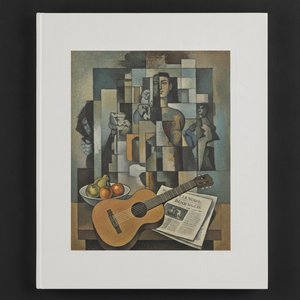
Journey through the revolutionary world of Georges Braque. Explore 25 iconic Cubist masterpieces, from geometric abstractions to timeless still lifes. Find inspiration for your collection with museum-quality art reproductions. Discover all masterpieces on WahooArt.com.
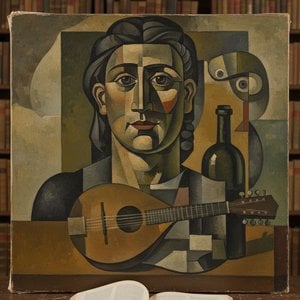
Master the complexities of Analytical Cubism with our expert guide. Explore how Picasso and Braque revolutionized art through fragmented perspective, geometric abstraction, and muted palettes—essential knowledge for every discerning art collector.

Explore the profound evolution of Cubist still life, from Cézanne's structural foundations to the fragmented brilliance of Braque and Léger. Discover how geometric abstraction redefined reality through a sophisticated lens of form, color, and modern artistic mastery.


第一时间获取最新的艺术新闻、独家优惠及装饰灵感。
向我们介绍您的项目需求,我们的艺术专家将为您提供 3 个个性化的艺术品推荐。
由我们的专家为您精选 3 款心仪之作 —— 完全免费!


 效果预览
效果预览
 购买印刷品
购买印刷品 分享
分享 分享
分享
 详情
详情

 下载
下载
 相似作品
相似作品 X射线
X射线 幻灯片播放
幻灯片播放

 展开详情
展开详情









 玻璃选项仅适用于110厘米以下的尺寸。


