
由我们的艺术家按需定制,为您提供您所选尺寸及画框的布面手工油画。 ( 切换至版画销售渠道 切换至数字图像销售渠道)





























您可以从与原作比例一致的预设尺寸中进行选择。

请输入您需要的宽度和高度,以适配您的画框或墙面。由于作品为手工绘制,若您选择不同的尺寸比例,艺术家可能会在画面边缘多画一些或稍作裁剪 —— 由您决定。在开始绘画之前,我们会为您发送一份数字效果图供您确认。本页面上展示的图片并非最终实物 —— 只有效果图才能反映真实结果。
The Clarinet
复刻品尺寸说明
Georges Braque's "The Clarinet," a work shrouded in the quiet intensity of early Cubism, isn’t merely a depiction of an instrument; it’s a carefully constructed meditation on perception and form. Born in Argenteuil in 1882, Braque’s artistic lineage was deeply rooted in the practical world – his father and grandfather were house painters and decorators, providing him with an invaluable understanding of materials and spatial relationships. This grounding, combined with his rigorous training at the École des Beaux-Arts and subsequent immersion in the Parisian art scene, fueled a revolutionary approach to painting that would forever alter the course of modern art. “The Clarinet” embodies this shift, moving beyond traditional representation towards a deconstructed reality where geometry reigns supreme.
The artwork immediately commands attention with its restrained palette – a symphony of browns, grays, and beiges that evokes the muted tones of an industrial landscape or perhaps the interior of a dimly lit music hall. These earthy hues are juxtaposed against a stark white background, amplifying the angularity of the shapes and creating a sense of both austerity and intrigue. The subject itself is fragmented; recognizable architectural elements – windows, walls, even hints of musical instruments – are broken down into their constituent geometric forms: rectangles, trapezoids, and sharp-edged planes. This deliberate dismantling isn’t arbitrary; it's a core tenet of Cubism, an attempt to capture the simultaneous viewpoints inherent in observing an object from multiple angles. The artist doesn’t offer a single, fixed perspective but instead presents a dynamic, multi-faceted representation that challenges our conventional understanding of space.
Braque’s technique is characterized by a meticulous layering and collage approach. Evidence suggests the use of paper or cardboard for the shapes themselves, perhaps combined with charcoal or pencil to define outlines and create subtle shading. This layering creates an illusion of depth – not through realistic perspective, but through overlapping planes and variations in tone. The flattened picture plane, a hallmark of Cubism, further reinforces this sense of spatial ambiguity. It’s as if the artist is constructing a new reality from the fragments of the old, inviting the viewer to actively participate in the process of interpretation.
The influence of Paul Cézanne is palpable here; Braque, along with Pablo Picasso, was deeply inspired by Cézanne's exploration of form and structure. However, while Cézanne sought to capture the underlying geometry of nature, Braque pushed this concept further, reducing objects to their essential shapes and presenting them in a deliberately fragmented manner. The text fragments, subtly integrated into the composition, add another layer of complexity, hinting at urban environments or perhaps even musical notation – reinforcing the connection between architecture, space, and sound.
While “The Clarinet” avoids overt emotional expression, it possesses a quiet intensity that speaks to themes of fragmentation, perception, and the deconstruction of reality. The clarinet itself, an instrument associated with melody and emotion, is rendered in a detached, almost clinical manner, suggesting a separation from its traditional connotations. It’s possible to interpret the work as a commentary on the breakdown of established order – both artistic and societal – that characterized the early 20th century. The angular lines and geometric forms can be seen as representing the anxieties and uncertainties of a rapidly changing world.
Ultimately, “The Clarinet” is more than just a still life; it’s a profound exploration of how we perceive and represent reality. Its austere beauty and intellectual rigor make it a compelling addition to any collection, offering a glimpse into the mind of one of the most influential artists of the modern era. A hand-painted reproduction captures the essence of Braque's vision with remarkable fidelity, allowing you to bring this enigmatic masterpiece into your own space – a testament to the enduring power of Cubist abstraction.
若要预览 乔治·布拉克 的《The Clarinet》 复制品的详情,请打开该作品的 预览 页面。
"The Clarinet" 由 乔治·布拉克 以 Cubism 流派风格创作而成。艺术家与艺术流派共同定义了作品的传承。
"The Clarinet" 代表了 乔治·布拉克 的 Early Cubism 时期。


1882 - 1963 , 法国

Explore the profound depth of Cubist Expression. From the deconstructed forms of Picasso to Braque’s geometric mastery, discover how shattering reality through abstraction redefined modern art and continues to inspire sophisticated collectors worldwide.

Explore the profound spiritual depth of geometric abstraction. From Malevich's Suprematism to modern masters, our expert guide reveals how pure form and color command presence in fine art collections.

Explore the profound evolution of Cubist still life, from Cézanne's structural foundations to the fragmented brilliance of Braque and Léger. Discover how geometric abstraction redefined reality through a sophisticated lens of form, color, and modern artistic mastery.
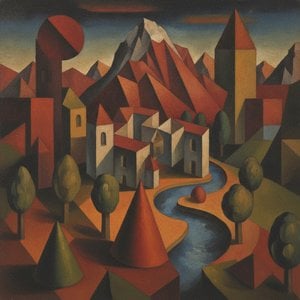
Explore the profound evolution of Cubist landscapes. Discover how masters like Braque and Picasso redefined perspective through geometric mastery, transforming nature into an intellectual mosaic of form and light for the discerning modern art collector.


 实景预览
实景预览
 发送
发送 分享
分享
 详情
详情 指南
指南

 下载图片
下载图片
 相似作品
相似作品 X射线
X射线 幻灯片播放
幻灯片播放 统计数据
统计数据
 阅读全文
阅读全文









 玻璃选项仅适用于110厘米以下的尺寸。


