
博物馆级艺术微喷或帆布版画,制作高效,并提供多种饰面选择。 ( 订购纯手工绘制画作 切换至数字图像销售渠道)





























您可以从与原作比例一致的预设尺寸中进行选择。

请输入您所需的宽度和高度,以适配您的画框或墙面。由于印刷品只能进行裁剪,无法超出原图尺寸,因此若比例不一致,画面的一部分将会被裁切。在正式印刷之前,我们会为您发送一份数字效果图供您确认。本页面显示的图片并非最终裁剪后的效果——只有效果图才能展示真实的裁剪情况。
the Chariot
复刻品尺寸
In the pantheon of modern art, few movements have reshaped our perception of reality as profoundly as Cubism, and few artists embodied its intellectual rigor quite like Georges Braque. His masterpiece, The Chariot, serves as a breathtaking window into this revolutionary era. At first glance, the viewer is met with the powerful imagery of a horse-drawn chariot, an ancient symbol of conquest and momentum. Yet, Braque refuses to offer a simple, literal depiction. Instead, he invites us into a world where form is deconstructed and reassembled, presenting a stylized representation that priorits geometric truth over naturalistic accuracy. The painting captures the kinetic energy of movement through a complex arrangement of planes, where the horses' musculature and flowing tails are rendered with a meticulous touch that contrasts beautifully against the abstract architecture of the composition.
The technique employed in The Chariot is a testament to Braque’s mastery of texture and depth. Utilizing a sophisticated layering of oil paints on canvas, the artist built up color through successive applications of pigment, creating a palpable, tactile surface. This method allows for a sense of structural weight that persists even as the subject matter dissolves into abstraction. The palette is intentionally restrained, leaning into muted blues and earthy browns to evoke a solemn, almost mythic atmosphere. This careful selection of tones ensures that the eye focuses on the interplay of light and shadow within the fractured shapes, rather than being distracted by vibrant, competing hues. For the collector or interior designer, this sophisticated color story offers a versatile elegance, capable of anchoring a room with its quiet, intellectual intensity.
To understand The Chariot is to understand the seismic shifts occurring in the early 20th century. Emerging as a reaction against the fleeting, light-obsessed impressions of the previous generation, Braque’s Cubist approach reflected a world undergoing radical transformation. Just as Einstein’s theory of relativity was challenging the very foundations of Newtonian physics, Braque was challenging the stability of the visual field. By presenting multiple viewpoints simultaneously, he captured the fragmented nature of modern experience—a sense that reality is not a single, static image but a collection of perspectives and moments in time.
Beyond its technical brilliance, the painting carries deep symbolic weight. The chariot itself has long been an emblem of royal authority, divine power, and the unstoppable force of progress. In Braque’s hands, these themes are subtly woven into the geometric tapestry. The figures controlling the horses represent a sense of agency and control amidst the chaos of abstraction, suggesting a deeper contemplation on how humanity navigates the complexities of change and transformation. Owning a reproduction of such a piece is more than an aesthetic choice; it is an invitation to engage with a profound historical dialogue about power, movement, and the enduring human spirit.
For those seeking to infuse their living spaces with art that stimulates thought and provides a focal point of sophisticated beauty, The Chariot stands as an incomparable choice. It offers a perfect balance of dynamic energy and composed tranquility, making it a timeless addition to any curated collection or thoughtfully designed interior.
乔治·布拉克 的《the Chariot》 的复制品非常适合用于 Accent。这一建议源于作品的主题、意境与色彩。
乔治·布拉克 的《the Chariot》 的 Earthy 色调与其推荐的布置空间——Living Room 完美契合。
“the Chariot”创作于Modern时期。

1882 - 1963 , 法国

Explore the profound spiritual depth of geometric abstraction. From Malevich's Suprematism to modern masters, our expert guide reveals how pure form and color command presence in fine art collections.

Explore the profound depth of Cubist Expression. From the deconstructed forms of Picasso to Braque’s geometric mastery, discover how shattering reality through abstraction redefined modern art and continues to inspire sophisticated collectors worldwide.
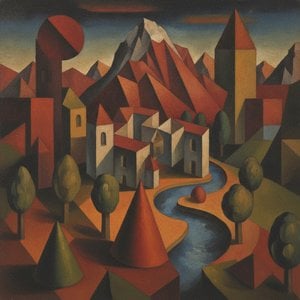
Explore the profound evolution of Cubist landscapes. Discover how masters like Braque and Picasso redefined perspective through geometric mastery, transforming nature into an intellectual mosaic of form and light for the discerning modern art collector.

Explore the profound evolution of Cubist still life, from Cézanne's structural foundations to the fragmented brilliance of Braque and Léger. Discover how geometric abstraction redefined reality through a sophisticated lens of form, color, and modern artistic mastery.

 实景预览
实景预览
 分享
分享 分享
分享
 详情
详情 指南
指南

 下载作品
下载作品
 相似作品
相似作品 X射线
X射线 幻灯片播放
幻灯片播放 问答
问答
 统计数据
统计数据

 展开全文
展开全文









 玻璃选项仅适用于110厘米以下的尺寸。


