
 Oil On CanvasWallArtAnalytical Cubism
 1927Modern
 53.0 x 73.0 cm
博物馆级艺术微喷或帆布版画,制作高效,并提供多种饰面选择。 ( 购买手绘画作 切换至数字图像销售渠道)





























从与原作比例一致的预设尺寸中进行选择。

您可以输入自定义尺寸,以适配特定的画框或空间。如果您选择的尺寸与原图比例不符,我们将对作品进行裁剪,或通过镜像填充/纯色填充边缘的方式来扩展图像。在开始制作之前,我们会向您发送一份数字效果图供您确认。
请注意,屏幕上的预览并不能反映实际的裁剪或扩展效果。只有效果图才能准确展示最终的构图。
虽然我们提供定制尺寸,但为了保持原图比例,我们建议您从预设列表中选择尺寸。

Still life (with clarinet)
复制品尺寸
To gaze upon Georges Braque’s “Still life (with clarinet)” is to witness a moment where the boundaries between object and perception dissolve into a rhythmic dance of geometry. Completed in 1927, this masterpiece serves as a profound testament to the Cubist revolution, offering far more than a mere arrangement of tabletop items. Instead, it presents a curated experience of fragmentation and reconstruction. The composition breathes with a quiet, intellectual energy, inviting the viewer to look past the surface of the grapes, oranges, and glassware to discover the underlying structure of reality itself. For the discerning collector or interior designer, this piece offers a sophisticated anchor, bringing a sense of historical depth and avant-garde elegance to any curated space.
The brilliance of Braque’s technique lies in his ability to balance the analytical rigor of Cubism with a tactile, almost sensory richness. While the subject matter—a clarinet resting amidst scattered fruit and wine glasses—suggests a traditional still life, the execution is anything but conventional. Braque employs a muted, earthy palette of ochres, deep browns, and mossy greens, creating an atmosphere of somber contemplation. Yet, within this restrained color scheme, there is a remarkable physical presence. Through meticulous brushwork and thick impasto strokes, particularly visible in the rounded forms of the fruit, Braque lends a sculptural weight to the canvas. This interplay between the flat, geometric planes and the textured, raised surfaces creates a captivating tension, making the artwork feel alive with movement and light.
At its heart, this work is an exploration of how we perceive the world through time and space. Moving away from the single-point perspective that had dominated Western art since the Renaissance, Braque utilizes the Cubist language to present multiple viewpoints simultaneously. The grapes are not merely spheres; they are fractured into angular facets that mirror the linear elegance of the clarinet. This deliberate deconstruction serves a higher purpose: it reflects the complexity of human sight, which is never static but always shifting and interpreting. There is a profound symbolism in the inclusion of the clarinet—an instrument of breath and melody—placed within a scene of frozen, geometric stillness. It suggests a harmony between the auditory and the visual, a silent music composed of shapes and shadows.
For those seeking to integrate fine art into modern interiors, “Still life (with clarinet)” provides an unparalleled opportunity for inspiration. Its sophisticated neutral tones allow it to harmonize seamlessly with contemporary minimalist decor, while its complex textures demand attention in more classical settings. Owning a high-quality reproduction of this work is not merely about decorating a wall; it is about inviting a dialogue between the past and the present. It is an invitation to pause, to observe the beauty in the broken, and to find a sense of structured peace within the beautiful chaos of modern life.


1882 - 1963 , 法国
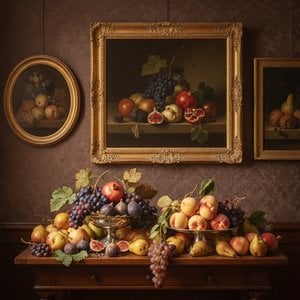
Discover the profound beauty of fruit still life paintings. Explore the rich symbolism, Baroque mastery, and timeless allure of nature's bounty through an art-historical lens, perfect for collectors and enthusiasts of classical fine art.

Discover the profound legacy of Georges Braque. Our expert guide explores the evolution of Cubism, from Analytic deconstruction to Synthetic innovation, offering deep insights for discerning art collectors and connoisseurs of modern masterpieces.

Explore the profound beauty of fruit arrangement masterpieces. From Dutch Golden Age opulence to Baroque chiaroscuro, discover the art history, symbolism, and timeless elegance of classical still life paintings for the discerning collector.

Embark on a visual journey through the luminous world of stained glass art. Discover the exquisite craftsmanship, historical significance, and captivating beauty of masterworks from Art Nouveau to the Gothic era, curated for the discerning fine art enthusiast.


 效果预览
效果预览
 分享
分享 分享
分享
 详情
详情

 下载
下载
 相似作品
相似作品 X射线
X射线 幻灯片播放
幻灯片播放 统计数据
统计数据 展开详情
展开详情









 玻璃选项仅适用于110厘米以下的尺寸。


