































从与原作比例一致的预设尺寸中进行选择。

您可以输入自定义尺寸,以适配特定的画框或空间。如果所选尺寸与原图比例不符,我们将通过裁剪作品或添加手绘元素来扩展画面。数字样稿将在制作开始前发送给您确认。
请注意,屏幕预览无法准确反映实际的裁剪或扩展效果,只有样稿才能真实呈现最终的构图。
虽然我们提供定制尺寸服务,但为了保留原作比例,建议您从预设列表中选择尺寸。

Road in Estaque
复制品尺寸
Georges Braque’s “Road in Estaque,” painted in late summer 1908, stands as a cornerstone of Cubist art and a testament to Cézanne's enduring influence. More than just a depiction of the Provençal landscape—a location favored by Cézanne himself—the painting embodies a radical reimagining of perspective and representation that fundamentally altered the course of modern artistic expression.
Braque’s artistic journey was profoundly shaped by Cézanne's groundbreaking approach to landscape painting. Cézanne famously stated, “I do not paint what I see but what I remember seeing.” Braque adopted this conceptual framework, prioritizing the artist’s internal experience over literal observation. Like Cézanne, he deliberately left areas of canvas unpainted—a technique known as *nez perce’, or ‘pierced nose,’ referencing Cézanne's depiction of Mont Sainte-Victoire—creating a sense of ambiguity and inviting contemplation.
"Road in Estaque" represents a pivotal moment in art history, signaling the decisive break from Impressionism and paving the way for Cubism. Picasso collaborated closely with Braque on this project, furthering the development of their shared vision—a radical reimagining of visual reality that prioritized intellectual analysis over sensory experience.


1882 - 1963 , 法国
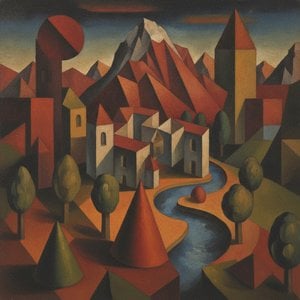
Explore the profound evolution of Cubist landscapes. Discover how masters like Braque and Picasso redefined perspective through geometric mastery, transforming nature into an intellectual mosaic of form and light for the discerning modern art collector.

Discover the profound legacy of Georges Braque. Our expert guide explores the evolution of Cubism, from Analytic deconstruction to Synthetic innovation, offering deep insights for discerning art collectors and connoisseurs of modern masterpieces.


 效果预览
效果预览
 购买印刷品
购买印刷品 分享
分享 分享
分享
 详情
详情

 下载
下载
 相似作品
相似作品 X射线
X射线 幻灯片播放
幻灯片播放

 展开详情
展开详情









 玻璃选项仅适用于110厘米以下的尺寸。


