
博物馆级艺术微喷或帆布版画,制作高效,并提供多种饰面选择。 ( 订购此收藏品的纯手工复刻画作 切换至数字图像销售渠道)





























您可以从与原作比例一致的预设尺寸中进行选择。

您可以输入自定义尺寸,以适配特定的画框或空间。如果您选择的尺寸与原图比例不符,我们将对作品进行裁剪,或通过镜像填充/纯色填充边缘的方式来扩展图像。在开始制作之前,我们会向您发送一份数字效果图供您确认。
请注意,屏幕上的预览并不能反映实际的裁剪或扩展效果。只有效果图才能准确展示最终的构图。
虽然我们提供定制尺寸,但为了保持原图比例,我们建议您从预设列表中选择尺寸。
Plow
复刻品尺寸说明
Georges Braque's "The Plow," painted in 1961, offers a deceptively simple yet profoundly layered glimpse into the artist’s evolving artistic vision. This work, rendered in a restrained palette of blues and yellows – colors often associated with the vastness of the French countryside – immediately draws the eye to its central subject: a weathered plow resting within a field. However, to reduce “The Plow” to a mere depiction of agricultural labor would be a significant oversight. Braque, a pivotal figure in the development of Cubism, employs his signature techniques not just to represent form but to deconstruct and reimagine it, inviting the viewer into a complex interplay of perspective and abstraction.
The painting’s style firmly places it within the Expressionist movement, though with a distinctly Braquean twist. Unlike the vibrant hues often associated with Fauvism, which marked his earlier work, here we see a deliberate restraint, a muted quality that emphasizes texture and form over immediate visual impact. The two wheels of the plow are rendered with meticulous detail, their surfaces suggesting both solidity and vulnerability. The geometric shapes—the wheel’s curves, the plow’s frame—are subtly fractured and rearranged, echoing the Cubist principles of simultaneous viewpoints that Braque pioneered alongside Pablo Picasso. This fragmentation isn't chaotic; rather, it creates a sense of dynamic equilibrium, as if the plow is simultaneously present in multiple spatial dimensions.
Understanding “The Plow” requires acknowledging its crucial role within the broader context of Braque’s artistic journey. Following his early explorations with Fauvism and his intense collaboration with Picasso, Braque began to systematically dismantle traditional notions of representation. He moved away from single-point perspective, instead presenting multiple viewpoints within a single image – a technique directly inspired by Paul Cézanne's emphasis on geometric forms and the underlying structure of nature. This approach is brilliantly demonstrated in “The Plow,” where the plow itself appears to be simultaneously viewed from above, below, and at an oblique angle. The birds soaring overhead further contribute to this sense of spatial ambiguity, adding another layer of visual complexity.
Braque’s use of color also plays a significant role in conveying meaning. The blues evoke a sense of vastness and the open sky, while the yellows suggest the warmth of the earth and the sun. These colors aren't applied with smooth gradients; instead, they are built up through layers of broken brushstrokes, creating a textured surface that invites close examination. This tactile quality reinforces the painting’s connection to the physical world – the feel of the soil beneath the plow, the weight of the metal frame.
While “The Plow” is undeniably an exercise in formal experimentation, it also carries a subtle symbolic resonance. The plow itself represents labor, fertility, and the cyclical rhythms of rural life. It’s a potent image of human effort connected to the land – a theme that resonated deeply with Braque, who spent much of his life observing and depicting the landscapes of France. The birds, often interpreted as symbols of freedom and aspiration, suggest a potential for transcendence within this seemingly simple scene.
Furthermore, the painting’s quietude—the absence of figures or any other elements beyond the plow and the field—creates an atmosphere of contemplative stillness. It invites the viewer to pause and consider the relationship between humanity and nature, between tradition and progress. “The Plow” is not merely a representation of a rural object; it's a meditation on the essence of human experience.
WahooArt offers meticulously crafted hand-painted reproductions of Georges Braque’s "The Plow," allowing art lovers to bring this iconic work into their homes or offices. Our skilled artists faithfully recreate Braque's nuanced brushwork, color palette, and compositional techniques, ensuring that the essence of the original painting is preserved with exceptional detail. Whether you are a seasoned collector or simply seeking to add a touch of artistic sophistication to your space, our reproduction provides an authentic and accessible way to appreciate this pivotal work in modern art.
"Plow" 属于 乔治·布拉克 的 Cubist Landscape 时期作品,其记录的主题包括 cézanne’s geometric forms, rural life, simplicity”, “braque’s experimentation”, “cubist exploration, abstraction”, landscape, quiet contemplation”。
乔治·布拉克 的《Plow》 所记录的情感基调为 Reflective。它概括了作品所传达的情绪。
"Plow" 由 乔治·布拉克 创作。本页面的信息旨在介绍 乔治·布拉克 的原作。
乔治·布拉克 的《Plow》 的色彩呈现出 Subtle Color 的饱和度与 Balanced 的强度。
乔治·布拉克 的《Plow》 的主色调为 Gray (#658085)。
“Plow”可通过 采用棉质帆布或档案级画布纸制作的艺术版画 进行订购。您可以在 本页 选择心仪的尺寸进行下单。
“Plow”现已推出亚麻画布手工绘制油画复制品。您可以在本页进行订购,并可自由选择多种尺寸。


1882 - 1963 , 法国

Discover the profound legacy of Georges Braque. Our expert guide explores the evolution of Cubism, from Analytic deconstruction to Synthetic innovation, offering deep insights for discerning art collectors and connoisseurs of modern masterpieces.
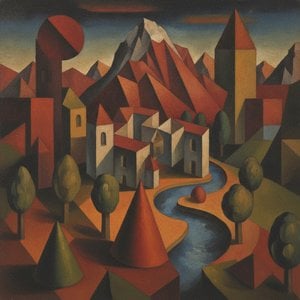
Explore the profound evolution of Cubist landscapes. Discover how masters like Braque and Picasso redefined perspective through geometric mastery, transforming nature into an intellectual mosaic of form and light for the discerning modern art collector.


 实景预览
实景预览
 发送
发送 分享
分享
 详情
详情 指南
指南

 下载图片
下载图片
 相似作品
相似作品 X射线
X射线 幻灯片播放
幻灯片播放 统计数据
统计数据

 阅读全文
阅读全文









 玻璃选项仅适用于110厘米以下的尺寸。


