
 OilWallArtProto-Cubism
 1951Modern
 161.0 x 73.0 cm
博物馆级艺术微喷或帆布版画,制作高效,并提供多种饰面选择。 ( 订购此收藏品的纯手工复刻画作 切换至数字图像销售渠道)





























您可以从与原作比例一致的预设尺寸中进行选择。

请输入您所需的宽度和高度,以适配您的画框或墙面。由于印刷品只能进行裁剪,无法超出原图尺寸,因此若比例不一致,画面的一部分将会被裁切。在正式印刷之前,我们会为您发送一份数字效果图供您确认。本页面显示的图片并非最终裁剪后的效果——只有效果图才能展示真实的裁剪情况。
Night
复刻品尺寸说明
In the profound stillness of Georges Braque’s “Night,” completed in 1951, viewers are invited into a world where the boundaries between observed reality and emotional depth begin to dissolve. This mature work stands as a masterful distillation of Braque’s lifelong engagement with color and form, capturing the serene, almost sacred atmosphere of twilight. Unlike the radical deconstruction found in his earlier Cubist experiments, this piece seeks to capture the very essence of a moment—the quietude that descends when the sun has vanished, leaving behind a landscape steeped in mystery and introspection.
The composition is deceptively simple yet meticulously orchestrated to evoke a sense of profound tranquility. In the foreground, two figures or sculptures command our attention, positioned against a backdrop of muted blues and greens that suggest the encroaping shadows of the evening. One figure embodies masculinity, cradling an instrument that hints at musical contemplation or the act of artistic creation, while the other represents femininity, adorned with a bird perched upon her shoulder. This small, delicate emblem of nature carries deep connotations of freedom, nurturing, and a silent connection to the natural world, grounding the composition in a sense of organic peace.
Braque’s approach to “Night” is deeply rooted in the tenets of Fauvism, a movement that championed unrestrained color as a primary vehicle for emotional expression. While he avoids purely naturalistic representation, he does not retreat into total abstraction; instead, he utilizes a bold and unconventional palette to convey mood. The artist deliberately eschews muted, academic tones in favor of intense shades of ochre, crimson, and indigo, creating a palpable sense of atmosphere that breathes with life even in the darkness.
The physical presence of the painting is enhanced by Braque’s masterful use of technique. By employing thick impasto—the application of paint in textured, heavy layers—he achieves a remarkable depth and luminosity. This deliberate manipulation of materiality invites the viewer to engage with the surface of the work, making the light seem as though it is emerging from within the pigment itself. For collectors and interior designers, such a piece offers more than mere decoration; it provides a tactile richness that transforms a space, offering an enduring capacity for wonder and a focal point that speaks directly to the emotional core.
To understand “Night” is to understand the trajectory of a man who helped redefine the very nature of modern art. Born in Argenteuil, France, Braque brought with him the technical precision of his family’s heritage in house painting and decoration, an understanding of pigment and surface that would later allow him to revolutionize the canvas. This painting, emerging from a period of intense experimentation following the Impressionist movement, reflects the broader cultural preoccupation with capturing subjective experience—a hallmark of Modernism.
Ultimately, this work transcends its visual depiction of a nocturnal scene to communicate themes of solitude and the cyclical rhythms of existence. It serves as a poignant reminder that even within the shadows, there is beauty to be found through the lens of artistic expression. For those seeking to bring a piece of art history into their private collections or curated environments, a high-quality reproduction of this iconic work offers an unparalleled opportunity to experience Braque’s unique ability to find harmony within the quietest moments of life.

1882 - 1963 , 法国

Journey through the revolutionary world of Georges Braque. Explore 25 iconic Cubist masterpieces, from geometric abstractions to timeless still lifes. Find inspiration for your collection with museum-quality art reproductions. Discover all masterpieces on WahooArt.com.

Step into the elegance of 18th-century Britain with our curated guide to George Romney's top 25 masterpieces. Explore iconic portraits and timeless techniques through museum-quality art reproductions and decor inspiration. Discover all masterpieces on WahooArt.com.

Immerse yourself in the luminous world of Georges Seurat. Explore 25 iconic Pointillist masterpieces, from color theory to timeless beauty. Find inspiration for museum-quality art reproductions and curated decor. Discover all masterpieces on WahooArt.com.
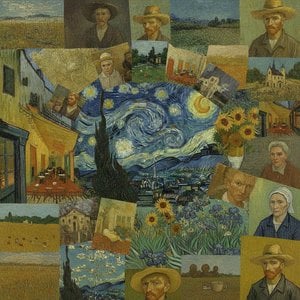
Immerse yourself in the vibrant world of Vincent van Gogh. Explore 25 iconic Post-Impressionist masterpieces, from Starry Night to Sunflowers. Discover the stories and techniques behind these timeless works and find museum-quality art reproductions on WahooArt.com.


 实景预览
实景预览
 发送
发送 分享
分享
 详情
详情 指南
指南

 下载图片
下载图片
 相似作品
相似作品 X射线
X射线 幻灯片播放
幻灯片播放 统计数据
统计数据 阅读全文
阅读全文









 玻璃选项仅适用于110厘米以下的尺寸。


