
 Oil On CanvasWallArtCubism
 1927
1927 81.0 x 116.0 cm
由我们的艺术家按需定制,为您提供您所选尺寸及画框的布面手工油画。 ( 切换至版画销售渠道 切换至数字图像销售渠道)





























从与原作比例一致的预设尺寸中进行选择。

您可以输入自定义尺寸,以适配特定的画框或空间。如果所选尺寸与原图比例不符,我们将通过裁剪作品或添加手绘元素来扩展画面。数字样稿将在制作开始前发送给您确认。
请注意,屏幕预览无法准确反映实际的裁剪或扩展效果,只有样稿才能真实呈现最终的构图。
虽然我们提供定制尺寸服务,但为了保留原作比例,建议您从预设列表中选择尺寸。

Mandolin, Glass, Pot and Fruit
复制品尺寸
Georges Braque’s “Mandolin, Glass, Pot and Fruit” – a deceptively simple composition of a mandolin, a glass, a pot, and scattered apples – is far more than the sum of its parts. Painted in 1927 during his pivotal period within Cubism, this work represents a radical departure from traditional representation, offering instead a fragmented, multi-faceted exploration of form, space, and perception. It’s a window into Braque's intellectual and artistic journey, a moment where the established rules of painting were deliberately dismantled to reveal a new way of seeing – and depicting – the world. The piece isn’t merely a depiction of objects; it’s an invitation to engage in a visual puzzle, demanding that we actively reconstruct the scene within our own minds.

Braque's work in this period is inextricably linked to the development of Cubism alongside Pablo Picasso. Rather than striving for a single, fixed viewpoint, they sought to capture an object from multiple perspectives simultaneously. “Mandolin, Glass, Pot and Fruit” exemplifies this approach brilliantly. The mandolin, rendered with sharp angles and geometric planes, seems to emerge from several positions at once; the glass reflects distorted fragments of the surrounding space, while the fruit appears both solid and ephemeral. This fragmentation isn’t arbitrary; it's a deliberate strategy to challenge our conventional understanding of depth and perspective – core tenets of Renaissance painting. The muted palette—earthy browns, ochres, and subtle greens—further emphasizes this sense of detachment from traditional realism, contributing to the work’s contemplative mood.
The influence of Paul Cézanne is particularly evident here. Braque deeply admired Cézanne's exploration of form and structure, particularly his use of geometric shapes to represent natural forms. Cézanne’s emphasis on underlying structures and multiple viewpoints paved the way for Cubism’s radical approach. The careful arrangement of objects within the composition echoes Cézanne’s own still lifes, but with a distinctly fractured and abstracted quality.
While seemingly straightforward, “Mandolin, Glass, Pot and Fruit” is rich in symbolic potential. The mandolin itself, an instrument of music and leisure, suggests a moment of quiet contemplation – a pause within the bustle of daily life. The glass, often associated with clarity and reflection, could represent introspection or perhaps the multifaceted nature of perception. The fruit, symbols of abundance and fertility, might allude to themes of nourishment and earthly pleasures. However, Braque deliberately avoids overt symbolism, allowing the viewer to project their own interpretations onto the scene. This ambiguity is a hallmark of Cubist art – encouraging engagement and fostering multiple readings.
“Mandolin, Glass, Pot and Fruit” stands as a pivotal work in the history of modern art. It demonstrates Braque's mastery of Cubism’s principles while simultaneously revealing his unique artistic vision. The painting’s influence can be seen in countless subsequent works by artists who sought to challenge traditional representation and explore new ways of seeing. Reproductions, like those offered at WahooArt.com, provide a remarkable opportunity to experience this groundbreaking artwork firsthand, appreciating the subtle nuances of Braque's technique and the profound impact of his artistic innovations. It’s a piece that continues to resonate with viewers today, inviting us to reconsider our own perceptions of reality and the power of art to transform our understanding of the world.

1882 - 1963 , 法国

Discover the profound legacy of Georges Braque. Our expert guide explores the evolution of Cubism, from Analytic deconstruction to Synthetic innovation, offering deep insights for discerning art collectors and connoisseurs of modern masterpieces.
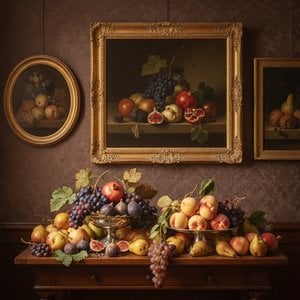
Discover the profound beauty of fruit still life paintings. Explore the rich symbolism, Baroque mastery, and timeless allure of nature's bounty through an art-historical lens, perfect for collectors and enthusiasts of classical fine art.

Embark on a visual journey through the luminous world of stained glass art. Discover the exquisite craftsmanship, historical significance, and captivating beauty of masterworks from Art Nouveau to the Gothic era, curated for the discerning fine art enthusiast.

Explore the profound beauty of fruit arrangement masterpieces. From Dutch Golden Age opulence to Baroque chiaroscuro, discover the art history, symbolism, and timeless elegance of classical still life paintings for the discerning collector.


 效果预览
效果预览
 分享
分享 分享
分享
 详情
详情

 下载
下载
 相似作品
相似作品 X射线
X射线 幻灯片播放
幻灯片播放 统计数据
统计数据 展开详情
展开详情









 玻璃选项仅适用于110厘米以下的尺寸。


