
由我们的艺术家按需定制,为您提供您所选尺寸及画框的布面手工油画。 ( 切换至版画销售渠道 切换至数字图像销售渠道)





























从与原作比例一致的预设尺寸中进行选择。

您可以输入自定义尺寸,以适配特定的画框或空间。如果所选尺寸与原图比例不符,我们将通过裁剪作品或添加手绘元素来扩展画面。数字样稿将在制作开始前发送给您确认。
请注意,屏幕预览无法准确反映实际的裁剪或扩展效果,只有样稿才能真实呈现最终的构图。
虽然我们提供定制尺寸服务,但为了保留原作比例,建议您从预设列表中选择尺寸。

Landscape in Estaque
复制品尺寸
Georges Braque’s *Landscape in Estaque*, painted circa 1906, stands as a pivotal work not just within the artist’s oeuvre but also as a foundational piece of early Cubism. This evocative depiction of a Provençal landscape – specifically, the village of Estaque near Marseille – transcends mere topographical representation; it's an intensely analytical exploration of form and space, anticipating the radical shifts that would redefine 20th-century art. The painting’s power resides in its ability to simultaneously capture a recognizable scene while dismantling it into fragmented geometric components, inviting the viewer to actively participate in reconstructing the image.
*Landscape in Estaque* emerged during a period of intense experimentation within Parisian artistic circles. Braque’s collaboration with Pablo Picasso is inextricably linked to the development of Cubism, and this painting represents a crucial step in that process. Prior to this work, Braque was influenced by Paul Cézanne's emphasis on geometric forms and his exploration of multiple viewpoints within a single composition. However, unlike Cézanne’s more lyrical approach, Braque pushed these ideas to their logical extreme, reducing objects to their essential shapes and presenting them from various angles concurrently. This technique, initially dubbed ‘Analytical Cubism,’ aimed to depict the subject's three-dimensionality by analyzing it into its constituent parts.
Braque’s meticulous brushwork and careful layering of paint contribute significantly to the painting’s impact. He utilized a technique known as *empasse*, meaning “encounter,” where he would rapidly apply layers of oil paint, often scraping them away before they dried completely. This process created a textured surface, rich with visual information and hinting at the underlying structure of the landscape. The use of muted colors and broken planes further emphasizes the materiality of the pigments themselves, reflecting Braque’s interest in exploring the properties of paint as a medium.
*Landscape in Estaque* is more than just a representation of a place; it's imbued with a sense of melancholy and contemplation. The fragmented composition mirrors the artist's own intellectual and emotional state during this period of profound artistic transformation. The painting’s ambiguity invites viewers to project their own interpretations onto the scene, fostering a deeply personal connection with the artwork. It speaks to the inherent instability of perception and the challenges of representing reality through art – themes that would continue to resonate throughout Braque's career and influence generations of artists.

1882 - 1963 , 法国
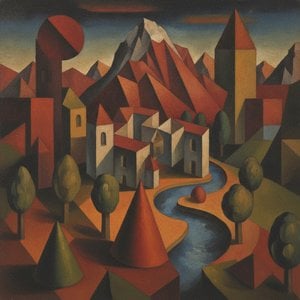
Explore the profound evolution of Cubist landscapes. Discover how masters like Braque and Picasso redefined perspective through geometric mastery, transforming nature into an intellectual mosaic of form and light for the discerning modern art collector.

Discover the profound legacy of Georges Braque. Our expert guide explores the evolution of Cubism, from Analytic deconstruction to Synthetic innovation, offering deep insights for discerning art collectors and connoisseurs of modern masterpieces.


 效果预览
效果预览
 分享
分享 分享
分享
 详情
详情

 下载
下载
 相似作品
相似作品 X射线
X射线 幻灯片播放
幻灯片播放 统计数据
统计数据

 展开详情
展开详情









 玻璃选项仅适用于110厘米以下的尺寸。


