
博物馆级艺术微喷或帆布版画,制作高效,并提供多种饰面选择。 ( 订购纯手工绘制画作 切换至数字图像销售渠道)





























您可以从与原作比例一致的预设尺寸中进行选择。

请输入您所需的宽度和高度,以适配您的画框或墙面。由于印刷品只能进行裁剪,无法超出原图尺寸,因此若比例不一致,画面的一部分将会被裁切。在正式印刷之前,我们会为您发送一份数字效果图供您确认。本页面显示的图片并非最终裁剪后的效果——只有效果图才能展示真实的裁剪情况。
If I die here 1
复刻品尺寸
In the vast, often turbulent landscape of early 20th-century modernism, few works possess the haunting, meditative stillness found in Georges Braque’s "If I Die Here." At first glance, the viewer is met with a deceptively simple subject: a feline figure captured in a moment of profound quietude. Yet, beneath this minimalist surface lies the very heartbeat of the Cubist revolution. Painted during the pivotal years of 1914-15, this work serves as a masterclass in how an artist can dismantle the physical world to reveal its underlying structural truth. The composition is dominated by a sophisticated interplay of black and white, set against a muted, ethereal purple backdrop that provides a sense of atmospheric depth without ever relying on traditional, illusionistic perspective.
Braque’s technique here is nothing short of transformative. Rather than attempting to mirror the soft textures of fur or the fluid grace of a living creature, he employs the core tenets of Cubism to dissect the subject into interlocking planes and geometric fragments. This method challenges the eye to move beyond mere recognition; it invites the observer to actively participate in the reconstruction of the cat's form. The subtle gradations of purple act as a grounding force, preventing the fractured black and white elements from dissolving into pure abstraction. It is a delicate dance between fragmentation and cohesion, where every sharp edge and tonal shift contributes to a larger, more complex visual reality.
To understand the soul of "If I Die Here," one must look toward the intellectual currents that flowed through Paris during Braque’s formative years. The painting is deeply rooted in the legacy of Paul Cézanne, whose radical approach to simplifying natural forms into geometric essences provided the blueprint for Braque’s experimentation. This piece captures that transition perfectly—the moment where the organic world begins to surrender to the structural logic of modern art. Furthermore, the work exists within the legendary artistic dialogue between Braque and Pablo Picasso. During this era, their styles were so intimately entwined in the pursuit of Cubism that their individual hands often became indistinguishable, both working toward a shared goal of shattering the traditional mirror of representation.
There is an undeniable emotional weight to this piece, a sense of stillness amidst innovation. The title itself suggests a poignant, perhaps even fatalistic, reflection on existence, mirroring the way the subject—the cat—seems suspended in time. For the collector or the interior designer, this artwork offers more than just visual interest; it provides a focal point of intellectual and emotional gravity. Its monochromatic palette and restrained color scheme make it an exceptionally versatile choice for sophisticated modern interiors, where it can serve as a silent, powerful anchor in a room characterized by minimalist elegance or bold, contemporary textures.
Whether viewed as a historical milestone of the Cubist movement or as a stunningly composed study in tonal restraint, "If I Die Here" remains an enduring testament to Braque's ability to find profound meaning within the simplest of forms. It is a work that does not shout for attention but rather commands it through its quiet, unshakable presence.
乔治·布拉克 的《If I die here 1》 的色彩呈现出 Muted 的饱和度与 Monochromatic 的强度。
在目录中,乔治·布拉克 的《If I die here 1》 被归类为 WallArt。该类别有助于查找相似作品。
在乔治·布拉克的艺术生涯中,"If I die here 1"创作于Analytical Cubism时期。这一阶段有助于将其与艺术家的其他作品进行比较。

1882 - 1963 , 法国

Journey through the bold shapes and vibrant colors of geometric abstraction. Explore the stories behind 10 iconic masterpieces that redefined modern art. Find museum-quality reproductions and decor inspiration for your space. Discover all masterpieces on WahooArt.com.
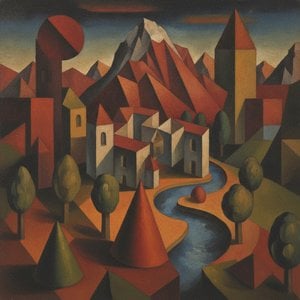
Explore the profound evolution of Cubist landscapes. Discover how masters like Braque and Picasso redefined perspective through geometric mastery, transforming nature into an intellectual mosaic of form and light for the discerning modern art collector.

Journey through the revolutionary world of Cubism. Explore 10 iconic masterpieces by legends like Picasso and Braque that redefined modern art. Find inspiration for your collection with our museum-quality reproductions. Discover all masterpieces on WahooArt.com.
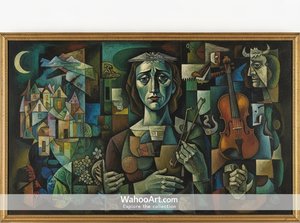
Journey through the vibrant world of Cubist Expressionism. Explore 10 iconic masterpieces, their bold techniques, and the stories behind these timeless works. Find museum-quality art reproductions and decor inspiration for your space. Discover all masterpieces on WahooArt.com.

 实景预览
实景预览
 分享
分享 分享
分享
 详情
详情 指南
指南

 下载作品
下载作品
 相似作品
相似作品 X射线
X射线 幻灯片播放
幻灯片播放 问答
问答
 统计数据
统计数据

 展开全文
展开全文









 玻璃选项仅适用于110厘米以下的尺寸。


