

博物馆级艺术微喷或帆布版画,制作高效,并提供多种饰面选择。 ( 订购纯手工绘制画作 切换至数字图像销售渠道)





























您可以从与原作比例一致的预设尺寸中进行选择。

请输入您所需的宽度和高度,以适配您的画框或墙面。由于印刷品只能进行裁剪,无法超出原图尺寸,因此若比例不一致,画面的一部分将会被裁切。在正式印刷之前,我们会为您发送一份数字效果图供您确认。本页面显示的图片并非最终裁剪后的效果——只有效果图才能展示真实的裁剪情况。
Fruit Dish
复刻品尺寸
Georges Braque's Fruit Dish, painted in 1908-09, isn’t merely a depiction of apples, oranges, and bananas arranged within a bowl; it’s a pivotal moment in the birth of Cubism – an artistic revolution that fundamentally altered how we perceive and represent reality. Born in Argenteuil, France, Braque's early training as a house painter instilled a deep understanding of materials and structure, a foundation he skillfully combined with his burgeoning artistic vision. This work represents a deliberate departure from traditional still life conventions, moving beyond simple representation towards an exploration of form, space, and the very nature of visual perception. The painting emerged during a period of intense experimentation within the Parisian art scene, fueled by influences ranging from Paul Cézanne’s geometric explorations to the radical ideas circulating amongst Picasso and other avant-garde artists.
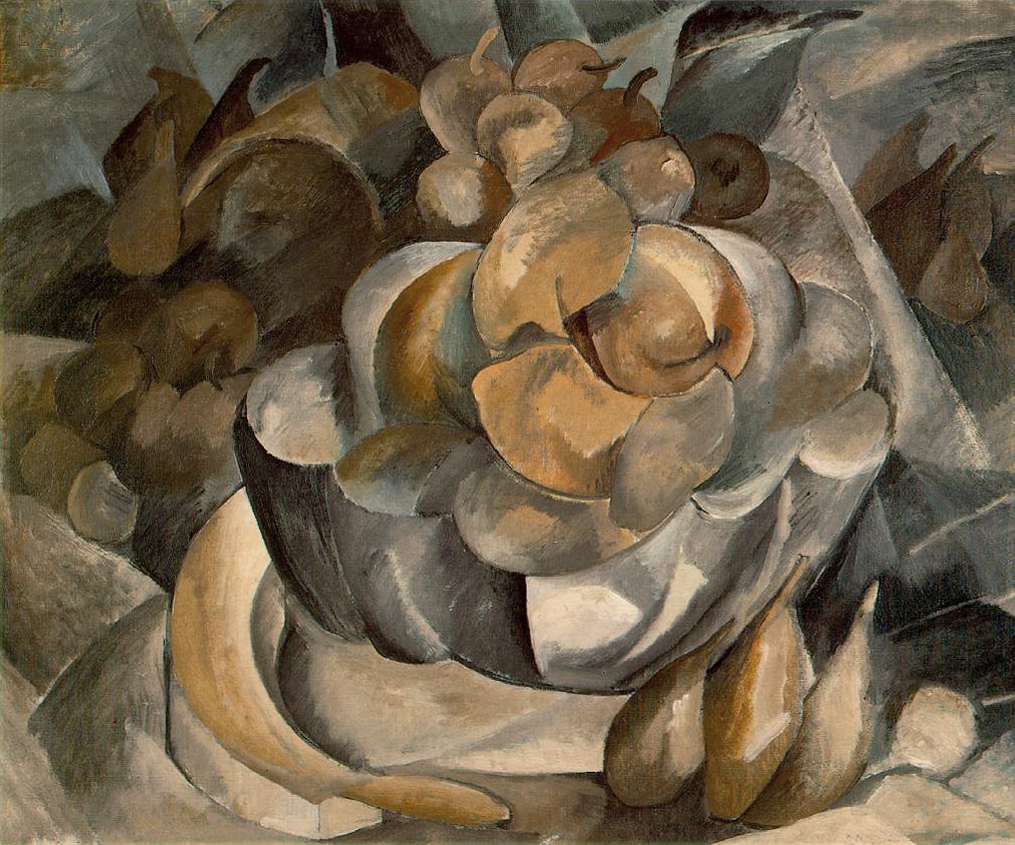
What truly distinguishes Fruit Dish is its innovative use of papier collé – a technique that would become inextricably linked to the development of Synthetic Cubism. Braque, while traveling with his friend Pablo Picasso, stumbled upon a roll of faux bois wallpaper depicting stylized oak panels at a shop in Avignon. Recognizing its potential, he meticulously cut and pasted fragments of this printed paper onto a canvas, layering it with charcoal lines and gouache. This seemingly simple addition dramatically transformed the painting, introducing an element of artificiality and challenging the illusion of depth traditionally achieved through perspective. The wallpaper’s inherent flatness – a deliberate contrast to the painted fruit – forces the viewer to reconsider their relationship with the image, questioning what is “real” and what is constructed.
Beyond its technical innovations, Fruit Dish is rich in symbolic meaning. The arrangement of the fruits – apples, oranges, and bananas – can be interpreted as representing abundance, nourishment, and perhaps even a subtle commentary on consumer culture. The bowl itself acts as a central organizing element, yet it’s fragmented and distorted, mirroring the fractured perspective characteristic of Cubism. Braque wasn't simply depicting objects; he was dissecting them, breaking them down into their essential geometric components and reassembling them in an entirely new way. The inclusion of the potted plant on the left side adds a touch of nature, grounding the still life within a broader context while simultaneously highlighting its artificiality.
Fruit Dish stands as a landmark work in the history of modern art. It’s not just a beautiful painting; it's a demonstration of Braque’s intellectual rigor and his willingness to push the boundaries of artistic convention. The techniques he pioneered – particularly the use of papier collé – would profoundly influence artists like Picasso, Matisse, and others, shaping the trajectory of 20th-century art. Reproductions of this iconic piece offer a remarkable opportunity to experience firsthand the genesis of Cubism and appreciate Braque’s groundbreaking contribution to our understanding of form, space, and perception. Its enduring appeal lies in its ability to simultaneously challenge and delight, inviting viewers to engage with the image on multiple levels.
这件Synthetic Cubism风格的作品《Fruit Dish》出自一位出生于法国的艺术家之手。
乔治·布拉克 的《Fruit Dish》 的 X 光视图可在作品的 X射线透视 页面查看:通过十一层光学图层对图像进行交互式深度解析。
乔治·布拉克 的《Fruit Dish》 采用了 Earthy 色调,这一色调概括了作品整体的色彩特征。


1882 - 1963 , 法国

Explore the profound evolution of Cubist still life, from Cézanne's structural foundations to the fragmented brilliance of Braque and Léger. Discover how geometric abstraction redefined reality through a sophisticated lens of form, color, and modern artistic mastery.

Discover the profound legacy of Georges Braque. Our expert guide explores the evolution of Cubism, from Analytic deconstruction to Synthetic innovation, offering deep insights for discerning art collectors and connoisseurs of modern masterpieces.

Explore the profound beauty of fruit arrangement masterpieces. From Dutch Golden Age opulence to Baroque chiaroscuro, discover the art history, symbolism, and timeless elegance of classical still life paintings for the discerning collector.

 实景预览
实景预览
 分享
分享 分享
分享
 详情
详情 指南
指南

 下载作品
下载作品
 相似作品
相似作品 X射线
X射线 幻灯片播放
幻灯片播放 问答
问答
 统计数据
统计数据

 展开全文
展开全文









 玻璃选项仅适用于110厘米以下的尺寸。


