由我们的艺术家按需定制,为您提供您所选尺寸及画框的布面手工油画。 ( 切换至版画销售渠道 切换至数字图像销售渠道)





























从与原作比例一致的预设尺寸中进行选择。

您可以输入自定义尺寸,以适配特定的画框或空间。如果所选尺寸与原图比例不符,我们将通过裁剪作品或添加手绘元素来扩展画面。数字样稿将在制作开始前发送给您确认。
请注意,屏幕预览无法准确反映实际的裁剪或扩展效果,只有样稿才能真实呈现最终的构图。
虽然我们提供定制尺寸服务,但为了保留原作比例,建议您从预设列表中选择尺寸。

A Red Pedestal
复制品尺寸
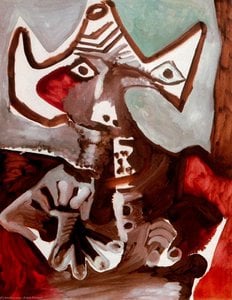
“A Red Pedestal,” created in 1942, presents a compelling still life that exemplifies Georges Braque’s later artistic evolution. The painting centers around a vibrant red pedestal draped with fabric, serving as the stage for a fragmented electric guitar and what appears to be scattered sheet music or newspaper clippings. The composition is deliberately disjointed, characteristic of Cubism, where objects are broken down into geometric forms and viewed from multiple perspectives simultaneously. Braque masterfully layers these elements against an abstract background filled with angular shapes and radiating lines, creating a sense of dynamic tension within the frame.
This artwork firmly resides within the realm of late Cubism, but also reveals subtle influences from Expressionism. Braque’s earlier work with Pablo Picasso during the formative years of Cubism established a revolutionary approach to representation, rejecting traditional perspective in favor of fractured forms and multiple viewpoints. However, “A Red Pedestal” demonstrates a shift towards greater emotional depth. The intense use of red—a dominant color throughout the piece—injects a palpable sense of drama and intensity. Braque’s technique involves thick impasto brushstrokes, adding texture and physicality to the canvas. This tactile quality contrasts with the intellectual rigor of Cubism, suggesting a more visceral engagement with the subject matter.
Created during World War II, “A Red Pedestal” reflects a period of profound upheaval and uncertainty in Europe. While not overtly political, the painting’s fragmented forms and unsettling atmosphere can be interpreted as mirroring the fractured state of society at the time. The choice of subject matter—a musical instrument alongside scattered papers—might allude to the disruption of artistic expression and intellectual pursuits amidst wartime chaos. Braque, living in France under Nazi occupation, likely channeled his anxieties and observations into this intensely personal work.
The symbolism within “A Red Pedestal” is open to interpretation, contributing to its enduring appeal. The red pedestal itself can be seen as a symbolic stage or platform, elevating the objects it supports while simultaneously confining them. The electric guitar, a relatively modern instrument at the time, juxtaposed with the traditional still life setting, suggests a tension between modernity and tradition. The scattered papers could represent fleeting thoughts, lost memories, or the fragility of knowledge. Overall, the painting evokes a complex range of emotions—anxiety, fascination, and perhaps even a sense of melancholy. The bold colors and fragmented forms create a visually arresting experience that challenges viewers to contemplate themes of mortality, artistic obsession, and the enduring power of human creativity.

1882 - 1963 , 法国

Discover the profound legacy of Georges Braque. Our expert guide explores the evolution of Cubism, from Analytic deconstruction to Synthetic innovation, offering deep insights for discerning art collectors and connoisseurs of modern masterpieces.

Explore the profound evolution of Cubist still life, from Cézanne's structural foundations to the fragmented brilliance of Braque and Léger. Discover how geometric abstraction redefined reality through a sophisticated lens of form, color, and modern artistic mastery.


 效果预览
效果预览
 分享
分享 分享
分享
 详情
详情

 下载
下载
 相似作品
相似作品 X射线
X射线 幻灯片播放
幻灯片播放 统计数据
统计数据

 展开详情
展开详情









 玻璃选项仅适用于110厘米以下的尺寸。