
 Baroque
 41.0 x 51.0 cm
博物馆级艺术微喷或帆布版画,制作高效,并提供多种饰面选择。 ( 订购此收藏品的纯手工复刻画作 切换至数字图像销售渠道)
您可以从与原作比例一致的预设尺寸中进行选择。

请输入您所需的宽度和高度,以适配您的画框或墙面。由于印刷品只能进行裁剪,无法超出原图尺寸,因此若比例不一致,画面的一部分将会被裁切。在正式印刷之前,我们会为您发送一份数字效果图供您确认。本页面显示的图片并非最终裁剪后的效果——只有效果图才能展示真实的裁剪情况。
Fruit
复刻品尺寸说明

George Robert Gray (1808-1872) emerged from the bustling intellectual landscape of Victorian England as a remarkably observant and deeply personal artist, primarily known for his exquisite fruit still lifes and evocative portraits. While often categorized within the broader tradition of British painting, Gray’s work possesses a unique sensibility—a quiet intensity combined with an almost scientific precision in rendering light and form. His legacy rests not only on the beauty of his paintings but also on his significant contribution to the field of entomology, a pursuit that profoundly shaped his artistic eye.
Born in Little Chelsea, London, into a family steeped in intellectual pursuits—his father was a pharmacologist and botanist, Samuel Frederick Gray—George’s early life fostered an appreciation for detail and observation. He received a solid education at Merchant Taylor's School, but his restless spirit and keen interest in the natural world led him away from formal academic training. Instead, he apprenticed himself to the renowned portrait painter Thomas Busby, gaining invaluable experience in capturing likeness and atmosphere. However, Gray’s true passion lay not solely in replicating reality but in understanding its underlying structure—a trait that would become central to his artistic practice.
Gray's career truly took flight when he joined the British Museum as Assistant Keeper of the Zoology Branch in 1831. This role provided him with unparalleled access to a vast collection of specimens and, crucially, the opportunity to study them meticulously. His work on insects—particularly Lepidoptera (butterflies and moths)—became legendary, culminating in his monumental publication, *Genera of Birds* (1844-49), illustrated by David William Mitchell and Joseph Wolf. This ambitious undertaking, encompassing over 46,000 references, cemented Gray’s reputation as a leading entomologist and demonstrated his extraordinary ability to synthesize information and translate it into visual form. The detailed illustrations, rendered with remarkable accuracy, reveal the same meticulous attention to detail that would later characterize his paintings.
While Gray's entomological work is undeniably significant, it was in the realm of still life painting that he truly achieved lasting recognition. His fruit arrangements—apples, pears, grapes, and plums—are not merely depictions of objects; they are carefully constructed meditations on light, color, texture, and decay. He eschewed the overly sentimental or decorative approaches favored by some of his contemporaries, instead opting for a rigorously analytical approach. Gray would often spend days observing a single fruit, studying its form from every angle, noting the subtle shifts in color as it ripened or began to spoil.
His technique was characterized by a remarkable control of brushwork and glazing—thin layers of paint applied over time to build up depth and luminosity. He employed a limited palette of muted tones—ochres, browns, greens, and blues—to create a sense of atmospheric perspective and evoke the feeling of light filtering through a window. The shadows are particularly masterful, conveying not just darkness but also the texture and volume of the fruit itself. Gray’s still lifes possess an almost photographic quality, yet they are far from cold or sterile; they radiate with warmth and vitality.
Gray's artistic style can be traced back to a confluence of influences. He was deeply affected by the works of Dutch Masters like Rembrandt and Jan van Eyck, particularly their mastery of light and shadow. The meticulous detail and atmospheric perspective evident in his paintings recall the Northern Renaissance tradition. However, Gray’s work also demonstrates an awareness of contemporary trends, including the influence of Pre-Raphaelite painters such as William Holman Hunt and John Everett Millais, who shared his interest in naturalism and symbolism.
Furthermore, Gray's scientific training undoubtedly shaped his artistic approach. His ability to dissect objects into their constituent parts—a skill honed through years of studying insects—translated into a remarkable understanding of form and structure. This analytical sensibility is evident in the precise rendering of fruit surfaces, the subtle gradations of color, and the careful arrangement of elements within each composition.
Despite his considerable talent and dedication, Gray’s work received relatively little recognition during his lifetime. He primarily exhibited at smaller galleries and private collections, and his paintings were largely overlooked by the major art institutions of London. However, in recent decades, Gray's oeuvre has experienced a significant revival, thanks to the efforts of dedicated collectors and scholars who have championed his unique vision. His paintings are now widely admired for their technical brilliance, emotional depth, and quiet beauty.
Gray’s influence extends beyond the realm of painting. He was also a passionate advocate for scientific education and a generous benefactor to various charitable organizations. His life exemplifies a rare combination of intellectual curiosity, artistic talent, and human compassion—a legacy that continues to inspire artists and scholars today. His work remains a testament to the power of observation, the beauty of simplicity, and the enduring appeal of light and landscape.

深入探索荷兰黄金时代绘画的文化创新与现实主义反思。本文解读伦勃朗、维米尔等大师的作品,并结合玛莉特·韦斯特曼的图像学研究,揭示艺术史背后的社会语境与现代性意识觉醒。
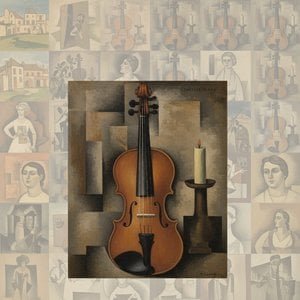
探索乔治·布拉克25幅大师杰作,领略立体主义的魅力与现代艺术的精髓。从早期作品到经典油画,WahooArt为您呈现法式优雅与家居装饰灵感。高清艺术复制品,点亮您的空间!立即在WahooArt.com发现更多。

Explore the dramatic mastery of the Dutch Baroque era. Discover how masters like Rembrandt used chiaroscuro to transform everyday life into timeless art. An expert guide for collectors and enthusiasts seeking to understand the profound interplay of light and shadow.

探索荷兰黄金时代的艺术巅峰! 伦勃朗、维米尔等大师名作,带您领略巴洛克艺术的辉煌。高清画作、博物馆级品质,点亮您的家居空间。WahooArt.com 提供精选艺术复制品和定制装饰方案。立即在线探索全系列!
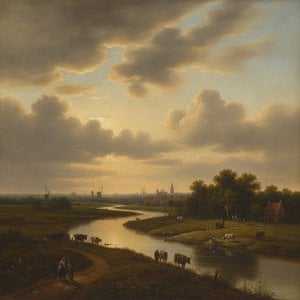
Discover the breathtaking beauty of Dutch Golden Age landscapes. Explore the mastery of light, chiaroscuro, and 17th-century realism through an expert art history lens, celebrating the enduring legacy of the Dutch Masters for discerning collectors and art lovers.


 实景预览
实景预览
 发送
发送 分享
分享
 详情
详情 指南
指南

 下载图片
下载图片
 相似作品
相似作品 X射线
X射线 幻灯片播放
幻灯片播放 统计数据
统计数据 阅读全文
阅读全文






































 玻璃选项仅适用于110厘米以下的尺寸。


