
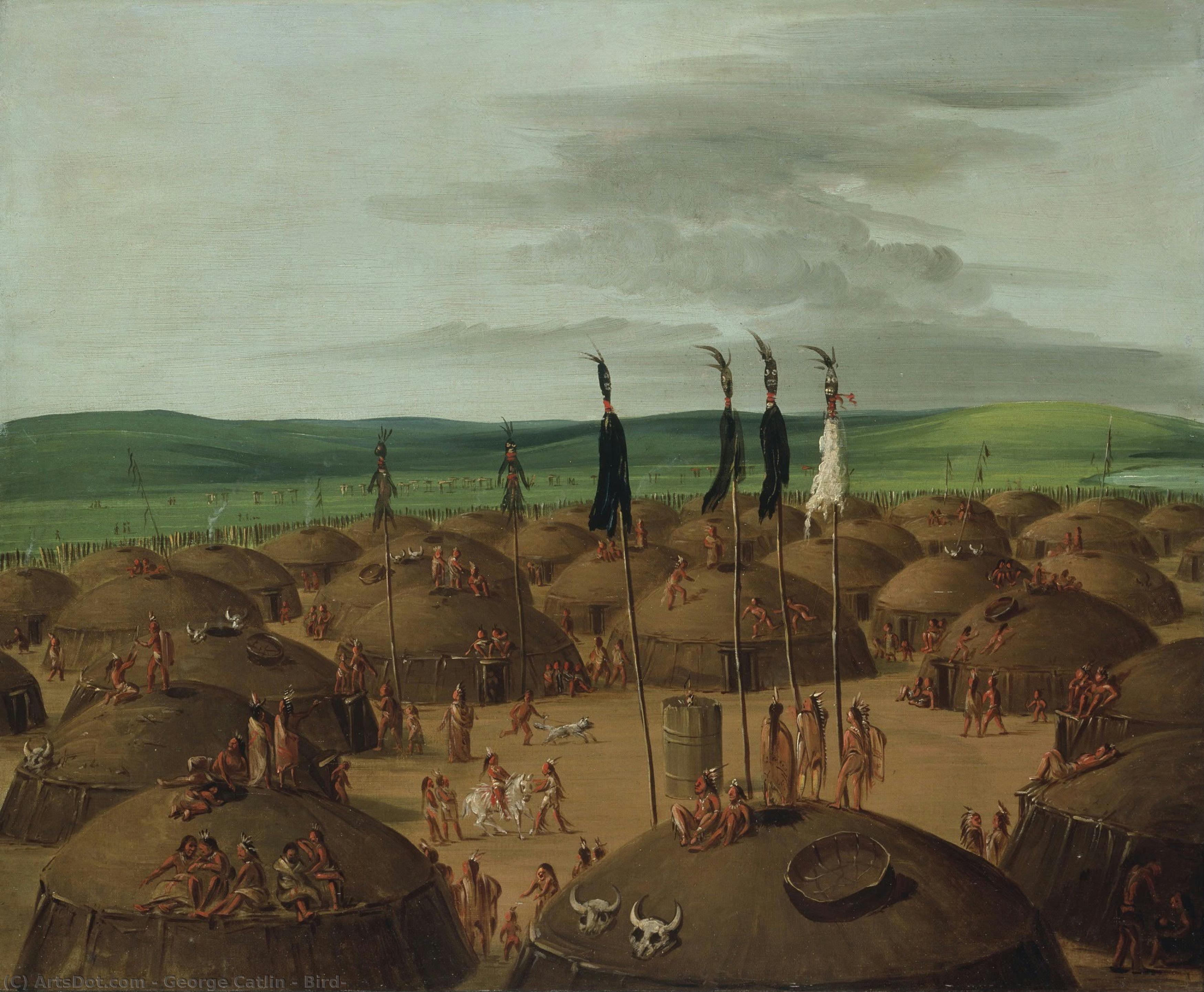
George Catlin’s “Shin ga wás sa, Handsome Bird”: A Window into the Spirit of the Plains
George Catlin (1796-1872) stands as a singular figure in American art history—a man driven by an unwavering conviction to document the disappearing cultures of Native American tribes during the mid-nineteenth century. His journey began not with formal training but with deeply formative experiences: tales recounted by his mother, Polly Sutton, who herself bore witness to the terrifying brutality of an Indian raid as a young woman. These narratives instilled within Catlin a profound respect for the frontier landscape and its inhabitants, shaping his artistic vision and fueling his determination to preserve their traditions before they vanished forever. Abandoning legal aspirations after just two years, he embraced painting with fervor—a decision that would ultimately yield one of the most iconic depictions of Native American life ever created.
“Shin ga wás sa, Handsome Bird,” completed in 1834, exemplifies Catlin’s Romantic style and meticulous approach to portraiture. Executed on canvas using oil paint, this artwork captures a Plains Indian warrior with remarkable realism—a testament to Catlin's dedication to capturing the physical appearance and dignity of his subjects. The composition is deliberately theatrical, positioning the warrior centrally against a backdrop of stylized mountains and sky, reflecting the grandeur and spiritual significance attributed to these landscapes by Native American cultures. Catlin’s use of warm hues – ochre yellows and earthy reds – enhances the painting's emotional impact, conveying both strength and solemn contemplation. The portrait is more than just an image; it’s a carefully crafted symbol of leadership and cultural heritage—a poignant reminder of a bygone era.
Exploring Catlin’s Technique: Observation and Stylized Representation
Catlin’s artistic process was characterized by painstaking observation combined with deliberate stylistic choices designed to convey deeper meanings beyond mere visual representation. He spent considerable time studying Native American anatomy and posture, meticulously documenting their physical characteristics with unwavering accuracy. However, he didn't strive for photographic realism; instead, he employed techniques that amplified the emotional resonance of his subjects. The artist utilized a pyramidal composition—a compositional device favored by Romantic painters—to emphasize the warrior’s stature and convey a sense of nobility. Furthermore, Catlin subtly stylized elements of the landscape, mirroring the spiritual worldview of Native Americans who saw mountains as sacred places imbued with divine power.
Historical Context: The Rise of Ethnographic Art
“Shin ga wás sa” emerged during a period marked by growing interest in documenting and celebrating indigenous cultures—a trend known as ethnography. Catlin’s work aligns perfectly with this movement, reflecting the anxieties surrounding westward expansion and the perceived decline of Native American traditions. He sought to counteract prevailing stereotypes perpetuated by popular culture and government officials, presenting portraits that honored the dignity and complexity of Native American life. His expeditions into Plains territory yielded invaluable ethnographic data—detailed sketches, watercolors, and written accounts—that contributed significantly to scholarly understanding of Native American societies during the 1830s and 40s.
Symbolism Beyond Appearance: Capturing Essence
The painting’s symbolism extends far beyond its depiction of a warrior's physical form. The mountainous backdrop symbolizes the spiritual realm, reflecting the belief that Native Americans viewed mountains as conduits to the divine—a concept central to their cosmology. Catlin’s careful attention to detail—the warrior’s gaze, his posture, and even the subtle shading on his skin—aimed to convey not just what he looked like but also who he was—a man embodying leadership, honor, and connection to the land. “Shin ga wás sa” remains a powerful testament to Catlin's artistic vision and his unwavering commitment to preserving the legacy of Native American culture.
问答详情
"Bird" 属于哪种艺术风格?
乔治·卡特林 的《Bird》 属于 Romanticism 流派。该流派为这件作品提供了风格背景。
"Bird" 是在哪一年创作的?
乔治·卡特林 的《Bird》 的创作年份为 1839。
哪里可以买到乔治·卡特林 的《Bird》的手绘复制品?
您可以在 本页 直接订购 乔治·卡特林 的《Bird》 的手绘复制品:亚麻画布手工绘制油画复制品,按需定制。
在 1839 年创作“Bird”时,乔治·卡特林 的年龄是多少?
当"Bird"于1839创作时,出生于1796的乔治·卡特林正值43岁。
乔治·卡特林 的《Bird》 的画面方向是怎样的?
乔治·卡特林 的《Bird》 采用 Landscape 格式。该格式描述了构图的比例。
建议将 乔治·卡特林 的《Bird》 悬挂在哪个空间?
"Bird" 的复制品非常适合陈设于 Living Room 中。
“Bird”被归于哪位艺术家名下?
《Bird》被归为乔治·卡特林的作品。





































