
 PaintingNeo-expressionism
 Modern
 46.0 x 54.0 cm
 Contemporary Art Platform
由我们的艺术家按需定制,为您提供您所选尺寸及画框的布面手工油画。 ( 切换至版画销售渠道 切换至数字图像销售渠道)





























从与原作比例一致的预设尺寸中进行选择。

您可以输入自定义尺寸,以适配特定的画框或空间。如果所选尺寸与原图比例不符,我们将通过裁剪作品或添加手绘元素来扩展画面。数字样稿将在制作开始前发送给您确认。
请注意,屏幕预览无法准确反映实际的裁剪或扩展效果,只有样稿才能真实呈现最终的构图。
虽然我们提供定制尺寸服务,但为了保留原作比例,建议您从预设列表中选择尺寸。

Title Unknown
复制品尺寸

Born in Port Arthur, Texas, in 1925, Robert Rauschenberg emerged as a pivotal figure in mid-20th century American art, challenging conventional boundaries between painting and sculpture. His career spanned nearly six decades, marked by an unrelenting experimentation with materials, processes, and concepts—a restless spirit that cemented his place among the most influential artists of his generation. Initially influenced by Surrealism and Abstract Expressionism, Rauschenberg swiftly developed a unique visual language characterized by its playful juxtaposition of the commonplace and the extraordinary, forever altering the landscape of modern art.
Rauschenberg’s early work, particularly his “Combine” paintings from 1954 to 1964, represents a radical departure. These works weren't simply paintings; they were collages incorporating found objects—discarded photographs, fabric scraps, bottle caps, and other detritus—directly onto the canvas. This blurring of boundaries between painting and sculpture established a new category of art, one that embraced chance, accident, and the inherent qualities of its materials. The “Monogram” series (1955-1962), featuring large-scale paintings incorporating single letters formed by meticulously placed objects, further explored this theme of assemblage and visual language. His work was a direct response to the prevailing artistic climate, moving away from purely representational art towards abstraction while retaining a strong connection to everyday experience.
Rauschenberg’s creative process was often described as intuitive and improvisational. He frequently worked with assistants, allowing them to contribute to the composition of his paintings—a deliberate act that acknowledged the collaborative nature of artistic creation. This approach, coupled with his willingness to experiment with unconventional materials and techniques, resulted in a body of work that is both intellectually stimulating and visually arresting. His exploration of photography, printmaking, and papermaking further expanded his artistic vocabulary, demonstrating a consistent desire to push the limits of traditional art forms.
Rauschenberg’s work played a crucial role in the development of Pop Art. While he predates many of the movement's most recognized figures, his embrace of popular imagery, mass-produced objects, and advertising techniques anticipated key themes explored by artists like Andy Warhol and Roy Lichtenstein. However, Rauschenberg’s approach differed significantly; he didn’t simply replicate existing images but rather used them as starting points for a more complex and layered investigation into the nature of art and its relationship to society.
His 1959 collaboration with Merce Cunningham on *Canyon*, a theatrical performance incorporating dance, music, and visual projections, exemplifies this innovative spirit. This ambitious project demonstrated Rauschenberg’s interest in integrating various artistic disciplines and challenging traditional notions of authorship and artistic control. The work was groundbreaking for its use of projected images—a technique that would become increasingly prevalent in later art forms.
Throughout his career, Rauschenberg received numerous accolades recognizing his significant contributions to the art world. He was awarded the International Grand Prize in Painting at the 1964 Venice Biennale and the National Medal of Arts in 1993. His work has been exhibited extensively worldwide, solidifying his reputation as one of America’s most important artists of the 20th century.
Rauschenberg's influence extends far beyond his own artistic output. He encouraged a spirit of experimentation and collaboration among younger generations of artists, fostering a climate of creative freedom and challenging established conventions. His legacy lies not only in the remarkable diversity of his work but also in his unwavering commitment to pushing the boundaries of art and exploring new possibilities for visual expression. He died in 2008, leaving behind a vast and complex body of work that continues to inspire and provoke debate.
Born in Florence, Italy, in 1856, John Singer Sargent was an American expatriate artist who achieved international renown as a portrait painter during the late Victorian and Edwardian eras. His early childhood was spent traveling extensively throughout Europe with his family, exposing him to diverse artistic traditions and cultures that would profoundly influence his style.
Sargent’s artistic training began in Paris, where he studied under Carolus-Duran, a prominent portraitist of the time. He quickly established himself as a skilled and sought-after artist, capturing the essence of his subjects with remarkable sensitivity and technical skill. His portraits became synonymous with elegance, sophistication, and social status, depicting a wide range of figures—royalty, aristocracy, celebrities, and members of the upper classes.
Sargent’s work is characterized by its loose brushwork, vibrant colors, and dynamic compositions. He was particularly adept at capturing fleeting expressions and conveying a sense of movement within his portraits. His paintings often evoke a feeling of immediacy and intimacy, drawing viewers into the lives of his subjects. Notable works include *Madame Gautreau*, which caused a sensation at the 1884 Paris Salon, and numerous portraits of prominent figures such as Ellen Terry, Henry James, and Lady Randolph Churchill.
Sargent’s legacy extends far beyond his individual masterpieces. He played a significant role in shaping the development of portraiture during the late 19th and early 20th centuries, influencing generations of artists with his innovative techniques and expressive style. His work continues to be celebrated for its beauty, technical brilliance, and enduring appeal.

1925 - 2021 , Egypt
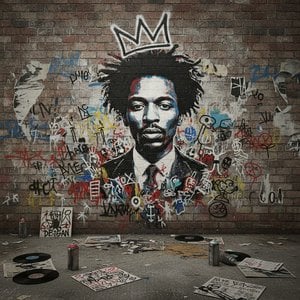
Explore the raw energy of Jean-Michel Basquiat and Neo-Expressionism. Discover how urban rebellion redefined modern art through a lens of luxury, identity, and profound emotional intensity for the discerning collector.

Explore the profound evolution of Neo-Abstract art. Discover how bold geometric forms, vibrant chromatic depth, and tactile textures redefine modern expression for the discerning collector seeking sophisticated, high-impact masterpieces for contemporary interiors.
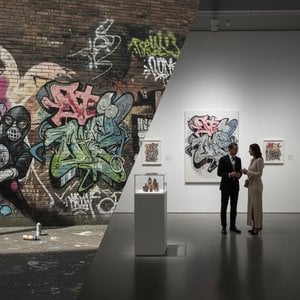
Explore the captivating journey of street art from urban walls to prestigious galleries. Discover how contemporary graffiti has evolved into a high-end collectible movement, redefining modern interior design and global art culture.


 效果预览
效果预览
 分享
分享 分享
分享
 详情
详情 指南
指南

 下载
下载
 相似作品
相似作品 X射线
X射线 幻灯片播放
幻灯片播放 统计数据
统计数据 展开详情
展开详情









 玻璃选项仅适用于110厘米以下的尺寸。


