
 29.0 x 27.0 cm
 不来梅艺术馆
由我们的艺术家按需定制,为您提供您所选尺寸及画框的布面手工油画。 ( 切换至版画销售渠道 切换至数字图像销售渠道)
您可以从与原作比例一致的预设尺寸中进行选择。

请输入您需要的宽度和高度,以适配您的画框或墙面。由于作品为手工绘制,若您选择不同的尺寸比例,艺术家可能会在画面边缘多画一些或稍作裁剪 —— 由您决定。在开始绘画之前,我们会为您发送一份数字效果图供您确认。本页面上展示的图片并非最终实物 —— 只有效果图才能反映真实结果。
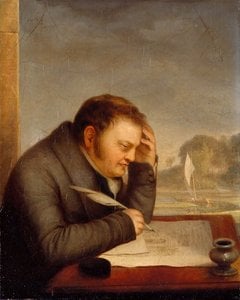
Waterfall (Study)
复刻品尺寸说明
您可以在Friedrich Nerly 的《Waterfall (Study)》的手工油画复刻页面直接订购其手绘复制品:亚麻画布手工绘制油画复制品,按需定制。
总体而言,"Waterfall (Study)" 的亮度记录为 deep_shadow。感知亮度描述了作品呈现出的明暗程度。
Friedrich Nerly 的《Waterfall (Study)》 是一幅 Square 构图的作品,原件尺寸为 29 x 27 cm。
Friedrich Nerly, a master of the German Romantic tradition, possessed an extraordinary ability to translate the ephemeral light of the Mediterranean into enduring oil on canvas. Born in 1808 in Erfurt, Germany, Nerly’s artistic journey was deeply rooted in a lineage of landscape mastery. His earliest instruction came from his father, a respected painter who instilled in him a reverence for the natural world and a technical precision that would later define his career. This foundational training prepared him for his transformative move to Italy, where he sought to capture the sublime atmosphere of the Venetian landscape. Enrolling at the Academy of Fine Arts in Venice, Nerly studied under luminaries such as Eugène de Blaas, Federico Moja, and Pompeo Mariano Molmenti, absorbing the nuances of light, shadow, and architectural grandeur that characterize the veduta tradition.
The essence of Nerly’s work lies in his profound connection to the Italian coast and its shifting atmospheres. His travels were not merely geographical expeditions but spiritual quests for beauty. From the dramatic coastal vistas of Olevano to the bustling maritime scenes of the Adriatic, Nerly’s brush captured the intersection of human endeavor and the overwhelming power of nature. His military service in the mid-19th century briefly interrupted his creative flow, yet the diverse landscapes he encountered across Europe—from the forests of Weimar to the urban centers of Munich and Dresden—only served to enrich his visual vocabulary. This period of movement allowed him to refine a style that blended meticulous detail with an evocative, almost melancholic, atmospheric perspective.
Nerly’s oeuvre is characterized by a remarkable versatility in subject matter, ranging from intimate coastal studies to sweeping architectural panoramas. His technique often employed a rich, textured application of paint to convey the weight of stone or the translucency of water. In works such as "Old Elms," one can witness his ability to manipulate shadow and depth, creating a sense of timelessness through towering trees and moody, darkened compositions. Conversely, his maritime paintings demonstrate a lighter touch, where the sun-drenched surfaces of the sea reflect the vibrant life of the Adriatic. His talent for capturing the veduta—the detailed view of a city or landscape—allowed him to document the architectural splendor of places like Palermo and Rome with both historical accuracy and romantic flair.
The emotional resonance of his work is perhaps most evident in his depictions of labor and movement within the landscape. In "Transporting Marble to the Sculptor Thorvaldsen in Rome," Nerly presents a dramatic narrative of human effort set against a somber, classical backdrop, utilizing a balanced composition to highlight the tension between man and material. His ability to weave together these elements—the monumental and the minute—is what elevates his work from mere documentation to high art. This skill earned him significant acclaim among the European elite, with his masterpieces finding homes in prestigious collections, including those of Emperor Wilhelm II and the Civic Museum of Danubia.
The historical significance of Friedrich Nerly resides in his role as a bridge between the structured traditions of classical landscape painting and the emotive, atmospheric explorations of the Romantic era. He did not merely paint what he saw; he painted how the light felt upon the skin and how the sea sounded against the shore. His legacy is preserved through several key artistic contributions:
Today, Nerly’s paintings continue to captivate collectors and historians alike, standing as testaments to a period when art sought to find the divine within the natural world. His ability to freeze a fleeting moment—a wave breaking, a shadow lengthening, or a ship approaching the harbor—ensures that his vision of a romanticized, luminous Italy remains eternally vibrant.
1808 - 1878 , Germany


 实景预览
实景预览
 发送
发送 分享
分享
 详情
详情 指南
指南

 下载图片
下载图片
 相似作品
相似作品 X射线
X射线 幻灯片播放
幻灯片播放 统计数据
统计数据 阅读全文
阅读全文






































 玻璃选项仅适用于110厘米以下的尺寸。


