
由我们的艺术家按需定制,为您提供您所选尺寸及画框的布面手工油画。 ( 切换至版画销售渠道 切换至数字图像销售渠道)





























您可以从与原作比例一致的预设尺寸中进行选择。

请输入您需要的宽度和高度,以适配您的画框或墙面。由于作品为手工绘制,若您选择不同的尺寸比例,艺术家可能会在画面边缘多画一些或稍作裁剪 —— 由您决定。在开始绘画之前,我们会为您发送一份数字效果图供您确认。本页面上展示的图片并非最终实物 —— 只有效果图才能反映真实结果。
Lost
复刻品尺寸说明
Frederick McCubbin's "Lost," painted in 1886, isn’t merely a depiction of the Australian outback; it’s a profound meditation on vulnerability, isolation, and the enduring pull of the wilderness. The painting immediately arrests the viewer with its muted palette – ochre yellows, dusty browns, and slate greys dominate, creating an atmosphere thick with both heat and impending storm. At the heart of the composition stands a young girl, her posture suggesting a hesitant step forward, a tentative exploration into a landscape that simultaneously offers beauty and threatens to swallow her whole. She’s not actively lost in the traditional sense; rather, she embodies a state of being adrift, a poignant symbol of innocence confronting the vastness and indifference of nature.
McCubbin's style is firmly rooted in the Heidelberg School movement, yet “Lost” transcends simple landscape painting. He employs a loose, expressive brushstroke – a hallmark of Impressionism – to capture not just the visual appearance of the scene but also its emotional resonance. The trees, rendered with a subtle blend of greens and browns, seem to lean inwards, creating a sense of enclosure and unease. The distant horizon is deliberately blurred, emphasizing the girl’s isolation and the overwhelming scale of the Australian interior. Notice how McCubbin masterfully uses light; it's diffused and melancholic, casting long shadows that heighten the painting’s somber mood.
The genesis of “Lost” is inextricably linked to a real-life tragedy: the disappearance of Clara Crosbie, a twelve-year-old girl, in the Yarra Valley in 1885. Local newspapers reported on her ordeal extensively, and McCubbin was deeply affected by the story. While the precise inspiration remains debated – some believe he directly painted from memory of the event, others suggest it sparked a broader contemplation of childhood vulnerability within the harsh Australian landscape – the painting undeniably carries the weight of this local legend. The girl’s attire—a simple dress and shawl—and her posture evoke a sense of quiet desperation, mirroring the accounts of Clara's ordeal.
Beyond the specific story, “Lost” taps into broader Australian folklore surrounding the bush – tales of lost children, dangerous wildlife, and the unforgiving nature of the land. It’s a narrative deeply embedded in the national psyche, reflecting anxieties about settlement, survival, and the relationship between humanity and the natural world. The painting speaks to a fundamental tension: the allure of the outback's beauty juxtaposed with its inherent dangers.
The symbolism within “Lost” is layered and subtly powerful. The girl herself represents innocence, vulnerability, and perhaps even a lost connection to childhood. Her solitary figure against the vast landscape underscores the insignificance of human existence in the face of nature’s immensity. The trees, traditionally symbols of strength and resilience, here seem almost menacing, guarding secrets and offering no comfort. Even the distant, hazy horizon suggests an uncertain future, a sense of being perpetually adrift.
McCubbin's masterful use of color and composition contributes significantly to the painting’s emotional impact. The muted tones evoke feelings of melancholy, loneliness, and quiet contemplation. The lack of vibrant colors reinforces the sense of isolation and vulnerability. “Lost” isn’t a visually dramatic work; its power lies in its understated portrayal of human emotion within a stark and unforgiving landscape. It invites viewers to contemplate their own relationship with nature, their place in the world, and the enduring mysteries of the Australian bush.
Reproductions of “Lost” capture the essence of McCubbin’s original vision while retaining a remarkable level of detail. When selecting a high-quality reproduction, consider the medium—canvas prints offer the most authentic representation of the painting's texture and color palette. The scale is also important; larger reproductions allow for a more immersive experience, drawing viewers into the painting’s evocative atmosphere. “Lost” would be an exceptional addition to any interior space, serving as a poignant reminder of Australia’s rich artistic heritage and the enduring beauty—and inherent challenges—of its landscape.
凭借其Earthy的色调,弗雷德里克·麦库宾 (Fú Lè Dé Lì Kè · Mài Kù Bīn) 的《Lost》非常适合布置在Living Room中。其色彩搭配正是这一推荐的核心原因。
建议为 弗雷德里克·麦库宾 (Fú Lè Dé Lì Kè · Mài Kù Bīn) 的《Lost》 制作 Medium 的复制品。尺寸可以在保持比例不变的情况下进行调整。
"Lost" 在 Heidelberg School 运动中蕴含着 Melancholic 的情感基调。


1855 - 1917 , 澳大利亚

Explore the captivating world of 19th-century landscape painting! Discover renowned artists like Friedrich & Monet, key movements, and find the perfect artwork to bring nature's serenity into your home. Expert insights at WahooArt.

探索浪漫主义风景画的巅峰!本文精选十部经典名作,带您领略莫奈、库尔贝等大师的艺术魅力。感受色彩与光影的诗意,重温自然风光的震撼。WahooArt.com为您提供博物馆级别的艺术复制品和个性化家居装饰方案。尽在WahooArt.com!

Explore the rich history of landscape art with WahooArt. Discover renowned artists, movements like Impressionism & Romanticism, and expert guidance for collecting timeless pieces. Find your perfect serene escape today!

Explore the luminous landscapes of John Frederick Kensett, a master of Luminism and key figure in the Hudson River School. Discover his serene paintings & enduring legacy with WahooArt.
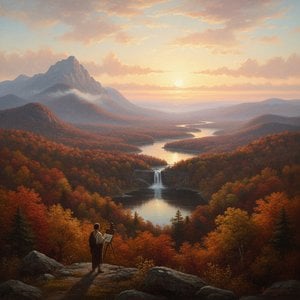
深入探索美国哈德逊河画派:浪漫主义视野下的自然与民族精神。了解其历史、艺术风格及对美国国家认同的深远影响。WahooArt提供高清油画复制和专业艺术咨询服务,助您领略大师之作。


 实景预览
实景预览
 发送
发送 分享
分享
 详情
详情 指南
指南

 下载图片
下载图片
 相似作品
相似作品 X射线
X射线 幻灯片播放
幻灯片播放 统计数据
统计数据


 阅读全文
阅读全文









 玻璃选项仅适用于110厘米以下的尺寸。


