博物馆级艺术微喷或帆布版画,制作高效,并提供多种饰面选择。 ( 购买手绘画作 切换至数字图像销售渠道)





























从与原作比例一致的预设尺寸中进行选择。

您可以输入自定义尺寸,以适配特定的画框或空间。如果您选择的尺寸与原图比例不符,我们将对作品进行裁剪,或通过镜像填充/纯色填充边缘的方式来扩展图像。在开始制作之前,我们会向您发送一份数字效果图供您确认。
请注意,屏幕上的预览并不能反映实际的裁剪或扩展效果。只有效果图才能准确展示最终的构图。
虽然我们提供定制尺寸,但为了保持原图比例,我们建议您从预设列表中选择尺寸。

Untitled (posssibly The Cigarette)
复制品尺寸
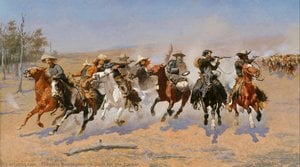
Frederic Remington’s “Untitled (possibly The Cigarette),” painted in 1908-1909, isn't merely a depiction of cowboys; it’s a carefully constructed tableau of camaraderie and the subtle beauty of a Western evening. The painting captures a fleeting moment around a campfire – a scene both familiar and imbued with a poignant sense of solitude. It’s a work that speaks volumes about Remington’s profound understanding of his subject matter, not just as an artist but as a chronicler of a vanishing way of life.
Remington, a pivotal figure in American art history, spent much of his career documenting the frontier—the cowboys, Native Americans, and rugged landscapes that defined the West. However, “The Cigarette” departs from the typical heroic narratives often associated with his work. There’s no dramatic showdown or sweeping vista here; instead, we are presented with a quiet scene of men sharing a simple pleasure – smoking cigarettes by the firelight. The composition is deliberately restrained, focusing on the intimate details of this small group and their immediate surroundings.
Remington’s masterful use of light and shadow is central to the painting's evocative power. He employs a muted palette—primarily browns, grays, and deep blues—to create an atmosphere of cool tranquility. The firelight casts long shadows across the cabin walls and illuminates the faces of the cowboys, lending them a sense of depth and realism. Notice how the light doesn’t dominate; it's subtly diffused, contributing to the overall mood of quiet contemplation rather than dramatic intensity.
The artist’s technique is particularly noteworthy. Remington was known for his meticulous attention to detail, evident in the rendering of the rough-hewn cabin walls, the worn leather saddles, and the individual faces of the cowboys. He utilized a broken brushstroke technique, layering thin washes of paint to build up texture and create a sense of atmosphere. The subtle gradations of color and tone contribute significantly to the painting’s realism and its ability to transport the viewer to this specific moment in time.
Beyond its immediate depiction, “The Cigarette” is rich with symbolic meaning. The act of smoking a cigarette around a campfire represents a shared ritual—a pause in the relentless demands of frontier life. The cowboy on the left, partially obscured by the cabin’s shadow, embodies this quiet contemplation, while his companion leans forward, seemingly engaged in conversation or storytelling. The arrangement of figures mirrors the gentle downward slope of the roofline, creating a sense of harmony and balance within the composition.
Remington's work often served as a poignant reminder of the West’s rapid transformation. As the painting was created during the twilight years of the frontier era, it reflects a growing awareness of its imminent demise. The scene evokes a nostalgia for a simpler time—a time when life revolved around community, hard work, and the rhythms of nature. It's a subtle elegy to a way of life that was rapidly disappearing.
“Untitled (possibly The Cigarette)” stands as a testament to Frederic Remington’s artistic vision and his enduring legacy in American art. It is a painting that invites contemplation, prompting us to consider the complexities of the West—its beauty, its hardships, and its inevitable transition. Reproductions of this iconic work continue to resonate with audiences today, offering a glimpse into a bygone era and reminding us of the power of art to capture both the grandeur and the quiet moments of human experience.

1861 - 1909 , 美国

Elevate your most cherished memories with WahooArt’s bespoke service. We transform your personal photos into breathtaking, hand-painted black & white oil masterpieces. Experience museum-quality craftsmanship and timeless elegance for your private collection. Discover the art of legacy.

Explore the profound emotional depth of documentary photography art. Discover how collectors curate powerful historical narratives through museum-quality black and white prints and fine art reproductions that preserve humanity's most resilient moments.

Explore the profound artistry of black and white photography. From historical mastery to the interplay of light and shadow, discover how monochrome captures timeless emotion and form through a sophisticated lens of art history.


 效果预览
效果预览
 分享
分享 分享
分享
 详情
详情

 下载
下载
 相似作品
相似作品 X射线
X射线 幻灯片播放
幻灯片播放 统计数据
统计数据


 展开详情
展开详情









 玻璃选项仅适用于110厘米以下的尺寸。