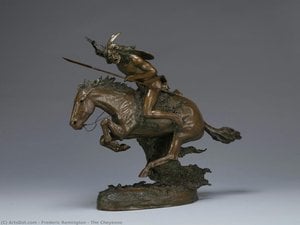
BronzeSculptureAmerican Romanticism
 1898
1898 53.0 x 55.0 cm
 阿蒙·卡特美国艺术博物馆
由我们的艺术家按需定制,为您提供您所选尺寸及画框的布面手工油画。 ( 切换至版画销售渠道 切换至数字图像销售渠道)
从与原作比例一致的预设尺寸中进行选择。

您可以输入自定义尺寸,以适配特定的画框或空间。如果所选尺寸与原图比例不符,我们将通过裁剪作品或添加手绘元素来扩展画面。数字样稿将在制作开始前发送给您确认。
请注意,屏幕预览无法准确反映实际的裁剪或扩展效果,只有样稿才能真实呈现最终的构图。
虽然我们提供定制尺寸服务,但为了保留原作比例,建议您从预设列表中选择尺寸。

The Wicked Pony
复制品尺寸
Frederic Remington's "The Wicked Pony," completed in 1898, isn’t merely a depiction of a cowboy and his bucking bronco; it’s a visceral embodiment of the American West at a pivotal moment – a collision between untamed wilderness and the burgeoning ambition of a nation. This bronze sculpture, now housed within The Metropolitan Museum of Art, transcends simple illustration, offering a complex narrative layered with symbolism and rendered with remarkable technical skill. It's a piece that speaks to both the romance and the brutal realities of frontier life, capturing a fleeting moment of chaotic energy and primal struggle.
Remington’s artistic journey was deeply intertwined with his own experiences. Born in Canton, New York, he wasn’t destined for the dusty trails he so vividly portrayed; instead, he inherited a lineage steeped in industry and military tradition – a fascinating juxtaposition that fueled his fascination with the West. His family's connection to Remington Arms, America’s oldest gunmaker, provided an early exposure to themes of action and weaponry, while his father’s service as a Civil War colonel instilled a respect for storytelling and the dramatic. This unique background shaped his artistic vision, allowing him to capture not just the landscape but also the spirit of its inhabitants – cowboys, Native Americans, and the cavalrymen who sought to tame it.
The sculpture’s power lies significantly in Remington's masterful use of lost-wax casting, a technique that allowed for an astonishing level of detail. The bronze itself is not simply molded; it’s meticulously built up layer by layer, capturing the musculature of the horse with breathtaking accuracy and the desperate struggle of the rider. Notice the subtle shifts in texture – the rough, uneven surface mirroring the ruggedness of the scene, the sleek sheen on the horse's flanks contrasting with the weathered leather of the rider’s saddle. The artist skillfully employed shading to create a sense of volume and depth, emphasizing the dynamic movement and conveying the raw power of the animal.
The choice of bronze is crucial to the sculpture’s impact. Its dark, rich color lends an air of gravitas and permanence to the scene, anchoring it within the historical record. The material's inherent weight and solidity further contribute to the feeling of drama and intensity – a tangible representation of the forces at play.
“The Wicked Pony” is far more than a simple depiction of a cowboy losing his grip; it’s a potent allegory for the ongoing struggle between humanity and nature. The rider, thrown from the horse, represents the ambition and control that humans attempt to exert over the wild. The horse, in turn, embodies the untamed spirit of the West – a force both beautiful and dangerous. The composition itself—a dramatic diagonal line sweeping across the sculpture—underscores this tension, conveying speed, chaos, and the inevitable consequences of attempting to dominate something inherently unpredictable.
Interestingly, Remington deliberately reversed the dynamic established in his earlier, more celebrated work, “Broncho Buster.” In "The Wicked Pony," it’s not the cowboy who is triumphant; instead, he's vulnerable and defeated. This subtle shift in perspective highlights a critical aspect of the Western narrative – the recognition that nature ultimately holds sway.
Remington’s work firmly places “The Wicked Pony” within the broader context of the American Romantic movement. Like other artists of the era, he sought to capture intense emotions and dramatic narratives, often drawing inspiration from folklore and legend. His depiction of the West—a land of adventure, hardship, and untamed beauty—resonated deeply with a nation grappling with its identity and forging a new frontier. “The Wicked Pony” stands as a testament to Remington’s ability to translate these complex themes into a visually arresting and emotionally resonant sculpture, ensuring his place as one of the most iconic figures in American art history.

1861 - 1909 , 美国

Discover the enduring allure of bronze sculptures at WahooArt.com. From classical lost-wax casting to modern metal masterpieces, explore museum-quality artworks designed to elevate luxury interiors. Expert curation, authenticity guaranteed, and worldwide shipping for discerning collectors.

Discover the enduring allure of bronze sculpture. From the intricate lost-wax process to Neoclassical masterpieces, our expert guide offers connoisseurs deep insights into evaluating patina, historical significance, and integrating metal fine art into sophisticated collections.

Discover the enduring elegance of bronze sculpture. From ancient Roman strength to Art Deco sophistication, explore our expert guide on collecting, casting techniques, and integrating timeless metal masterpieces into your fine art collection.


 分享
分享 分享
分享
 详情
详情

 下载
下载
 相似作品
相似作品 幻灯片播放
幻灯片播放 统计数据
统计数据 展开详情
展开详情






































 玻璃选项仅适用于110厘米以下的尺寸。