
由我们的艺术家按需定制,为您提供您所选尺寸及画框的布面手工油画。 ( 切换至版画销售渠道 切换至数字图像销售渠道)





























您可以从与原作比例一致的预设尺寸中进行选择。

您可以输入自定义尺寸,以适配特定的画框或空间。如果所选尺寸与原图比例不符,我们将通过裁剪作品或添加手绘元素来扩展画面。数字样稿将在制作开始前发送给您确认。
请注意,屏幕预览无法准确反映实际的裁剪或扩展效果,只有样稿才能真实呈现最终的构图。
虽然我们提供定制尺寸服务,但为了保留原作比例,建议您从预设列表中选择尺寸。
Ridden Down
复刻品尺寸说明
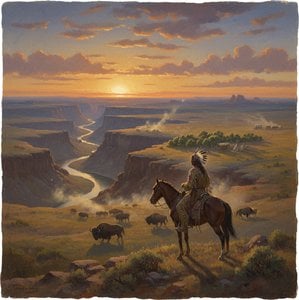
Frederic Remington's "Ridden Down," painted in 1905, isn’t merely a depiction of cowboys and horses; it’s a profound meditation on solitude, resilience, and the enduring spirit of the American West. This oil-on-canvas masterpiece, currently residing within the Amon Carter Museum of American Art in Fort Worth, Texas, captures a pivotal moment – a lone Native American rider silhouetted against an expansive, undulating sand dune landscape under a brilliant, cloudless sky. Remington, a master of portraying the frontier, expertly blends realism with an impressionistic sensibility, creating an image that simultaneously feels immediate and deeply symbolic.
The painting’s composition immediately draws the eye to the central figures: a man, clad in a simple green shirt, riding a powerful mustang. The horse is positioned behind him, its head lowered as if acknowledging the immensity of the terrain. Remington skillfully employs horizontal lines created by the towering sand dunes, which dominate the scene and establish a sense of overwhelming scale. These sweeping forms contrast sharply with the verticality of the rider and horse, emphasizing their vulnerability against the backdrop of nature’s grandeur. Two birds soar high above, adding a touch of fleeting beauty to this otherwise stark landscape – perhaps representing freedom or a distant hope.
Remington’s technique is immediately recognizable—bold, expressive brushstrokes that convey both the physicality of the scene and an underlying sense of movement. He doesn’t shy away from visible texture; the sand dunes are rendered with a rough, grainy quality, while the horse’s coat appears almost sculpted by the artist's hand. The color palette is dominated by warm yellows and ochres, reflecting the sun-baked earth and creating a feeling of intense heat. Cool blues in the sky provide a striking contrast, highlighting the vastness of the space and adding depth to the composition. Remington masterfully uses light and shadow to sculpt the forms, lending them a remarkable three-dimensionality.
The painting’s dynamic energy is further enhanced by his use of color—a vibrant, almost feverish application that captures the intensity of the desert environment. Notice how he subtly shifts tones within the sand dunes, suggesting variations in texture and depth. This attention to detail, combined with his confident brushwork, elevates “Ridden Down” beyond a simple landscape painting; it becomes a visceral experience for the viewer.
"Ridden Down" is more than just a visual record of the American West; it’s imbued with layers of symbolic meaning. The lone rider, often interpreted as a Native American figure, embodies themes of survival, adaptation, and resilience in the face of an increasingly encroaching civilization. The posture of the horse—lowered head, steady gait—suggests both respect for the land and a quiet determination to endure. Considering Remington’s own career, which coincided with a period of significant change and displacement for Native American communities, the painting can be viewed as a poignant commentary on this historical context.
Painted in 1905, “Ridden Down” reflects the waning days of the frontier era. Remington’s work often depicted scenes of cowboys, Indians, and the wild west—a romanticized vision that captured the imagination of a nation eager to define its identity. However, it's important to note that Remington’s portrayal was not without its complexities; he sometimes perpetuated stereotypes while simultaneously capturing the raw beauty and inherent drama of the West. The painting stands as a testament to his skill as an artist and a valuable window into a transformative period in American history.
To delve deeper into Frederic Remington’s artistic legacy, consider examining "The Wounded Buffalo," another iconic work showcasing his mastery of capturing the spirit of the West. You can explore more of his paintings and writings at WahooArt.com, where you'll find a curated selection of his most celebrated works. For further insights into Remington’s life and career, visit the Amon Carter Museum of American Art (here) or explore his biography on Wikipedia (here). And for a visual journey through the world of Frederic Remington, be sure to visit this page.
在弗雷德里克·雷明顿已记录的主题——western expansion influence, native american culture", frontier life depiction, military & exploration, remington's iconic style, american identity theme, landscapes & human scale, key work in artist corpus——之中,"Ridden Down" 则将焦点转向了american west, native american, horseback riding, desert landscape, remington art, western theme, lone figure, dynamic scene”。
《Ridden Down》由出生于 美国 的 弗雷德里克·雷明顿 在 American Regionalism” 运动背景下创作而成。艺术家的原籍地使这部作品与 美国 艺术家所实践的 American Regionalism” 风格紧密相连。
"Ridden Down" 是由 弗雷德里克·雷明顿 于 1905 年创作的。
弗雷德里克·雷明顿 的《Ridden Down》 推荐陈列于 Living Room。此建议是基于作品的主题、色彩与意境而定。
"Ridden Down" 的色彩呈现出 Luminous 的亮度。
"Ridden Down" 的背后是 弗雷德里克·雷明顿 及其所属的 American Regionalism” 流派。
"Ridden Down"创作于1905年,属于American Regionalism”运动时期的作品。其创作年代与艺术流派确立了该作品在艺术史上的地位。
弗雷德里克·雷明顿 的《Ridden Down》 的版权说明:该作品属于 属于公有领域 —— 其版权已过期。这决定了是否可以自由进行图像复制。


1861 - 1909 , 美国

Explore the life & legacy of Benjamin West, pioneering American artist and Royal Academy president. Discover his Neoclassical masterpieces, transatlantic influence, and lasting impact on art history. Learn more at WahooArt.
Explore the evocative paintings of Henry Farny, renowned for his romantic realism & depictions of Native American life in the 19th-century West. Discover his legacy and key artworks at WahooArt.

Explore the world of Grant Wood & American Regionalism with WahooArt. Discover the symbolism behind 'American Gothic', recurring themes, and the movement's lasting impact on art history. High-quality reproductions available.

Explore the captivating world of Charles Marion Russell, 'the cowboy artist.' Discover his life, iconic paintings, advocacy for Native Americans, and investment potential. A guide for discerning art collectors.

Explore the captivating art of Alfred Jacob Miller, chronicler of the American West. Discover his iconic paintings, techniques & lasting legacy – a valuable addition to any serious collection. Learn more at WahooArt.


 实景预览
实景预览
 发送
发送 分享
分享
 详情
详情 指南
指南

 下载图片
下载图片
 相似作品
相似作品 X射线
X射线 幻灯片播放
幻灯片播放 统计数据
统计数据


 阅读全文
阅读全文









 玻璃选项仅适用于110厘米以下的尺寸。


