Oil On CanvasWallArtAmerican West Painting
 1889
1889 86.0 x 124.0 cm
 阿蒙·卡特美国艺术博物馆
购买高分辨率增强版数字图像,其品质远超在线预览。
每一份文件都由我们的内部专家使用先进工具与专业的后期润色技术精心打造。我们确保每一张图像都具备卓越的清晰度、精准的色彩还原度以及细腻的细节表现。
最终文件将在 72 小时内通过电子邮件交付,并针对专业、编辑及印刷用途进行了优化。其品质与顶级设计工作室、出版社和画廊所信赖的标准完全一致。
选择 WahooArt.com,您获得的不仅仅是一张图像——您收到的是经过专业级增强、精雕细琢的数字艺术作品,并享有满意保证。以下是您的订单中自动包含的所有内容:

您的高分辨率数字图像文件将在下单后 72 小时内通过电子邮件发送给您 —— 即可立即使用。

您的艺术品经过专业优化,结合先进的 AI 技术与人工修饰,确保呈现极致的细节、清晰度与色彩准确度。

不小心删除了文件或找不到了?没关系——我们将随时为您免费重发。

即刻拥有您的艺术作品,无需支付任何关税、税费或运费——数字下载始终免税。

我们通过专业工具与色彩管理技术,确保您的数字图像尽可能真实地还原原作色彩。

如果您对所购数字图像不满意,我们将在100天内为您进行修改或提供100%的全额退款——无需任何理由。

不满意?在收到数字文件后的100天内,您可以申请全额退款——无需任何理由。

购买 3 张图片可享 10% 折扣 - 购买 5 张可享 15% 折扣 - 购买 10+ 张可享 20% 折扣。非常适合创意项目、画廊和机构使用。
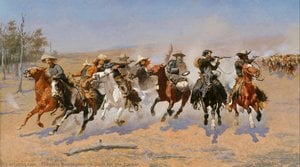
Frederic Remington’s “An Indian Trapper,” painted in 1889, isn't merely a portrait; it’s a carefully constructed narrative of the fading frontier and the complex relationship between European settlers and Native Americans. Born in Canton, New York, in 1861 – a place far removed from the landscapes he would immortalize – Remington initially sought a military career but found his true calling in capturing the spirit of the American West through art. This particular painting, created after his travels to Alberta, Canada, reflects a period of profound change and increasing tension as the vast territories were rapidly being claimed by white settlers.
The scene unfolds with remarkable detail against a backdrop of rugged, snow-dusted mountains – a quintessential vista of the Canadian Rockies. At the center stands a Native American man, identified often as a Cree or Blackfoot warrior, mounted on horseback and expertly maneuvering his mount through the challenging terrain. His attire—a traditional headdress, buckskin clothing, and a rifle slung across his back—immediately anchors him within this specific cultural context. Remington’s meticulous rendering of the horse, its powerful muscles straining with effort, underscores the vital role of animals in Native American life and their mastery of the wilderness.
Remington was a master of realism, meticulously documenting the details of his subjects – from the weathered texture of the man’s clothing to the intricate patterns of the headdress. However, “An Indian Trapper” transcends simple representation; it’s imbued with a romantic sensibility characteristic of Remington's work. The dramatic lighting—a strong contrast between light and shadow—heightens the sense of adventure and emphasizes the rugged beauty of the landscape. Notice how the artist uses loose brushstrokes to convey movement and energy, particularly in the horse’s stride and the man’s determined posture.
The painting's composition is carefully balanced, drawing the viewer’s eye across the scene. The figure dominates the foreground, while the distant mountains create a sense of scale and emphasize the vastness of the territory. Remington employed oil paints on canvas, utilizing layering techniques to achieve depth and texture. His use of color—earth tones punctuated by flashes of white snow—further enhances the painting’s realism and evokes the harsh beauty of the Western landscape.
“An Indian Trapper” is more than just a depiction of an individual; it's a visual statement about the era. The title itself suggests a figure caught between two worlds – a skilled hunter and tracker, yet also a participant in a rapidly changing society. The painting was initially conceived during Remington’s sketching expedition to Alberta, where he sought to document the lives of Native Americans before they were largely displaced by settlers. It's important to note that Remington’s portrayal, while detailed, has been subject to criticism for potentially perpetuating stereotypes about Native American culture.
However, considering the context of the late 19th century, when westward expansion was accelerating and Native American tribes were facing increasing pressure, “An Indian Trapper” offers a valuable glimpse into a vanishing way of life. The painting’s inclusion in *Harper's Monthly Magazine* in 1891 further cemented its place as a significant representation of the West during that period, sparking debate and discussion about the future of Native American communities.
Looking at “An Indian Trapper” today, one is struck by its powerful sense of adventure and resilience. The figure’s determined gaze and confident posture convey a spirit of independence and mastery over his environment. The painting evokes a feeling of both admiration for the Native American warrior and a poignant awareness of the impending loss of their traditional way of life. It remains a compelling testament to Frederic Remington's skill as an artist and his enduring fascination with the American West – a landscape forever shaped by conflict, exploration, and transformation.


1861 - 1909 , 美国


 效果预览
效果预览
 切换至版画销售渠道
 分享
分享 分享
分享
 详情
详情 指南
指南

 下载
下载
 相似作品
相似作品 X射线
X射线 幻灯片播放
幻灯片播放 统计数据
统计数据 展开详情
展开详情