Oil On CanvasWallArtAmerican West Art
 1889
1889 124.0 x 86.0 cm
 阿蒙·卡特美国艺术博物馆
购买高分辨率增强版数字图像,其品质远超在线预览。
每一份文件都由我们的内部专家使用先进工具与专业的后期润色技术精心打造。我们确保每一张图像都具备卓越的清晰度、精准的色彩还原度以及细腻的细节表现。
最终文件将在 72 小时内通过电子邮件交付,并针对专业、编辑及印刷用途进行了优化。其品质与顶级设计工作室、出版社和画廊所信赖的标准完全一致。
选择 WahooArt.com,您获得的不仅仅是一张图像——您收到的是经过专业级增强、精雕细琢的数字艺术作品,并享有满意保证。以下是您的订单中自动包含的所有内容:

您的高分辨率数字图像文件将在下单后 72 小时内通过电子邮件发送给您 —— 即可立即使用。

您的艺术品经过专业优化,结合先进的 AI 技术与人工修饰,确保呈现极致的细节、清晰度与色彩准确度。

不小心删除了文件或找不到了?没关系——我们将随时为您免费重发。

即刻拥有您的艺术作品,无需支付任何关税、税费或运费——数字下载始终免税。

我们通过专业工具与色彩管理技术,确保您的数字图像尽可能真实地还原原作色彩。

如果您对所购数字图像不满意,我们将在100天内为您进行修改或提供100%的全额退款——无需任何理由。

不满意?在收到数字文件后的100天内,您可以申请全额退款——无需任何理由。

购买 3 张图片可享 10% 折扣 - 购买 5 张可享 15% 折扣 - 购买 10+ 张可享 20% 折扣。非常适合创意项目、画廊和机构使用。
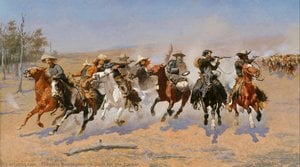
Frederic Remington’s “An Indian Trapper,” painted in 1889, isn't merely a depiction of a solitary figure on horseback; it’s a potent distillation of the burgeoning mythology surrounding the American West during a period of profound transformation. This oil-on-canvas masterpiece captures a moment suspended between tradition and encroaching modernity, embodying both the romanticized vision of frontier life and the unsettling reality of displacement for Native American communities.
The scene unfolds within a vast, rugged landscape—a palette dominated by ochre browns, deep blues, and muted greens. The composition is carefully constructed to emphasize the figure’s isolation and connection to his environment. A lone Native American man, clad in traditional buckskin garments and adorned with a distinctive headdress, surveys the horizon from atop a powerful chestnut horse. His posture exudes quiet confidence and an intimate understanding of the land—a stark contrast to the often-portrayed image of the savage or untamed wilderness.
Remington, initially trained as a journalist and illustrator for dime novels, possessed a remarkable ability to synthesize observation with artistic license. “An Indian Trapper” exemplifies this approach. While rooted in meticulous detail—notice the texture of the buckskin, the muscular build of the horse, and the subtle nuances of light and shadow—the painting transcends simple realism. Remington employs a slightly heightened palette and dramatic lighting to evoke a sense of grandeur and timelessness, aligning with the conventions of Romanticism.
His brushwork is loose and expressive, particularly in the depiction of the landscape, suggesting movement and vastness. The horse’s powerful stride is rendered with dynamic energy, while the man's stillness conveys a deep connection to his surroundings. Remington masterfully utilizes color to create depth and atmosphere, drawing the viewer into the heart of the scene.
“An Indian Trapper” emerged during a critical juncture in American history—the late 19th century witnessed escalating conflicts between settlers and Native American tribes following westward expansion. Remington’s work, while often celebrated for its romanticized portrayal of the West, is inextricably linked to this complex historical context. The painting can be interpreted as both an endorsement of the frontier spirit and a subtle commentary on the displacement of indigenous populations.
The figure's solitary stance reflects the increasing isolation experienced by Native Americans as their traditional ways of life were disrupted. The headdress, a symbol of leadership and spiritual authority, subtly hints at the cultural heritage being lost in the face of assimilation. Remington’s decision to depict the man on horseback—a mode of transportation increasingly associated with settlers—underscores this shift.
Despite its historical complexities, “An Indian Trapper” continues to resonate deeply with viewers today. The painting evokes a sense of melancholy and contemplation, prompting reflection on themes of identity, displacement, and the enduring relationship between humans and the natural world. It’s a powerful reminder of a vanishing way of life—a poignant testament to the beauty and tragedy inherent in America's westward expansion.
Reproductions of this iconic artwork offer an accessible means of experiencing Remington’s vision, allowing viewers to appreciate the artistry and historical significance of this enduring masterpiece. Its evocative imagery continues to captivate audiences seeking a glimpse into the heart of the American West.

1861 - 1909 , 美国


 效果预览
效果预览
 切换至版画销售渠道
 分享
分享 分享
分享
 详情
详情 指南
指南

 下载
下载
 相似作品
相似作品 X射线
X射线 幻灯片播放
幻灯片播放 统计数据
统计数据 展开详情
展开详情