Acrylic On CanvasWallArtGerman Expressionism
 1911Early Modern
 50.0 x 70.0 cm
博物馆级艺术微喷或帆布版画,制作高效,并提供多种饰面选择。 ( 购买手绘画作 切换至数字图像销售渠道)





























从与原作比例一致的预设尺寸中进行选择。

您可以输入自定义尺寸,以适配特定的画框或空间。如果您选择的尺寸与原图比例不符,我们将对作品进行裁剪,或通过镜像填充/纯色填充边缘的方式来扩展图像。在开始制作之前,我们会向您发送一份数字效果图供您确认。
请注意,屏幕上的预览并不能反映实际的裁剪或扩展效果。只有效果图才能准确展示最终的构图。
虽然我们提供定制尺寸,但为了保持原图比例,我们建议您从预设列表中选择尺寸。

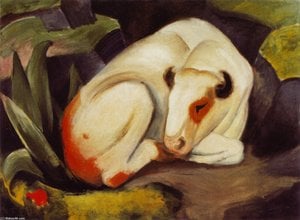
Red Dog
复制品尺寸
Franz Moritz Wilhelm Marc (1880 – 1916), born in Munich, Germany, stands as one of the most influential figures in German Expressionism. His artistic journey began with a fascination for landscape painting under his father's tutelage but swiftly pivoted toward a deeper exploration of spirituality—a quest to distill the fundamental truths of existence into visual form.
Marc’s breakthrough came during his time at the Academy of Fine Arts in Munich, where he encountered Vincent van Gogh’s expressive canvases. This encounter profoundly impacted him, fostering an unwavering conviction that art possessed the capacity to transcend mere representation and evoke genuine spiritual experience. He believed that by capturing the essence of nature—particularly animals—artists could communicate a profound understanding of life's interconnectedness.
"Red Dog," painted in 1911, exemplifies Marc’s distinctive style – a cornerstone of Expressionism. Rejecting academic realism, he embraced bold color palettes and simplified forms to convey emotion rather than precise detail. Marc utilized tempera paint on canvas, a technique favored for its luminosity and ability to achieve vibrant hues. The artist meticulously applied thick layers of pigment, creating textured surfaces that mirrored the rugged beauty of the mountainous landscape.
Marc’s artistic endeavors unfolded against the backdrop of a turbulent era marked by social unrest and intellectual ferment. Expressionism emerged as a reaction to the perceived failings of bourgeois culture, seeking to express inner turmoil and confront existential anxieties. “Red Dog” reflects this spirit of rebellion, rejecting conventional aesthetic standards in favor of an uncompromising commitment to conveying psychological depth.
The painting’s central figure—a red dog—is laden with symbolic significance. Dogs have long been associated with loyalty, companionship, and instinctual wisdom within Western culture. Marc deliberately chose this animal to represent the primal forces of nature and, crucially, to embody spiritual harmony. The dog's upward gaze symbolizes aspiration toward transcendence, mirroring Marc’s own belief that art could illuminate the hidden realities of existence.
"Red Dog" transcends mere visual depiction; it invites contemplation and evokes a powerful emotional response. The dominant reds and oranges convey warmth, energy, and passion—reflecting Marc’s fervent desire to capture the vibrancy of life itself. Viewing this artwork is akin to stepping into a realm where form serves as conduit for feeling, prompting viewers to consider questions of beauty, truth, and the enduring power of artistic expression.


1880 - 1916 , 德国
Transform your photos into high-octane action anime masterpieces with WahooArt. Our expert artists blend AI innovation with traditional oil painting to create premium, hand-painted pop culture legacies for your home. Experience museum-quality craftsmanship and a 100% satisfaction guarantee.

Step into the spotlight with WahooArt's AI-driven transformation. Turn your photos into stunning, hand-painted anime oil masterpieces. Experience the perfect fusion of cutting-edge technology and museum-grade craftsmanship to create a timeless pop-culture legacy for your home.


 效果预览
效果预览
 分享
分享 分享
分享
 详情
详情

 下载
下载
 相似作品
相似作品 X射线
X射线 幻灯片播放
幻灯片播放 统计数据
统计数据 展开详情
展开详情









 玻璃选项仅适用于110厘米以下的尺寸。