
由我们的艺术家按需定制,为您提供您所选尺寸及画框的布面手工油画。 ( 切换至版画销售渠道 切换至数字图像销售渠道)





























您可以从与原作比例一致的预设尺寸中进行选择。

请输入您需要的宽度和高度,以适配您的画框或墙面。由于作品为手工绘制,若您选择不同的尺寸比例,艺术家可能会在画面边缘多画一些或稍作裁剪 —— 由您决定。在开始绘画之前,我们会为您发送一份数字效果图供您确认。本页面上展示的图片并非最终实物 —— 只有效果图才能反映真实结果。
Playing Forms
复刻品尺寸说明
Franz Marc's "Playing Forms," painted in 1914 and currently residing within the hallowed halls of the Museum Folkwang in Essen, Germany, is more than just a painting; it’s an immersion into the heart of Expressionist thought. This vibrant canvas pulsates with a raw, almost primal energy, born from Marc's profound desire to capture not merely what he *saw*, but what he *felt* – the essence of life itself. The work immediately draws the eye with its bold color palette and dynamic arrangement of circles, inviting viewers into a world where form and emotion intertwine seamlessly.
At first glance, the composition appears deceptively simple: a dominant red circle anchors the center, surrounded by a swirling dance of blues – varying in intensity from pale washes to deep, saturated hues. These smaller circles aren’t merely decorative; they possess a rhythmic quality, suggesting movement and interconnectedness. A flash of yellow adds a touch of warmth and vitality on the right, while a subtle blue circle near the top left hints at an underlying harmony. But beneath this surface lies a complex exploration of color theory and its expressive potential. Marc wasn’t interested in replicating reality; he sought to distill it down to its purest emotional components.
To fully appreciate “Playing Forms,” one must consider its context within the burgeoning artistic landscape of early 20th-century Germany. Marc's work was profoundly influenced by his friend Robert Delaunay, particularly their shared fascination with color and abstraction. Delaunay’s “Les Fenêtres sur la Ville” series, with its fragmented planes of color, served as a crucial catalyst for Marc’s own explorations. However, Marc diverged from Delaunay's approach, forging his own distinct path towards what he termed ‘pure’ painting – an attempt to strip away representational elements and focus solely on the emotive power of color itself.
Marc’s method involved a deliberate manipulation of proportion and rhythm, creating a visual flow that guides the viewer’s eye. The arrangement of circles isn't random; it’s carefully orchestrated to evoke a sense of movement and energy. The crystalline structures hinted at on the left edge contrast sharply with the explosive bursts of color towards the center, mirroring perhaps the duality of experience – the ordered and the chaotic, the rational and the instinctive.
Like many artists of his time, Marc was deeply interested in the role of light. He wasn't simply depicting illumination; he was harnessing it to shape the very mood and meaning of the painting. This engagement with light aligns closely with the principles of “luminism,” a technique championed by figures like Caravaggio and later embraced by Impressionists – an emphasis on capturing the effects of light and shadow, not just their source. In "Playing Forms," Marc skillfully uses color to simulate light, creating a dynamic visual experience that seems to radiate outwards from the central red circle.
The interplay between light and shadow isn’t merely aesthetic; it's deeply symbolic. The brighter circles suggest vitality and joy, while the darker shades hint at introspection and perhaps even melancholy. This careful orchestration of tonal values contributes significantly to the painting’s emotional resonance, inviting viewers to contemplate the complexities of human experience.
Franz Marc's work is steeped in symbolism, reflecting his lifelong interest in spirituality and the natural world. The circles themselves can be interpreted as representing animals – particularly horses, which held a profound significance for Marc. He believed that animals possessed a deeper understanding of life’s mysteries than humans, and sought to capture their essence through his art. “Playing Forms” isn't simply an abstract composition; it’s a visual meditation on the interconnectedness of all living things and the search for spiritual truth.
The painting’s vibrant colors and dynamic forms evoke a sense of primal energy, suggesting a connection to something larger than ourselves. It’s a testament to Marc's ability to translate his inner world onto canvas, creating a work that continues to resonate with viewers today. A high-quality reproduction from WahooArt.com offers an exceptional opportunity to bring this powerful and evocative masterpiece into your home or studio – a window into the soul of one of Expressionism’s most visionary artists.
就视觉亮度而言,马克·弗朗茨 的《Playing Forms》 呈现出 bright 的效果。
在German Expressionism运动中,"Playing Forms"具有Recognized的知名度。
"Playing Forms" 所蕴含的 Spiritual 情感,与其 German Expressionism 风格相得益彰。

1880 - 1916 , 德国

Explore 10 defining German Expressionism masterpieces – from Munch's 'The Scream' to Kandinsky’s abstracts. Discover the artists, stories & bold colors behind this powerful art movement. Find museum-quality reproductions at WahooArt.com.

探索抽象表现主义的十幅经典杰作!波洛克、罗斯科等大师作品,揭秘艺术史上的重要瞬间。WahooArt.com为您呈现高品质艺术品复制和精选家居装饰方案,感受现代艺术的力量与魅力。立即浏览全系列!

Journey through Wassily Kandinsky's 25 most iconic abstract paintings. Explore his revolutionary use of color, form & spiritual expressionism. Find museum-quality Kandinsky reproductions and elevate your home decor with WahooArt.com. Discover all masterpieces on WahooArt.com!

探索几何抽象艺术的十大杰作!康定斯基、蒙德里安等大师作品,色彩构成与非具象之美。WahooArt.com提供博物馆级艺术复制品,为您的家居带来现代艺术灵感。立即在线探索完整系列!
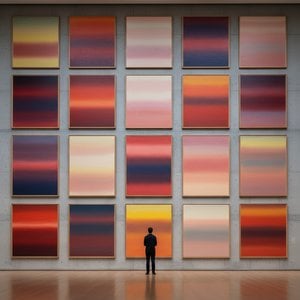
探索马克·罗斯科25幅杰作,感受抽象表现主义的色彩力量与深刻情感。从经典色域绘画到无题系列,了解艺术史上的大师及其作品背后的故事。WahooArt.com提供博物馆级高质量复制品,为您的家居装饰带来艺术灵感!立即探索完整收藏。


 实景预览
实景预览
 发送
发送 分享
分享
 详情
详情 指南
指南

 下载图片
下载图片
 相似作品
相似作品 X射线
X射线 幻灯片播放
幻灯片播放 统计数据
统计数据


 阅读全文
阅读全文









 玻璃选项仅适用于110厘米以下的尺寸。


