
博物馆级艺术微喷或帆布版画,制作高效,并提供多种饰面选择。 ( 购买手绘画作 切换至数字图像销售渠道)





























从与原作比例一致的预设尺寸中进行选择。

您可以输入自定义尺寸,以适配特定的画框或空间。如果您选择的尺寸与原图比例不符,我们将对作品进行裁剪,或通过镜像填充/纯色填充边缘的方式来扩展图像。在开始制作之前,我们会向您发送一份数字效果图供您确认。
请注意,屏幕上的预览并不能反映实际的裁剪或扩展效果。只有效果图才能准确展示最终的构图。
虽然我们提供定制尺寸,但为了保持原图比例,我们建议您从预设列表中选择尺寸。

Horse and Donkey
复制品尺寸
In the pantheon of German Expressionism, few works capture the raw, spiritual yearning of the early twentieth century as po of Franz Marc’s “Horse and Donkey.” Painted in 1912, this masterpiece serves as a visual distillation of an era caught between the stability of the past and the turbulent uncertainty of a modernizing world. At first glance, the viewer is met with an arresting encounter between two animals, yet to look deeper is to enter a realm where color transcends physical reality to communicate profound emotional truths. The canvas does not merely depict creatures; it orchestrates a dialogue of souls, inviting anyone from the passionate art collector to the discerning interior designer to contemplate the interconnectedness of nature and spirit.
The composition is a masterclass in the Expressionist technique, where Marc deliberately moves away from photographic accuracy toward a more primal, symbolic language. He employs a bold, reductive palette that vibrates with energy. The deep, passionate crimson of the horse stands in striking contrast to the earthy, grounding ochre tones that define the landscape. These colors are not applied with subtle gradients but as distinct, rhythmic blocks of pigment. Through thick, deliberate brushstrokes, Marc creates a sense of texture and weight, where every stroke feels like an intentional heartbeat. The use of geometric simplification—circles and squares that subtly shape the forms of the animals—mirrors the movement’s rejection of academic realism, offering a modern aesthetic that remains timelessly elegant in any curated space.
To understand “Horse and Donkey,” one must understand the intellectual climate of 1912 Germany. This was a period profoundly shaped by the philosophical tremors of Friedrich Nietzsche, whose ideas regarding the death of traditional certainties forced artists to seek new sources of meaning. For Marc, this meaning was found in the purity of the animal kingdom. He viewed animals as being untainted by the anxieties and artificiality of human civilization, representing a state of primordial innocence. In this painting, the interaction between the horse and the donkey becomes a meditation on vulnerability and strength. The horse, often a symbol of nobility and vitality, engages with its companion in a way that suggests a shared, silent understanding of the natural order.
For those looking to integrate such a powerful piece into a sophisticated interior, the painting offers more than just visual impact; it provides an emotional anchor. The balance of warm reds and stable earth tones allows the work to command attention without overwhelming its surroundings, making it an ideal centerpiece for a room designed for reflection or intellectual stimulation. It is a window into a moment in history when art sought to bridge the gap between the physical world and the divine, offering a sense of profound peace amidst the chaos of modern life.

1880 - 1916 , 德国

Explore the profound depth of Cubist Expressionism. Discover how geometric precision meets raw emotion through the lens of avant-garde masters, offering sophisticated insights for discerning art collectors and connoisseurs of modern abstraction.
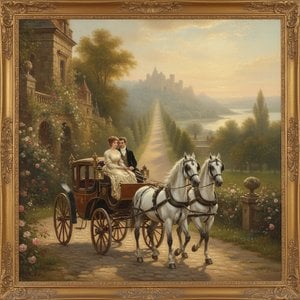
Embark on a visual journey through the romantic world of horse carriage art. Discover the mastery of equestrian oil paintings, from Impressionist textures to classical realism, and learn how to bring timeless elegance into your home with museum-quality reproductions.


 效果预览
效果预览
 分享
分享 分享
分享
 详情
详情

 下载
下载
 相似作品
相似作品 X射线
X射线 幻灯片播放
幻灯片播放 统计数据
统计数据

 展开详情
展开详情









 玻璃选项仅适用于110厘米以下的尺寸。


