
 Oil On CanvasWallArtNeoclassicism
 1820
1820 48.0 x 37.0 cm
 大都会艺术博物馆
博物馆级艺术微喷或帆布版画,制作高效,并提供多种饰面选择。 ( 订购此收藏品的纯手工复刻画作 切换至数字图像销售渠道)





























您可以从与原作比例一致的预设尺寸中进行选择。

请输入您所需的宽度和高度,以适配您的画框或墙面。由于印刷品只能进行裁剪,无法超出原图尺寸,因此若比例不一致,画面的一部分将会被裁切。在正式印刷之前,我们会为您发送一份数字效果图供您确认。本页面显示的图片并非最终裁剪后的效果——只有效果图才能展示真实的裁剪情况。
First Steps
复刻品尺寸说明
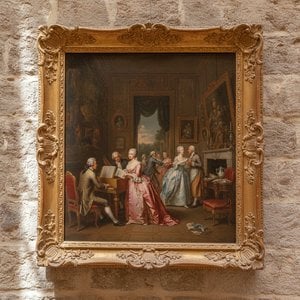
Franz Ludwig Catel's "First Steps," painted around 1820-25, is more than just a charming depiction of a young child taking its first tentative steps; it’s a poignant meditation on continuity and the enduring promise of family within the evolving landscape of post-revolutionary Europe. This idyllic scene, rendered in rich oil paints, transports us to a sun-drenched courtyard in rural Italy – a setting deliberately chosen by Catel to evoke the classical ideals of harmony and balance, subtly contrasting with the turbulent social shifts occurring across the continent.
The painting’s subject matter—a young girl supported by her mother as she embarks on this momentous occasion—resonates deeply with a popular genre theme of the early 19th century. Following the upheaval of the French Revolution, there was a widespread desire for stability and a return to traditional values. Families, representing the bedrock of society, became potent symbols of reassurance and continuity. Catel masterfully captures this sentiment, presenting a scene that feels both timeless and remarkably contemporary. The peasant family depicted isn’t idealized in an overly romanticized way; rather, they are presented with a quiet dignity and warmth, embodying a sense of groundedness and connection to the land.
Catel's technical skill is immediately apparent in his masterful use of light and shadow. The scene is bathed in a warm, golden glow, suggesting an idyllic afternoon. He employs a carefully orchestrated interplay of light to highlight the central figures – the mother and child – while subtly receding into the background, creating a sense of depth and spatial awareness. The architectural details—the simple yet sturdy walls of the courtyard, the arched doorway hinting at a larger space beyond—are rendered with meticulous precision, reflecting Catel’s training in the École des Beaux-Arts in Paris.
Notice also the attention to detail in the depiction of everyday objects: the two chairs positioned invitingly, the bowl containing fruit or vegetables – these elements ground the scene in a tangible reality. The artist's brushwork is smooth and refined, contributing to the overall sense of serenity and order. The color palette is restrained yet vibrant, dominated by earthy tones—ochres, browns, and greens—that evoke the warmth of the Italian countryside.
The choice of an Italian setting is significant. Italy, with its ancient ruins and enduring traditions, represented a romanticized vision of antiquity for many European artists and intellectuals during this period. Catel’s work subtly references this fascination with the classical past, suggesting a connection between the present family and the timeless values embodied by the ancients. The inclusion of a contemporary peasant family within this idyllic setting serves as a deliberate contrast to the aristocratic ideals that had been challenged by the revolution. It suggests a belief in the inherent goodness and stability of the common people.
Furthermore, Catel’s work aligns with François Gérard's “Ages of Man,” a monumental Salon painting from 1808 at the Louvre Museum. While sharing the Italian setting, "First Steps" updates Gérard’s antique dress by depicting a contemporary peasant family, offering a more immediate and relatable portrayal of human experience. This subtle shift in perspective reflects a broader trend in art during this period—a move away from purely mythological subjects towards scenes of everyday life.
"First Steps" is a testament to Franz Ludwig Catel’s artistic journey, beginning with his training in Berlin and culminating in his embrace of the Neoclassical style while living in Rome. The painting embodies the spirit of the era—a desire for stability, harmony, and connection to both tradition and nature. It's a beautiful reminder that even the smallest moments – a child’s first steps – can hold profound significance, representing not only personal growth but also the enduring promise of family and continuity within a changing world. Reproductions of this evocative work capture its warmth and timeless appeal, making it a cherished addition to any collection or interior space.
Franz Ludwig Catel 的《First Steps》 的 Portrait 格式推荐用于 Living Room。画幅与空间的结合,将为您提供复制品摆放的指引。
《First Steps》由出生于 Germany 的 Franz Ludwig Catel 在 Neoclassicism 运动背景下创作而成。艺术家的原籍地使这部作品与 Germany 艺术家所实践的 Neoclassicism 风格紧密相连。
针对 Franz Ludwig Catel 的《First Steps》,我们为您提供以下两项建议:用途为 (Harmony),适宜空间为 (Living Room)。

Born in Berlin, Franz Ludwig Catel embarked on a creative odyssey that would eventually lead him to the heart of the Italian art scene. His early artistic endeavors were remarkably diverse, beginning not with a brush, but with the tactile precision of wood carving. This foundational skill in shaping form likely informed his later mastery of composition and structure. As his talents evolved, he transitioned into the delicate realm of book illustration, notably contributing ten plates for Goethe's Heredia and Dorothea in 1799. His progression through various media—from Indian ink to the fluid grace of watercolours—culminated in a significant achievement in 1806, when his large-scale watercolour piece, The Death of Nicholas of Bernau, earned him prestigious admission into the Berlin Academy.
The trajectory of Catel's life was profoundly shaped by his movements through Europe's great cultural capitals. Following his success in Berlin, he traveled to Paris in 1807 to immerse himself in the study of oil painting at the École des Beaux-Arts. This period of formal training provided him with the technical vocabulary necessary to navigate the complexities of light and shadow. However, it was his arrival in Rome in 1812 that would define his career. In the vibrant atmosphere of Italy, Catel became part of a distinguished circle of artists, drawing inspiration and advanced instruction from figures such as Koch, Overbeck, Schadow, and Cornelius. This connection to the new classic school of landscape painting allowed him to refine a style that blended architectural precision with atmospheric depth.
Catel’s artistic vision was characterized by an exquisite ability to marry the grandeur of nature with the intimacy of human experience. He found his true calling in landscapes that featured prominent architectural details or figures positioned in the foreground, a technique that often drifted into the realm of genre painting. His works are celebrated for their masterful use of perspective and a profound command over light and shade, creating immersive environments that invite the viewer to step into the scene. Whether capturing the sun-drenched courtyards of rural Italy in First Steps or the sweeping vistas of the Italian countryside, his paintings evoke a sense of harmony and classical balance.
His explorations were not limited to the Roman landscape; a visit to Sicily in 1818 significantly broadened the scope and breadth of his artistic ideas. This exposure to new terrains and light conditions enriched his palette and composition. His ability to capture the essence of a place—be it the nostalgic charm of a Sicilian life in Walk in Palermo or the dramatic, historical allure of Virgil's Tomb, Naples—demonstrates a versatility that resonated with the Romantic spirit of his era. Through his meticulous attention to detail and his ability to evoke emotion through scenery, Catel established himself as a significant voice in the nineteenth-century landscape tradition.

1778 - 1856 , Germany

Transform your most cherished family moments into timeless heirlooms with WahooArt's custom hand-painted oil portraits. Enjoy up to 3 faces free in a bespoke masterpiece designed to last generations. Experience premium artistry, professional transparency, and our 100% satisfaction guarantee.

Transform your family's history into a timeless masterpiece. WahooArt specializes in luxury, large-scale custom group portrait commissions for 10+ people. Hand-painted by master artists using traditional oil techniques to create an enduring legacy for your home or organization.

Transform scattered family photos into a single, breathtaking oil masterpiece. WahooArt specializes in hand-painted custom portraits that merge loved ones from multiple images into one timeless heirloom. Experience museum-quality artistry and a 100% satisfaction guarantee.
Explore the profound beauty of genre painting. From Dutch Golden Age masters to global traditions, discover how artists capture the essence of everyday life through masterful realism and timeless storytelling.


 实景预览
实景预览
 发送
发送 分享
分享
 详情
详情 指南
指南

 下载图片
下载图片
 相似作品
相似作品 X射线
X射线 幻灯片播放
幻灯片播放 统计数据
统计数据 阅读全文
阅读全文









 玻璃选项仅适用于110厘米以下的尺寸。


