


 Oil On CanvasWallArtDutch Golden Age
 1623Early Modern
 70.0 x 62.0 cm
 卢浮宫
卢浮宫




























从与原作比例一致的预设尺寸中进行选择。

您可以输入自定义尺寸,以适配特定的画框或空间。如果所选尺寸与原图比例不符,我们将通过裁剪作品或添加手绘元素来扩展画面。数字样稿将在制作开始前发送给您确认。
请注意,屏幕预览无法准确反映实际的裁剪或扩展效果,只有样稿才能真实呈现最终的构图。
虽然我们提供定制尺寸服务,但为了保留原作比例,建议您从预设列表中选择尺寸。

Buffoon Playing a Lute
复制品尺寸
In the heart of the seventeenth century, amidst the bustling prosperity of the Dutch Republic, there emerged a style of painting that breathed life into the mundane. Frans Hals I, a master of movement and emotion, achieved this feat most vibrantly in his 1623 masterpiece, Buffoon Playing a Lute. This work is far more than a mere portrait; it is a window into a fleeting moment of musical ecstasy. As you gaze upon the central figure, draped in a striking red and blue striped outfit, you are immediately drawn into his infectious smile. The musician is not simply performing; he is lost in the rhythm, his long hair cascading over his shoulders as he cradles his lute. This sense of spontaneous joy is mirrored by the subtle presence of onlookers in the background, whose attentive gazes complete a scene of shared human connection and communal delight.
For the discerning collector or interior designer, this painting offers a profound emotional resonance that transcends time. It captures the very essence of joie de vivre, making it an ideal centerpiece for spaces designed to inspire warmth, conversation, and vitality. Whether placed in a grand salon or a curated study, the piece serves as a reminder of the beauty found in life's unscripted, joyful interludes.
What sets this work apart from the more rigid, meticulous portraiture of its era is Hals’s revolutionary approach to technique. Moving away from the polished, almost porcelain-like finishes favored by many contemporaries, Hals embraced a loose, expressive brushstroke that would later influence the Impressionist movement. Upon closer inspection of a high-quality reproduction, one can truly appreciate the thick impasto and the energetic application of paint. This tactile quality allows light to dance across the canvas, creating a sense of atmospheric depth and shimmering realism.
Hals’s genius lies in his ability to use visible, bravura strokes to suggest texture and motion rather than defining every single thread of fabric or string of the lute. He skillfully blends colors to create soft shadows that recede into the background, ensuring that the luminous face of the buffoon remains the undisputed protagonist. This technique creates an incredible sense of immediacy; it feels as though the music is still vibrating through the air and the performer might break into song at any second. For those seeking art that possesses a "living" quality, Hals’s mastery of light and motion provides an unparalleled sensory experience.
To understand the Buffoon Playing a Lute is to understand the flourishing cultural landscape of Haarlem during the Dutch Golden Age. During this period, the Netherlands was experiencing unprecedented economic growth driven by maritime trade, which in turn fueled a massive demand for art that celebrated everyday life and middle-class values. Hals emerged from this environment as a pioneer of genre painting, elevating scenes of common folk to the level of high art through his psychological depth and technical innovation.
The painting serves as a testament to the era's shift toward realism and the celebration of the human condition. There is no heavy-handed symbolism here; instead, the symbolism lies in the music itself—a metaphor for harmony, vitality, and the fleeting nature of pleasure. Owning or displaying a reproduction of this work allows one to bring a piece of this historical brilliance into a modern setting, bridging the gap between the seventeenth-century Dutch Republic and the contemporary aesthetic. It is an investment in a legacy of creativity, capturing a timeless fragment of human happiness that continues to captivate audiences at the Musée du Louvre and beyond.

大约在1580年,弗兰斯·哈尔斯一世诞生于比利时安特卫普。尽管他早期的生活细节鲜为人知,但他很快便成为荷兰黄金时代最重要的画家之一,以其创新的肖像画和风俗画而闻名。哈尔斯并非仅仅是一位技艺精湛的艺术家,更是一位敏锐的观察者,一位能够捕捉人物灵魂深处情感的诗人。
关于哈尔斯早期的训练情况记载不多,普遍认为他最初在安特卫普接受了绘画教育。然而,由于宗教和政治动荡,他的家庭迁居荷兰哈勒姆。1610年,他加入了哈勒姆圣卢卡行会,标志着其职业生涯的正式开始。安特卫普的艺术氛围为他奠定了坚实的基础,而哈勒姆则成为了他挥洒才华、逐渐成名的舞台。那个时代,荷兰正经历着经济繁荣和文化蓬勃发展时期,这无疑也影响了哈尔斯作品的主题和风格。
哈尔斯以其清新而自发的画风独树一帜。与许多同时代画家注重精细刻画不同,他采用了一种自由奔放的笔触。这种技法赋予了他的作品一种鲜活的生命力,能够生动地展现人物的个性和气质,这在当时是一项革命性的突破。他的肖像画并非简单的容貌复制,而是深刻的心理研究。他擅长捕捉转瞬即逝的瞬间——欢笑、交谈或沉思,将这些稍纵即逝的情感凝固于画布之上。
哈尔斯对光影的运用也极具匠心,为他的构图增添了深度和戏剧性。他善于利用光线来突出人物的面部特征和情感表达,营造出一种引人入胜的氛围。这种对光线的敏锐感知和巧妙运用,使得他的作品充满了活力和感染力。
哈尔斯创作了大量的作品,其中以肖像画最为著名。他的一些最受赞誉的作品包括:
此外,他还创作了许多引人入胜的风俗画——描绘日常生活的场景,为人们提供了了解荷兰社会风貌的窗口。
确定哈尔斯直接的影响因素颇具挑战性,因为他发展出了一种高度个性化的风格。然而,可以肯定的是,他对早期佛兰德斯画家如彼得·勃鲁盖尔的作品有所了解。他的创新肖像画方法对后世的艺术家产生了深远影响。
弗兰斯·哈尔斯一世在塑造荷兰黄金时代的绘画方面发挥了至关重要的作用。他的作品反映了当时荷兰蓬勃的繁荣和个人主义精神。他摆脱了僵化的形式,转向一种更自然、更具表现力的风格,为艺术世界留下了持久的遗产。
今天,他的画作备受追捧,可以在世界各大博物馆找到,包括哈勒姆的弗兰斯·哈尔斯博物馆,那里收藏了他最多的作品。他的贡献继续激励着艺术家,几个世纪以来一直吸引着观众。

1580 - 1585 , 比利时

Embark on a sophisticated journey through the Dutch Golden Age. Unveil the dramatic brilliance of Rembrandt’s chiaroscuro and the expressive landscapes of 17th-century masters in this authoritative exploration of light, shadow, and enduring artistic legacy.

Explore the breathtaking mastery of Dutch Golden Age landscapes. From Italianate light to atmospheric realism, discover the techniques of 17th-century masters and learn how to bring these timeless, museum-quality masterpieces into your home through expert oil reproductions.
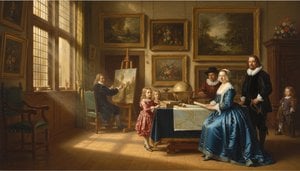
Embark on a journey through the Dutch Golden Age. Discover how masters like Rembrandt and Vermeer used chiaroscuro to manipulate light and shadow, creating timeless depth and spiritual resonance in art history's most captivating masterpieces.


 效果预览
效果预览
 购买印刷品
购买印刷品 分享
分享 分享
分享
 详情
详情

 下载
下载
 相似作品
相似作品 X射线
X射线 幻灯片播放
幻灯片播放 展开详情
展开详情









 玻璃选项仅适用于110厘米以下的尺寸。


