Oil On CanvasWallArtRococo
 1723
1723 184.0 x 151.0 cm
 威廉斯收藏馆
购买高分辨率增强版数字图像,其品质远超在线预览。
每一份文件都由我们的内部专家使用先进工具与专业的后期润色技术精心打造。我们确保每一张图像都具备卓越的清晰度、精准的色彩还原度以及细腻的细节表现。
最终文件将在 72 小时内通过电子邮件交付,并针对专业、编辑及印刷用途进行了优化。其品质与顶级设计工作室、出版社和画廊所信赖的标准完全一致。
选择 WahooArt.com,您获得的不仅仅是一张图像——您收到的是经过专业级增强、精雕细琢的数字艺术作品,并享有满意保证。以下是您的订单中自动包含的所有内容:

您的高分辨率数字图像文件将在下单后 72 小时内通过电子邮件发送给您 —— 即可立即使用。

您的艺术品经过专业优化,结合先进的 AI 技术与人工修饰,确保呈现极致的细节、清晰度与色彩准确度。

不小心删除了文件或找不到了?没关系——我们将随时为您免费重发。

即刻拥有您的艺术作品,无需支付任何关税、税费或运费——数字下载始终免税。

我们通过专业工具与色彩管理技术,确保您的数字图像尽可能真实地还原原作色彩。

如果您对所购买的数字图像不满意,我们将在100天内为您进行修改或退还100%的款项——无需任何解释。

如果不满意?在收到数字文件后的100天内,我们为您提供全额退款——无需任何理由。

购买 3 张图片可享 10% 折扣 - 购买 5 张可享 15% 折扣 - 购买 10+ 张可享 20% 折扣。非常适合创意项目、画廊和机构使用。
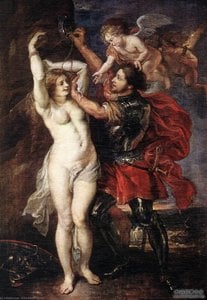
François Lemoyne's “Perseus and Andromeda,” painted in 1723, isn’t merely a depiction of a classical myth; it’s a vibrant, dynamic tableau brimming with the energy and theatricality characteristic of the Rococo period. Housed within the Wallace Collection in London, this oil on canvas offers a captivating glimpse into the artistic sensibilities of a master craftsman – Lemoyne himself – who sought to elevate mythological narratives beyond simple illustration, imbuing them with dramatic intensity and emotional resonance. The painting immediately draws the viewer in with its scale—184 x 151 cm—and its masterful composition, which expertly balances action, light, and shadow to create a scene of both perilous rescue and triumphant victory.
At first glance, the scene unfolds with arresting clarity. Perseus, positioned powerfully on the left, is rendered in robust detail: his muscular form clad in flowing robes, a shield held firmly in his right hand and a gleaming sword grasped by his left. His expression is one of focused determination, conveying the weight of his heroic task – slaying the monstrous Cetus that threatened to engulf Andromeda. Opposite him, Andromeda stands poised on the rocky coastline, her posture suggesting both vulnerability and nascent gratitude as she awaits rescue. The sea monster itself—a terrifying amalgamation of scales, claws, and serpentine form—looms large in the lower left corner, a potent symbol of chaos and impending doom. The background, a dramatic expanse of clear blue sky beneath a rugged coastline, provides a vital stage for this epic confrontation.
Lemoyne’s style is undeniably Rococo, yet it's infused with the grandeur and theatricality often associated with Baroque art. The vibrant color palette—rich reds, oranges, and browns contrasted against cool blues and greens—creates a sense of opulent drama. Notice how Lemoyne skillfully employs chiaroscuro – the dramatic interplay of light and shadow – to sculpt the figures and landscape, adding depth and volume to the scene. The brushwork is remarkably smooth, indicative of a meticulous approach that prioritizes detail and polished finish. This technique allows for an almost photographic realism within the context of a stylized narrative.
The composition itself is meticulously crafted, utilizing a diagonal thrust from the monstrous Cetus to Perseus’s descent, guiding the viewer's eye through the scene with compelling momentum. Linear perspective subtly recedes into the distance, anchoring the figures within a believable landscape while simultaneously creating an illusion of depth. The artist’s attention to detail is particularly evident in the rendering of the rocky coastline and the intricate scales of the sea monster – elements that contribute significantly to the painting's overall impact.
Beyond its aesthetic merits, “Perseus and Andromeda” is rich in symbolic meaning. The story itself speaks volumes about themes of heroism, courage, and divine intervention. Perseus’s act of slaying the monster represents a triumph over adversity, while his rescue of Andromeda embodies the concept of salvation. The sea monster, Cetus, serves as a potent symbol of danger, chaos, and the forces that threaten human existence. The painting subtly suggests the role of fate and divine favor in shaping human destiny – Perseus’s success is not solely due to his own strength but also to the intervention of the gods.
Furthermore, Andromeda's pose—a mixture of vulnerability and acceptance—evokes a powerful emotional response. She represents not only a damsel in distress but also a symbol of resilience and hope. The painting’s enduring appeal lies in its ability to resonate with universal themes of courage, sacrifice, and the triumph of good over evil – themes that continue to captivate audiences centuries after its creation.


1688 - 1737 , 法国


 效果预览
效果预览
 购买印刷品
购买印刷品 分享
分享 分享
分享
 详情
详情

 下载
下载
 相似作品
相似作品 X射线
X射线 幻灯片播放
幻灯片播放 展开详情
展开详情