
购买高分辨率增强版数字图像,其品质远超在线预览。
每一份文件都由我们的内部专家使用先进工具与专业的后期润色技术精心打造。我们确保每一张图像都具备卓越的清晰度、精准的色彩还原度以及细腻的细节表现。
最终文件将在 72 小时内通过电子邮件交付,并针对专业、编辑及印刷用途进行了优化。其品质与顶级设计工作室、出版社和画廊所信赖的标准完全一致。
选择 WahooArt.com,您获得的不仅仅是一张图像——您收到的是经过专业级增强、精雕细琢的数字艺术作品,并享有满意保证。以下是您的订单中自动包含的所有内容:

您的高分辨率数字图像文件将在下单后 72 小时内通过电子邮件发送给您 —— 即可立即使用。

您的艺术品经过专业优化,结合先进的 AI 技术与人工修饰,确保呈现极致的细节、清晰度与色彩准确度。

不小心删除了文件或找不到了?没关系——我们将随时为您免费重发。

即刻拥有您的艺术作品,无需支付任何关税、税费或运费——数字下载始终免税。

我们通过专业工具与色彩管理技术,确保您的数字图像尽可能真实地还原原作色彩。

如果您对所购数字图像不满意,我们将在100天内为您进行修改或提供100%的全额退款——无需任何理由。

不满意?在收到数字文件后的100天内,您可以申请全额退款——无需任何理由。

购买 3 张图片可享 10% 折扣 - 购买 5 张可享 15% 折扣 - 购买 10+ 张可享 20% 折扣。非常适合创意项目、画廊和机构使用。
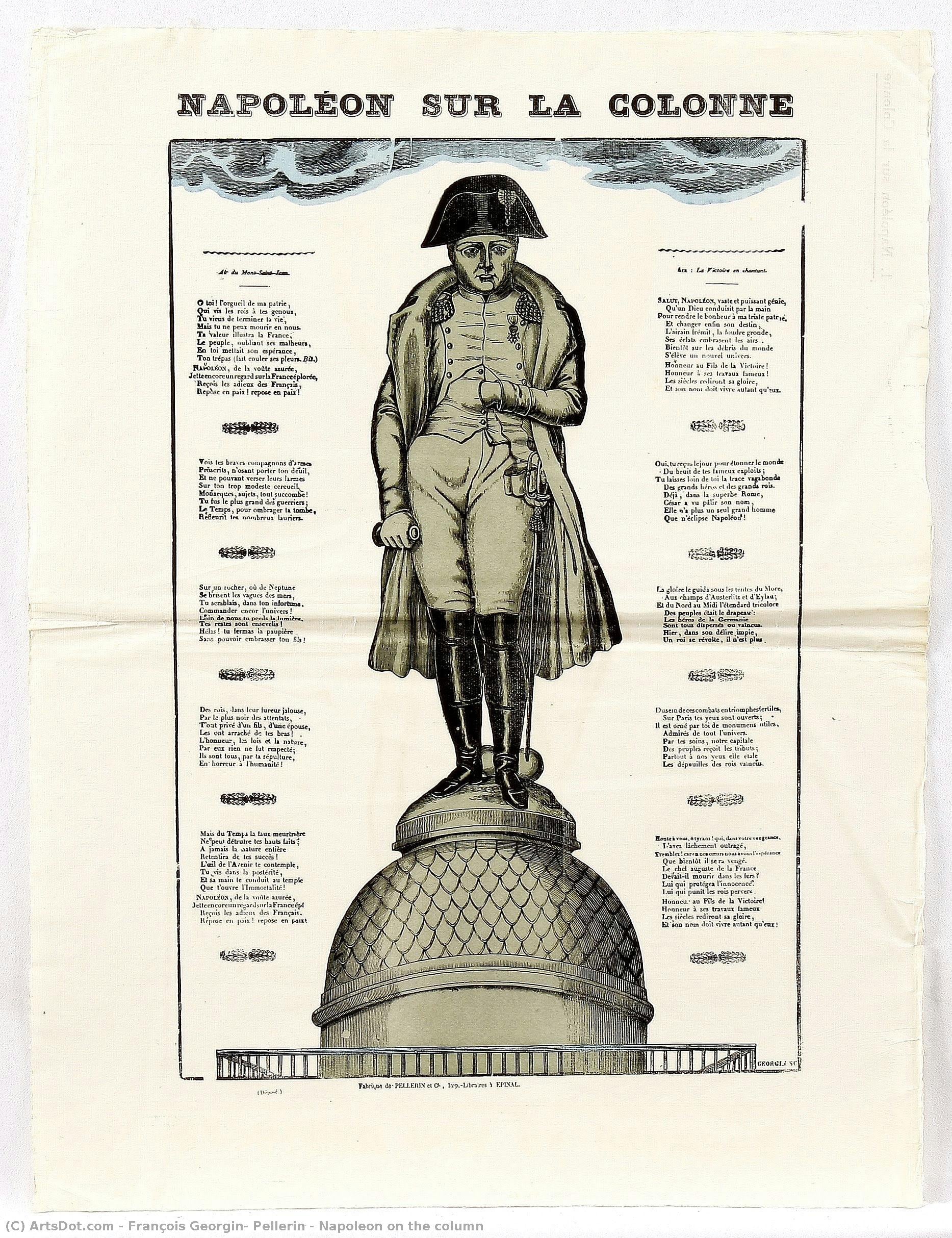
In the heart of nineteenth-century France, a period defined by the sweeping shadows of empire and the romantic fervor of revolution, the name François Georgin emerged as a vital chronicler of history. Born in 1801 in Épinay-sur-Seine, Georgin did not merely observe the tumultuous era of Napoleon Bonaparte; he translated its grandeur, its violence, and its triumphs into a visual language accessible to the masses. His journey into the soul of French printmaking began in the storied town of Epinal, a place where the air was thick with the scent of ink and the rhythmic tapping of woodcut artisans. Under the tutelage of Jean-Charles Pellerin, a master manufacturer of images, Georgin mastered the delicate alchemy of transforming simple woodblocks into vibrant, narrative windows onto the world.
The apprenticeship within Pellerin’s workshop was far more than a technical education; it was an immersion into a tradition of storytelling that blended folk art with historical documentation. Georgin learned to manipulate the medium of woodcut and linoleum, discovering how bold lines could command attention and how a carefully applied palette of crimson, gold, and black could evoke the heat of battle or the solemnity of a monument. This technical foundation allowed him to participate in the creation of the famous Epinal prints, which became a cultural phenomenon across Europe. His work was characterized by an almost theatrical intensity, where every carved groove served to heighten the drama of the Napoleonic epoch.
Georgin’s oeuvre is inextricably linked to the legend of Napoleon. He possessed a unique ability to capture the epic scale of military campaigns while maintaining a poignant focus on the human element within the chaos. His prints, such as the evocative Napoleon Injured at Regensburg, do not merely record historical facts; they breathe life into the vulnerability and heroism of the Emperor. Through his hands, the triumphs at Austerlitz, Marengo, and Jena were rendered with a vividness that stirred national pride and shaped the collective memory of a generation. His style was one of striking contrasts, utilizing deep blacks to ground the composition and brilliant primary colors to illuminate the movement of cavalry and the glint of bayonets.
Beyond the battlefield, Georgin’s artistry touched upon the spiritual and the allegorical, demonstrating a versatility that transcended mere reportage. His ability to navigate between the gritty reality of war and the ethereal beauty of religious or symbolic subjects—such as his depictions of Notre Dame or complex allegorical maps—reveals an artist deeply attuned to the cultural zeitgeist of the Romantic era. This breadth of subject matter ensured that his prints were not only collected by those interested in military history but also cherished by a public enamored with the era's deep emotional and spiritual explorations.
The significance of François Georgin lies in his role as a bridge between high art and popular culture. While the fine arts of the academy often catered to the elite, Georgin’s work through the Pellerin tradition brought the majesty of history into the homes of the common people. He was a master of the "popular print," a medium that functioned as both news and art, providing a visual heartbeat for a nation navigating the complexities of the post-Napoleonic world.
Today, the works of Georgin remain vital pieces of historical evidence and artistic achievement. His contributions can be seen in several key areas:
As we look back upon his life, from the workshops of Epinal to the enduring legacy of his prints, François Georgin stands as a testament to the power of the image to capture the fleeting spirit of an age. His work remains a vibrant, colorful window into a time when history was carved in wood and painted in the bold colors of glory and loss.

1801 - 1863 , France

 效果预览
效果预览
 切换至版画销售渠道
 分享
分享 分享
分享
 详情
详情 指南
指南

 下载
下载
 相似作品
相似作品 X射线
X射线 幻灯片播放
幻灯片播放 统计数据
统计数据
 展开详情
展开详情


