A Rococo Dream in Verdant Hues
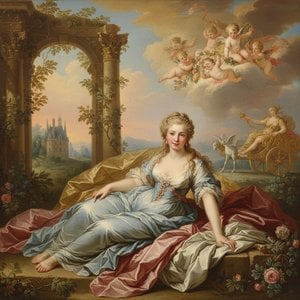
To gaze upon François Boucher's The Forest is to step through a veil of time and into an idealized pastoral reverie. This masterpiece, painted in 1740, captures the very essence of the Rococo spirit—a breathy confluence of lightness, exquisite elegance, and unrestrained natural exuberance. The scene unfolds with a breathtaking dominance of greens and blues, hues that speak of deep woodland mystery tempered by the soft glow of an imagined sun. It is more than just a depiction of trees; it is an emotional landscape, inviting the viewer to pause, breathe deeply, and surrender to nature's gentle embrace.
Composition and the Art of Light
Boucher masterfully guides the eye through this verdant tapestry. In the immediate foreground, two figures are seated upon a moss-kissed rock, seemingly lost in quiet conversation or shared contemplation. Their presence anchors the intimacy of the scene, while their attire whispers tales of 18th-century leisure and refined sensibility. Notice the artist's technique: the loose, almost spontaneous brushwork employed here lends an immediate sense of lived reality, drawing the viewer into the moment as if they could hear the rustle of leaves beneath unseen feet. Contrast this immediacy with the background, where details become more defined, allowing the eye to wander toward a meandering river glimpsed through the foliage. The handling of light is nothing short of miraculous; it filters through the dense canopy in ethereal shafts, suggesting moments when the clouds part just enough to bless the scene with golden illumination.
Historical Echoes and Rococo Sensibility
This painting stands as a quintessential artifact of the Rococo period. Boucher, a titan of 18th-century French art, channeled the era's love for idyllic subjects, decorative allegory, and graceful naturalism. The Rococo favored asymmetry and curving forms over rigid classical structure, and The Forest embodies this philosophy perfectly. It eschews grand historical narratives for moments of exquisite, cultivated pleasure—a hallmark of aristocratic taste. Owning a reproduction allows one to bring this sophisticated, playful spirit of the Enlightenment era into a modern setting, transforming any room into a salon worthy of Parisian salons.
Symbolism and Emotional Resonance
The forest itself has always been a potent symbol in art—a liminal space between civilization and wilderness. Here, Boucher presents it not as threatening, but as nurturing; a sanctuary for quiet reflection. The pairing of the figures suggests themes of companionship, shared solitude, and the harmonious relationship between humanity and the natural world. For the collector or designer, this piece offers more than mere decoration; it is an emotional anchor. It evokes peace, nostalgia, and a profound sense of harmony—a visual balm against the clamor of modern life. To reproduce this work is to invite that same deep, restorative calm into your personal space.
常见问题与解答
弗朗索瓦·布歇 的《The Forest》 采用了什么技法?
弗朗索瓦·布歇 在作品《The Forest》中运用了 Oil On Canvas 技法。该技法界定了原作的材质特性。
"The Forest" 的主题与 弗朗索瓦·布歇 常有的创作主题有何关联?
在弗朗索瓦·布歇已记录的主题——rococo elegance of nature, pastoral themes of leisure, influenced by classical ideals, part of genre scenes——之中,"The Forest" 则将焦点转向了forest scene, rococo style, pastoral setting, figures conversing, nature painting, outdoor leisure。
在哪里可以下载弗朗索瓦·布歇 的《The Forest》?
"The Forest" 可供下载:您可以在该作品的 下载数字图像 页面进行 高分辨率数字图像下载。