Oil On CanvasWallArtRenaissance
 1477
1477 124.0 x 234.0 cm
 柏林州立博物馆
由我们的艺术家按需定制,为您提供您所选尺寸及画框的布面手工油画。 ( 切换至版画销售渠道 切换至数字图像销售渠道)





























您可以从与原作比例一致的预设尺寸中进行选择。

您可以输入自定义尺寸,以适配特定的画框或空间。如果所选尺寸与原图比例不符,我们将通过裁剪作品或添加手绘元素来扩展画面。数字样稿将在制作开始前发送给您确认。
请注意,屏幕预览无法准确反映实际的裁剪或扩展效果,只有样稿才能真实呈现最终的构图。
虽然我们提供定制尺寸服务,但为了保留原作比例,建议您从预设列表中选择尺寸。

Architectural View
复刻品尺寸说明
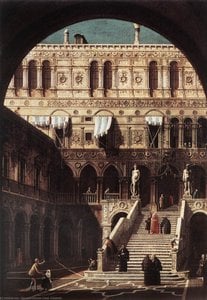
The Staatliche Museen in Berlin houses a painting that transcends mere representation; it offers a meticulously crafted glimpse into the heart of Renaissance architectural thought – Francesco di Giorgio Martini's "Architectural View," completed around 1477. More than simply a depiction of a courtyard, this work is a profound meditation on space, perspective, and the burgeoning humanist ideals shaping Europe’s artistic landscape. Martini, a polymath whose talents spanned painting, sculpture, architecture, and engineering, imbued this piece with an intellectual rigor rarely found in contemporary art, making it a cornerstone of his legacy.
The scene unfolds within a classically inspired courtyard, a carefully orchestrated composition dominated by muted earth tones – ochres, siennas, and umbers – that evoke the weathered grandeur of ancient Rome. Columns, arches, and domes rise with an almost mathematical precision, each element contributing to a sense of ordered harmony. Martini’s mastery lies not just in his technical skill but in his ability to capture the *illusion* of depth and volume. The use of linear perspective draws the viewer's eye towards the central fountain or pool, creating a powerful focal point that anchors the entire composition. Notice how the diminishing size of objects in the distance – a subtle yet crucial element of Renaissance painting – reinforces this sense of spatial recession.
Martini's "Architectural View" stands as a pivotal work, representing a significant departure from the prevailing artistic conventions of his time. While other artists were primarily focused on portraying realistic appearances, Martini was deeply invested in understanding and replicating the principles of linear perspective – a technique that had been developing for centuries but was only beginning to be fully embraced by Renaissance painters. This painting isn’t merely a representation of an existing space; it's a demonstration of how that space *could* be rendered on a two-dimensional surface, reflecting Martini’s own architectural theories.
The influence of Leon Battista Alberti and Filarete, prominent architects and theorists of the early 15th century, is evident in Martini’s approach. However, Martini pushed beyond their established methods, incorporating elements of his own innovative designs – particularly concerning staircase planning and the arrangement of spaces within a building. The meticulous detailing of the columns, arches, and domes speaks to a deep understanding of architectural construction, suggesting that Martini intended this painting to serve as both an artistic statement and a practical guide for aspiring architects.
Beyond its technical brilliance, “Architectural View” is rich in symbolic meaning. The courtyard itself represents a microcosm of the ideal city – a carefully planned space designed for civic life, contemplation, and social interaction. The central fountain or pool, often associated with abundance and prosperity, further reinforces this theme. The muted color palette contributes to an atmosphere of timelessness and serenity, evoking a sense of classical antiquity while simultaneously suggesting the potential for future innovation.
Interestingly, Martini’s architectural treatise, “Trattato di architettura, ingegneria e arte militare,” reveals his fascination with creating an ‘ideal city,’ a concept deeply rooted in humanist philosophy. This painting can be seen as a visual manifestation of that vision – a carefully constructed representation of the principles governing harmonious urban design. The influence of this treatise is further evidenced by the inclusion of geometric patterns within the ceiling, echoing the mathematical precision underlying Martini’s architectural theories.
Today, “Architectural View” remains a testament to Francesco di Giorgio Martini's extraordinary talent and intellectual curiosity. Reproductions by WahooArt offer an exceptional opportunity to bring this masterpiece into your home or office, allowing you to appreciate its beauty and complexity in exquisite detail. The careful attention to color, texture, and perspective ensures that these reproductions capture the essence of Martini’s original vision, transporting you back to the heart of the Renaissance.
For those seeking a deeper understanding of this remarkable work, we encourage you to explore the supplementary resources provided: links to scholarly articles, online exhibitions, and detailed analyses of Martini's artistic techniques. Discovering the rich history and symbolism behind “Architectural View” is an enriching experience in itself – a journey into the mind of one of Renaissance Italy’s most innovative thinkers.

在意大利 15 世纪(Quattrocento)那绚烂夺目的文化织锦中,很少有人能像 弗朗切斯科·迪·乔治奥·马蒂尼 那样,拥有如此宏大且多维的身影。作为一位真正的 homo universalis(全才),他的智慧跨越了精细艺术那超凡脱俗的美感与工程学严谨精确的边界。1439 年出生于锡耶纳,马蒂尼诞生于一个深刻的文化转型时代,彼时中世纪的阴影正逐渐被人文主义的光芒所驱散。他的生命轨迹不仅仅是一段艺术生涯,更是一场终身的探索——试图去理解宇宙内在的几何法则,无论这种法则是在圣母像细腻的笔触中流露,还是在理想之城的坚固城墙里体现。
马蒂尼的艺术之旅始于名师 Vecchietta 的悉心教导。这位锡耶纳画派的大师偏好富有节奏感、如饰带画般的构图风格。虽然早期的训练赋予了他对宗教图像学和锡耶纳优雅传统的深厚敬意,但弗朗切斯科内心却蕴含着一种对创新的不懈渴求。他并未止步于本土传统,而是将目光投向了当时佛罗伦萨兴起的线性透视法研究以及对古典文明的热忱。这种求知欲使他超越了前辈作品中单纯的装饰性,为他的创作注入了全新的心理深度,并展现出对空间关系的精妙掌控,这种艺术造诣在后来与达芬奇的天才构思遥相呼应。
马蒂尼创作产出的广度令人叹为观止。作为一名画家,他拥有一种罕见的能力,能够将神圣性与物质性完美结合。在诸如 圣母与圣婴及众圣徒与天使 等杰作中,人们可以观察到一种深沉的温柔感与严谨的结构清晰度并存。他的宗教作品,包括为锡耶搭建大教堂创作的宏伟巨作 圣母加冕,充分展示了他将古典主义的壮丽与神圣艺术所需的感染力融会贯通的能力。他不仅仅是在描绘神圣的人物,更是将他们置于一个在建筑逻辑上稳固、在物理感知上真实存在的空间之中。
然而,如果仅仅通过画家的视角去审视马蒂尼,便会错失他真正天才灵魂的跳动。他在建筑学与军事工程领域的贡献同样具有变革意义。通过他的 《建筑论》 (Trattato di architettura),他提供的远不止是技术图纸,更是一份关于 città ideale(理想之城)的远见蓝图。其详尽的插图与手稿揭示了一个痴迷于比例和谐与防御战略必要性的头脑。在这些素描中,我们看到了现代城市规划的萌芽——在那里,美学价值与实用功能处于一种微妙且经过精密计算的平衡之中。
弗朗切斯科·迪·乔治奥·马蒂尼的历史意义,在于他成功架起了艺术家直觉与工程师逻辑之间的桥梁。对于他而言,雕塑肢体的优雅与石质堡垒的坚固并无本质区别。他的影响力在整个文艺复兴时期激荡,塑造了后世将设计视为一门综合学科的思维方式。1502 年,他在故乡锡耶纳走完了传奇的一生,但他留下的遗产至今仍在艺术史与建筑理论的研究中持续回响。
若要反思他那持久深远的影响力,我们可以从以下几个伟大的支柱来审视:

1439 - 1502 , 意大利

Explore 10 iconic paintings with captivating 'mushroom' tones! Discover Van Gogh, Monet & Rembrandt’s masterpieces—earthy palettes, rich history & artistic techniques. Find museum-quality art reproductions and curated decor ideas at

Explore the captivating world of earth tones! Discover their historical significance, psychological impact & artistic techniques. Find inspiration for your home decor and museum-quality reproductions at WahooArt.

Explore the captivating world of earth tones in art! Discover historical context, emotional resonance & artistic techniques behind these timeless colors. Find inspiration for your home decor and museum-quality reproductions.

Explore 10 famous paintings dominated by captivating tan tones! From Renaissance portraits to Impressionist landscapes, discover art history's most serene masterpieces. Find museum-quality reproductions & elevate your home decor on .

Journey through 10 iconic paintings bathed in 'sand' tones – from Van Gogh to Monet. Explore the stories, techniques & warm palettes of these timeless masterpieces. Find museum-quality art reproductions at and bring classic beauty home.


 实景预览
实景预览
 发送
发送 分享
分享
 详情
详情 指南
指南

 下载图片
下载图片
 相似作品
相似作品 X射线
X射线 幻灯片播放
幻灯片播放 统计数据
统计数据 阅读全文
阅读全文









 玻璃选项仅适用于110厘米以下的尺寸。