A Symphony of Sorrow: The Ethereal Grief of Fra Angelico
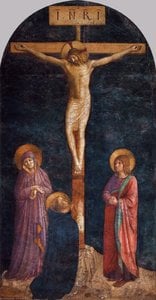
In the quiet, contemplative halls of the Museo Nazionale di San Marco in Florence, there exists a moment frozen in time, a profound meditation on loss and faith known as Lamentation. Painted around 1430, this masterpiece by the Dominican friar Fra Angelico transcends the boundaries of mere religious illustration to become an immersive emotional experience. The scene unfolds within a somber, cave-like space that mirrors the monastic solitude of the artist's own life, drawing the viewer into a sacred circle of mourning. At the heart of this composition lies the lifeless body of Jesus, his arms outstretched in a final gesture of sacrifice, serving as the central axis around which a constellation of grief revolves.
The arrangement of the figures is a masterclass in Early Renaissance balance and proportion. Surrounding the central figure are those who shared in this biblical tragedy: Mary Magdalene, Saint John the Evangel_Evangelist, Nicodemus, and Joseph of Arimathea. Each character is placed with meticulous precision, creating a tableau that feels both structurally stable and emotionally volatile. The artist uses the physical closeness of these figures to evoke a sense of communal suffering, inviting anyone who gazes upon the work to participate in their shared heartache.
The Alchemy of Light and Color
Fra Angelico’s technical brilliance is most evident in his use of color and medium. Utilizing tempera paint—a technique involving the delicate mixing of pigment with egg yolk—the artist achieved a luminous, glaze-like surface that captures and reflects light with an almost supernatural quality. This choice of medium was essential for creating the ethereal glow seen in the wings of the surrounding angels, providing a celestial contrast to the earthly weight of the scene.
The color palette is a deliberate study in contrasts. A restrained selection of cool blues and deep greens dominates the stony, subterranean setting, grounding the scene in a sense of heavy, earthen desolation. However, this coolness is pierced by sudden, vibrant bursts of warmth; the rich reds and shimmering golds adorning Mary’s robes act as visual anchors, drawing the eye toward the most poignant expressions of devotion. This juxtaposition between the coldness of death and the warmth of divine compassion serves to heighten the visual impact, making the Lamentation not just a painting to be seen, but a spiritual encounter to be felt.
A Timeless Legacy for the Discerning Collector
For the art lover or interior designer, a reproduction of this work offers more than mere decoration; it brings a sense of historical depth and spiritual serenity into a contemporary space. The Lamentation is a testament to the power of art to communicate the most complex human emotions—the intersection of agony and hope, of mortality and divinity. Its ability to anchor a room with its profound stillness and balanced composition makes it an incomparable choice for those seeking to curate an environment of reflection and grace.
常见问题与解答
“lamentation”的创作者是谁?创作于哪一年?
"lamentation" 是由 安吉利科 于 1430 年创作的。
是否有面向学生的 安吉利科 的《lamentation》 详情页?
"lamentation" 的指南请参阅作品的 指南 页面 —— 这是一份可打印的信息单,包含了该作品的说明、署名以及详细信息表(艺术家、日期、媒介、原尺寸、馆藏)。
对于 安吉利科 的《lamentation》,有哪些推荐的用途和陈列空间?
安吉利科 的《lamentation》 推荐用于 Accent,理想的摆放空间为 Living Room。结合使用场景与空间布局,可以更好地确定复制品的陈列位置。