A Parisian Dream in Watercolor
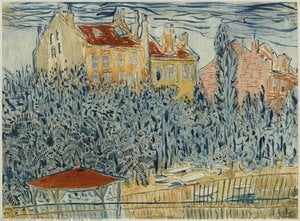
In the evocative work Moda, the viewer is transported into a stylized, dreamlike vision of a Parisian streetscape, captured through the sensitive and expressive lens of Fikret Muallâ Saygı. The composition presents an architectural dance of steeply pitched roofs and dormer windows, rendered with a rhythmic, almost calligraphic quality that suggests the bustling energy of urban life without ever succumbing to mere realism. Through a masterful use of layering, the artist creates a sense of verticality and depth, inviting the eye to wander through the overlapping silhouettes of buildings that seem to rise from a misty, atmospheric foundation. It is a scene that feels both intimately familiar and hauntingly distant, as if glimpsed through the fleeting memory of a traveler passing through the heart of France.
The technical execution of Moda reveals a profound command over the delicate medium of watercolor combined with the precision of pen and ink. The artist employs loose, expressive washes that bleed into one another, creating a soft, diffused light reminiscent of an overcast Parisian afternoon. This fluidity is brilliantly contrasted by bold, dark outlines that define the edges of the architecture and the organic shapes of urban foliage. The color palette is a sophisticated study in temperature; cool blues and deep greens dominate the landscape, providing a serene, melancholic backdrop that is punctuated by sudden, spirited accents of warm red and orange. This interplay of light and shadow, combined with a slightly grainy texture achieved through dry brush techniques, lends the piece an almost tactile, weathered quality that enhances its Post-Impressionistic charm.
The Soul of the Avant-Garde
To understand the emotional resonance of Moda, one must look toward the turbulent and brilliant life of Fikret Muallâ Saygı. A central figure in the Turkish avant-garde movement, Saygı’s work is deeply intertwined with his personal journey through the streets of Paris and his own internal struggles. His fascination with the social fabric of the city—the cafés, the circuses, and the spontaneous gatherings—is distilled here into a singular, atmospheric moment. The painting transcends simple landscape art; it becomes a symbolic representation of the tension between the structured permanence of urban architecture and the ephemeral, reclaiming nature of the greenery interspersed throughout the scene. There is a palpable sense of nostalgia and emotional depth in every stroke, reflecting an artist who found beauty within the chaos of existence.
For the discerning collector or interior designer, Moda offers more than just aesthetic appeal; it provides a sophisticated focal point that brings a sense of history and intellectual intrigue to any space. The artwork’s ability to balance cool, calming tones with energetic linework makes it an ideal addition to modern, minimalist, or classical interiors alike. As a high-quality reproduction, this piece serves as a window into the soul of early 20th-century expressionism, offering a timeless elegance that celebrates the enduring allure of the Parisian spirit and the profound legacy of one of Turkey's most captivating masters.
常见问题与解答
在“Moda”中,哪种颜色最为醒目?
Driftwood (#857244) 是 菲克雷特·穆阿拉·萨伊 的《Moda》 的主导色。
“Moda”这一Post-Impressionism背后蕴含着怎样的国族渊源?
《Moda》由出生于 土耳其 的 菲克雷特·穆阿拉·萨伊 在 Post-Impressionism 运动背景下创作而成。艺术家的原籍地使这部作品与 土耳其 艺术家所实践的 Post-Impressionism 风格紧密相连。
菲克雷特·穆阿拉·萨伊 的作品《Moda》是否属于公有领域?其原因是什么?
菲克雷特·穆阿拉·萨伊 的《Moda》 已进入 仍受版权保护。版权保护期自艺术家逝世之日起计算,该艺术家于 1967 年逝世。